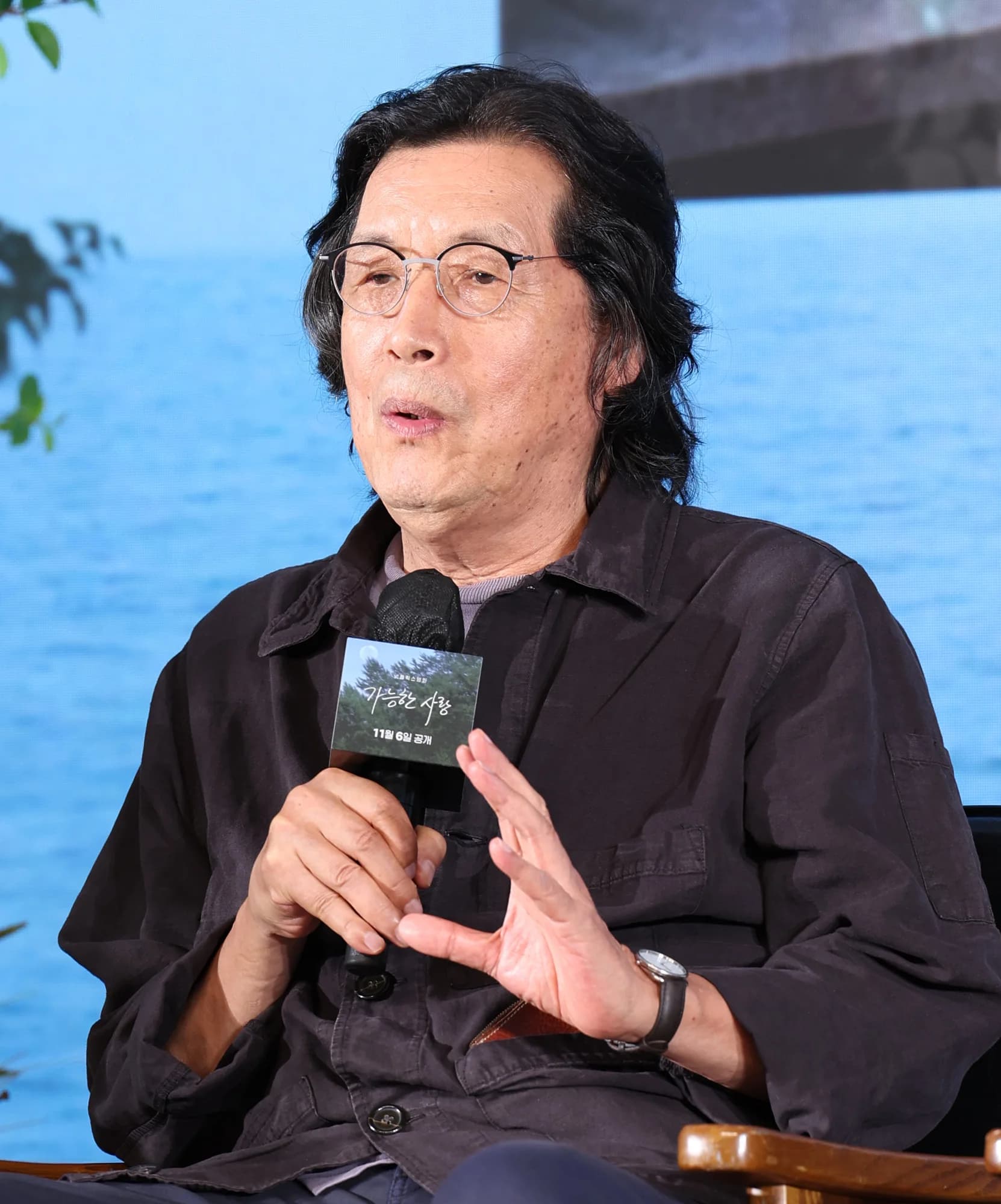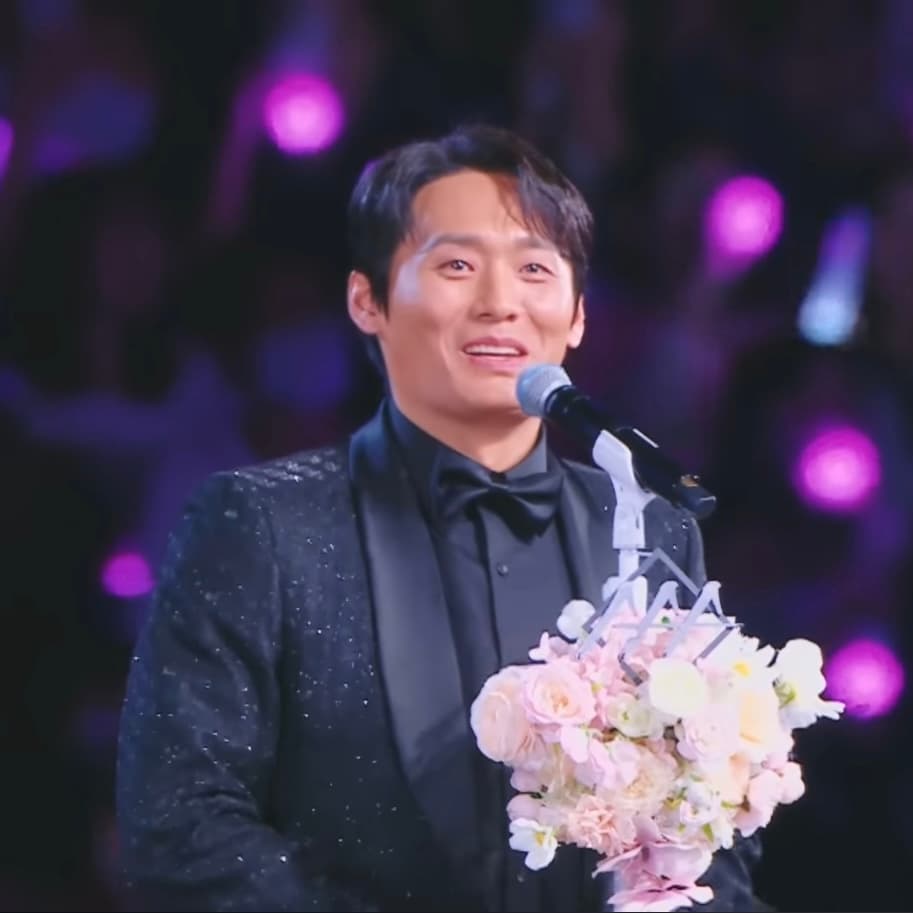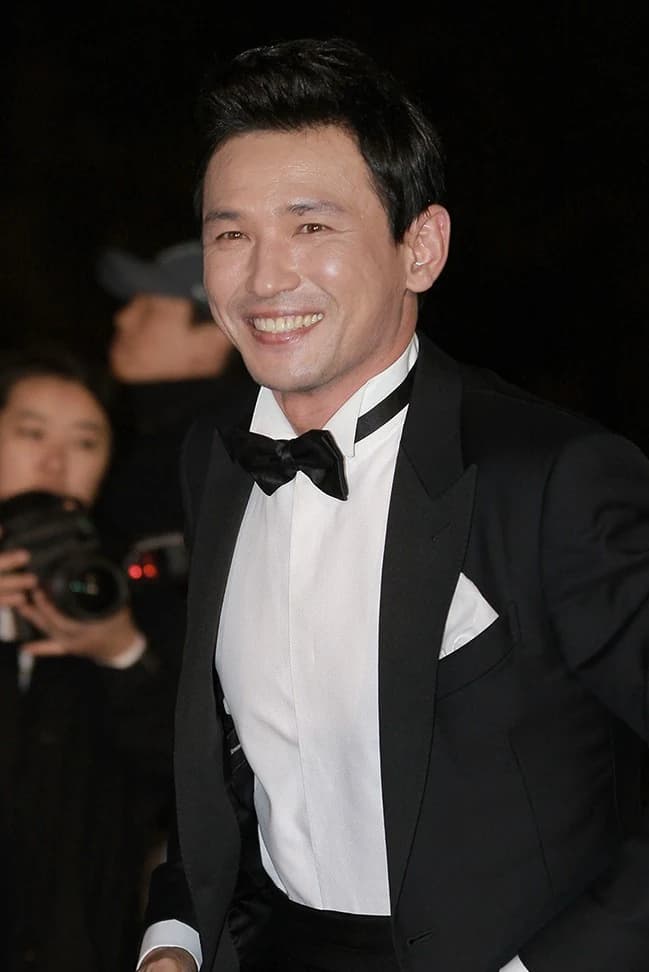
Hwang Jung-min needed a scale for fear in HOPE. He told Cine21 that he treated Bum-seok’s first confrontation as the maximum, then calculated the intensity of other reactions against it. Terror became something he could vary across a performance. July interview.
Role and relationship spoilers: this article discusses Bum-seok’s preparation and village ties, without revealing the ending. The linked interviews contain further spoilers.
A police role with a different source of pressure
The official Cannes synopsis places police chief Bum-seok, played by Hwang, in a village facing an unidentified threat. Officer Sung-ae works alongside him; communications fail and help is diverted by wildfires. His responsibility is concrete even when the danger is not understood. Official film record.
For viewers who know Hwang as Do-cheol in Veteran, another police character provides a useful reference. KOFIC’s account of that film describes a detective investigating a powerful corporate heir. KOFIC retrospective.
The comparison here concerns the assignments: an investigation against a human adversary and an emergency involving an unfamiliar one. It does not mean that Hwang has abandoned the kinds of roles he played before. His HOPE interviews explain a specific new demand—making reactions credible when a scene partner is missing.
Reacting without the other performer’s eyes
In his StarNews Cannes interview, Hwang described how much he normally relies on another actor’s eyes and responses. Creature work required him to imagine that exchange and plan his own reactions with unusual precision. Direct interview.
The percentage scale supplies another part of that method. Hwang told Cine21 that the first encounter set a 100-percent reference point. Other moments could then occupy different positions on the scale, rather than repeating the same intensity. Cine21.
Our reading is that these two accounts describe complementary problems. The actor needs something precise to react to, and a way of placing that reaction within the larger performance. Neither account gives us a complete shot list or permits us to assign a numerical fear score to every finished scene. They do explain why apparently spontaneous panic can require careful preparation.
The chief also belongs to the village
Hwang’s July interview adds a relationship the short official synopsis does not explain: he describes Bum-seok and Sung-ki as second cousins. He also imagines Hope as a clan village and draws on memories of his small hometown. The kinship detail is his account of the characters; the broader village picture is his interpretation for playing Bum-seok. Cine21 interview.
That distinction matters. A police uniform does not cancel local familiarity, but one actor’s preparation should not become a general statement about Korean villages. Nor does a family connection establish that the two men agree. It gives the performer another relationship to hold alongside his character’s official duty.
This article therefore treats village belonging as performance context. It leaves the plot’s questions of trust and individual decisions to the film, rather than using kinship as a shortcut to an explanation.
Even the profanity needed variation
In a separate Cine21 interview, Hwang said he initially suggested reducing the swearing. Na considered it natural under extreme pressure. Hwang then worked on differences in emotion and sound so the language would carry more than repeated abuse. He also recalled how filming in a real Haenam village helped ground the work. May interview.
The relevant Korean-language context is vocal performance: delivery can distinguish reactions even where the vocabulary repeats. Without a checked dialogue track, we cannot turn that observation into a line-by-line translation or judge what any particular subtitle preserves.
Returning to Na with a new acting problem
Hwang told StarNews that he and Na had wanted to work together again after The Wailing. Another proposed film did not proceed; HOPE later brought the reunion, and its science-fiction premise surprised him. StarNews.
The continuity is the collaboration. The change, in Hwang’s account, lies in what he had to do: sustain a local police chief’s reactions while imagining a creature, calibrating panic and varying a forceful voice. Those are useful things to watch for beneath the spectacle.
For the ensemble and trailer, read our HOPE film guide. The Na Hong-jin profile follows the filmmaker’s career beyond this reunion.