The doors close, the bus pulls away, and your card is still in your pocket. You remembered the stop. You forgot the tap.
A missed exit tap can break a transfer and lead to an extra charge on the next ride. It does not mean every Korean bus imposes the same fixed penalty. The answer depends on the operator, fare product and whether the bus was part of a linked journey. This guide focuses on ordinary transit-card travel in Seoul and the surrounding metropolitan network.
First, Separate a Single Ride From a Transfer
Seoul's integrated-fare guidance distinguishes a standalone Seoul city or village bus ride, charged at a flat fare, from a connected journey. Gyeonggi and Incheon buses may use flat or distance-based charging. That is why a friend's experience elsewhere is not a reliable price estimate for your mistake.
For a transfer journey, the city's rule says a missing exit record breaks the connection at that leg. At a subsequent boarding, an uncollected portion of that leg's base fare can be collected after treating it as a separate ride. There is no honest one-number answer that covers every route.
The missing record is the issue. Our explanation of the second bus tap covers the normal journey; here, the useful question is what to do once that record is absent.
At the Next Reader, Look at the Transaction
Use your own card as usual and pay attention to the amount deducted and balance shown. If the charge is unexpected, note the time rather than assuming the whole amount is a penalty. A new fare and an adjustment for the previous ride are different things.
Keep the same physical card available for any enquiry. Switching cards cannot repair the travel history stored against the first one. If you are also uncertain about balance checks, use the T-money practical guide.
Do not chase a departing bus or try to use another vehicle's reader as a substitute exit. Once you have safely stepped off, reconstructing the trip is more useful than improvising a tap somewhere else.
Give Support a Journey They Can Identify
Write down the bus number, boarding and exit stops, approximate times, card product and unexpected amount. A brief note on your phone is enough to stop the details blurring together later.
Ask the operator or card provider whether the transaction can be checked. Seoul's official transfer page lists 02-120 for city enquiries. This is a contact route, not a promise that every accidental missed tap will be reversed.
You can describe the mistake with 내릴 때 카드를 안 찍었어요 (naeril ttae kadeureul an jjigeosseoyo): “I didn't tap my card when I got off.” Add the route and time. Do not share your full card details in a public comment or social post.
Your Next Ride Needs a Fresh Habit
As your stop approaches, put the card you boarded with where you can reach it. Request the stop, then complete the exit tap before leaving. Those are two separate actions.
This article does not apply an ordinary stored-value card's charging rules to unlimited passes. If you used a pass rather than ordinary T-money balance, check that product's missed-tag policy. A calm check of the actual trip beats a universal “fine” copied from a different city's bus system.
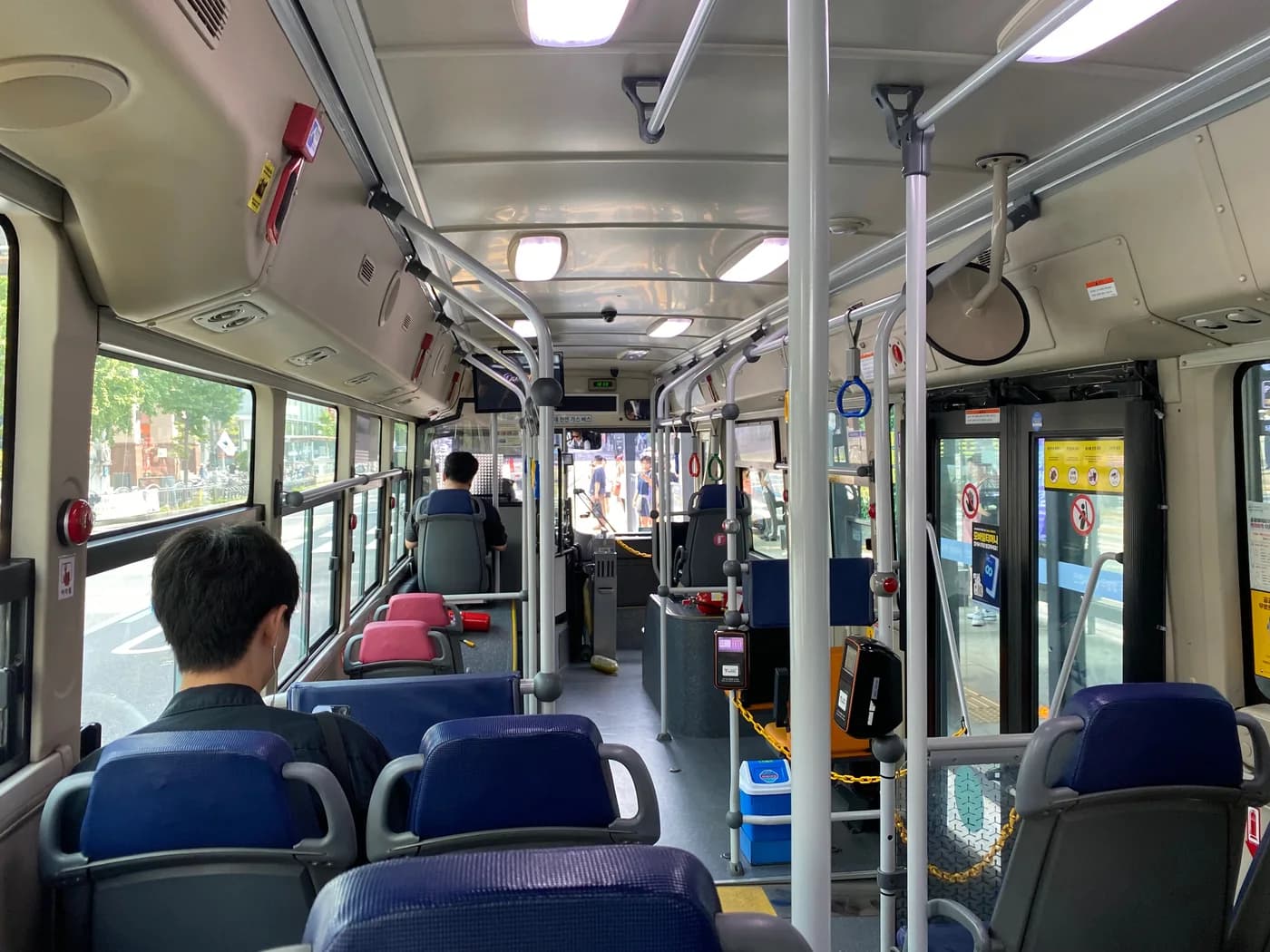
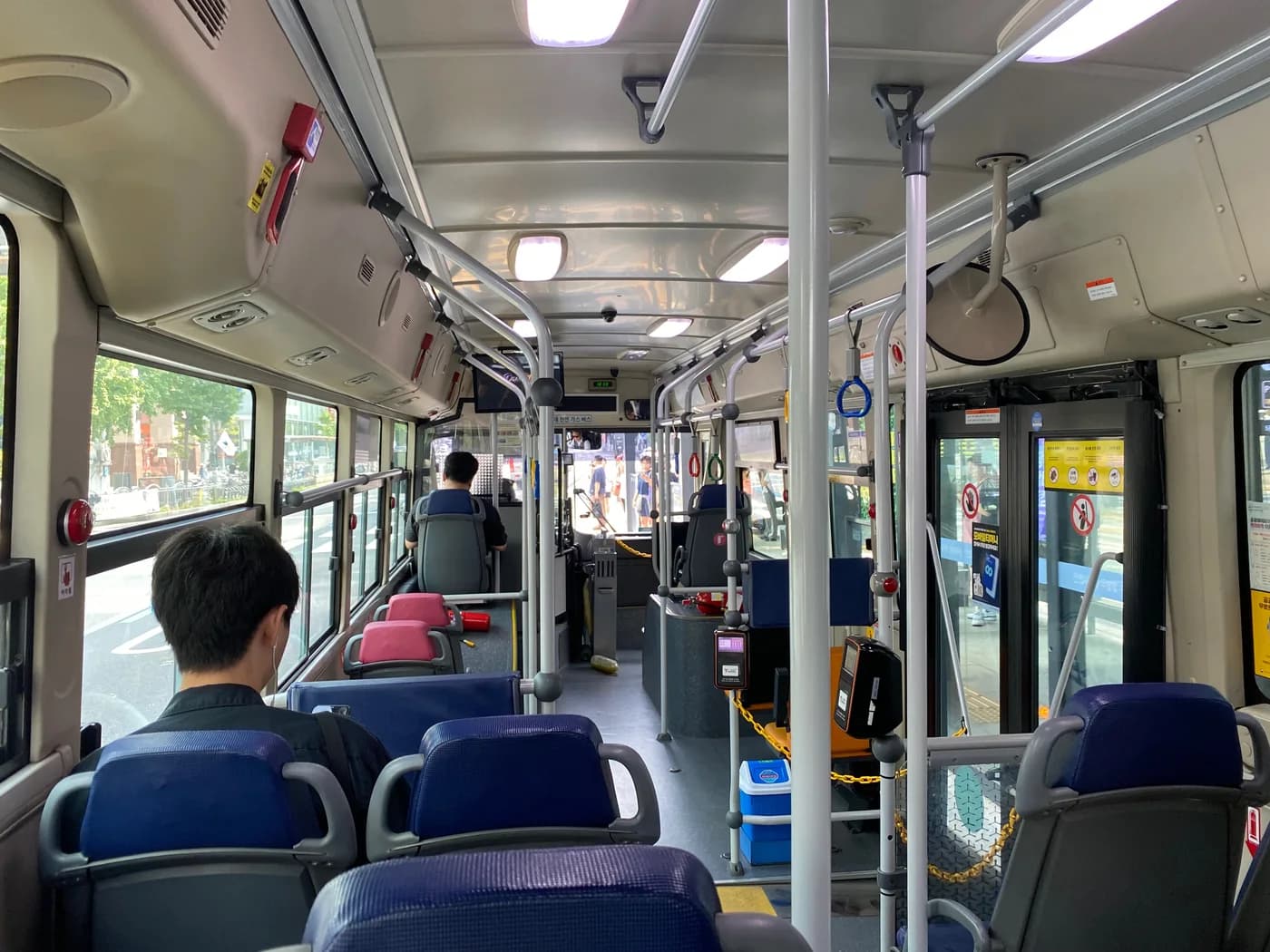
Photo context: Archive photograph, August 20, 2024. Red stop buttons and the separate exit card reader are visible. Vehicle layouts vary; this is not a photograph of a missed-tap incident. Sgroey / Wikimedia Commons, CC BY-SA 4.0; resized and converted to WebP by KSPILL. Source photograph; license.