Japchae usually contains dangmyeon: glass noodles made from sweet potato starch. They are not ordinarily rice noodles, even though their pale, translucent appearance can suggest that to someone encountering the dish for the first time.
The Korean Cultural Center Los Angeles describes this standard combination as dangmyeon with vegetables and meat, seasoned with soy sauce and sesame oil. The noodle and the finished dish have different names.
Dangmyeon is the noodle; japchae is the dish
If you are trying to identify the strands on your plate, dangmyeon is the useful word. Japchae refers to the prepared dish around them.
That difference matters when shopping. A bag of noodles supplies one ingredient; it does not supply the vegetables, seasoning or other additions needed to reproduce a particular restaurant's serving. Check the package's ingredient list rather than relying only on an English “glass noodles” label.
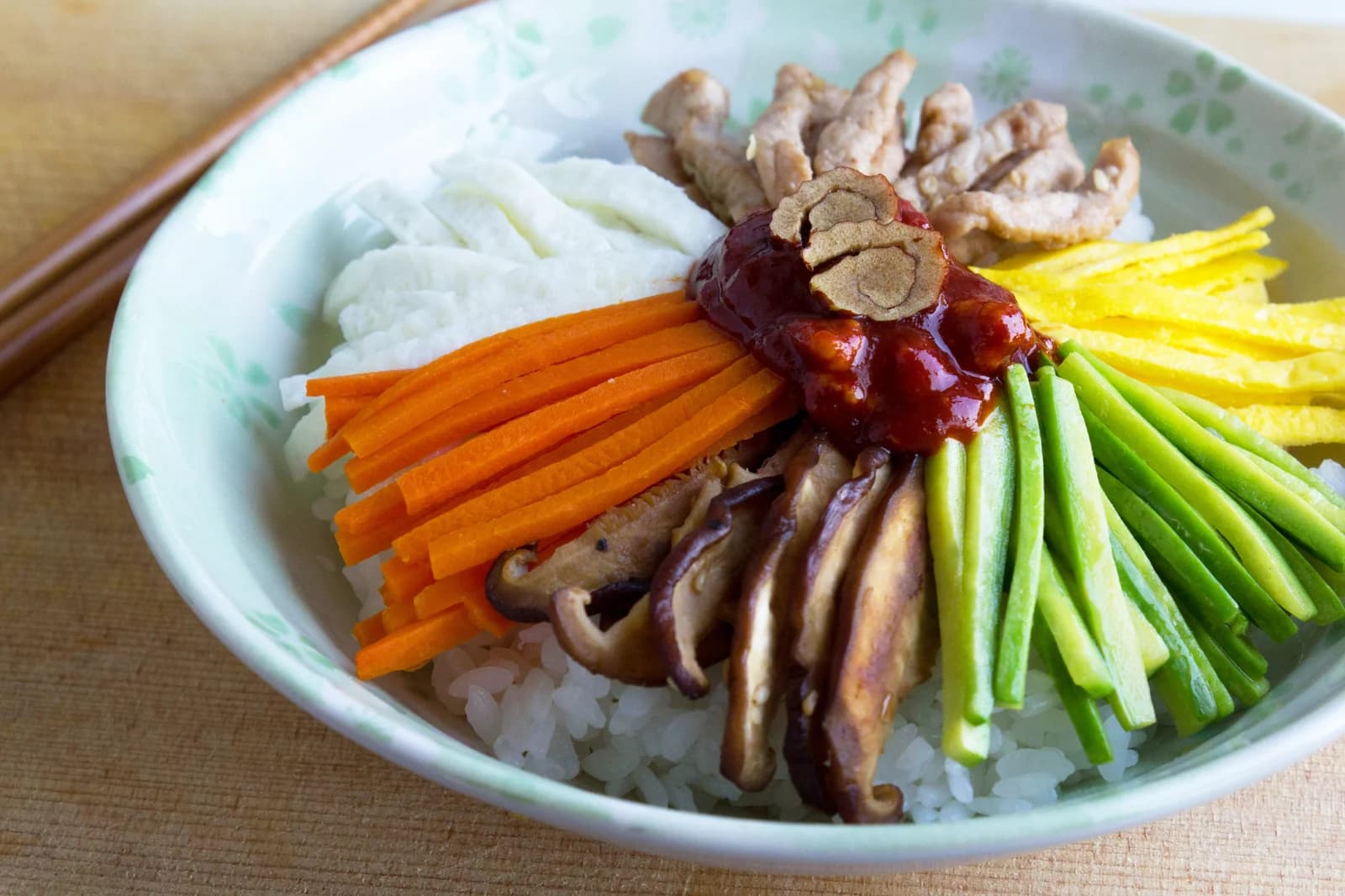
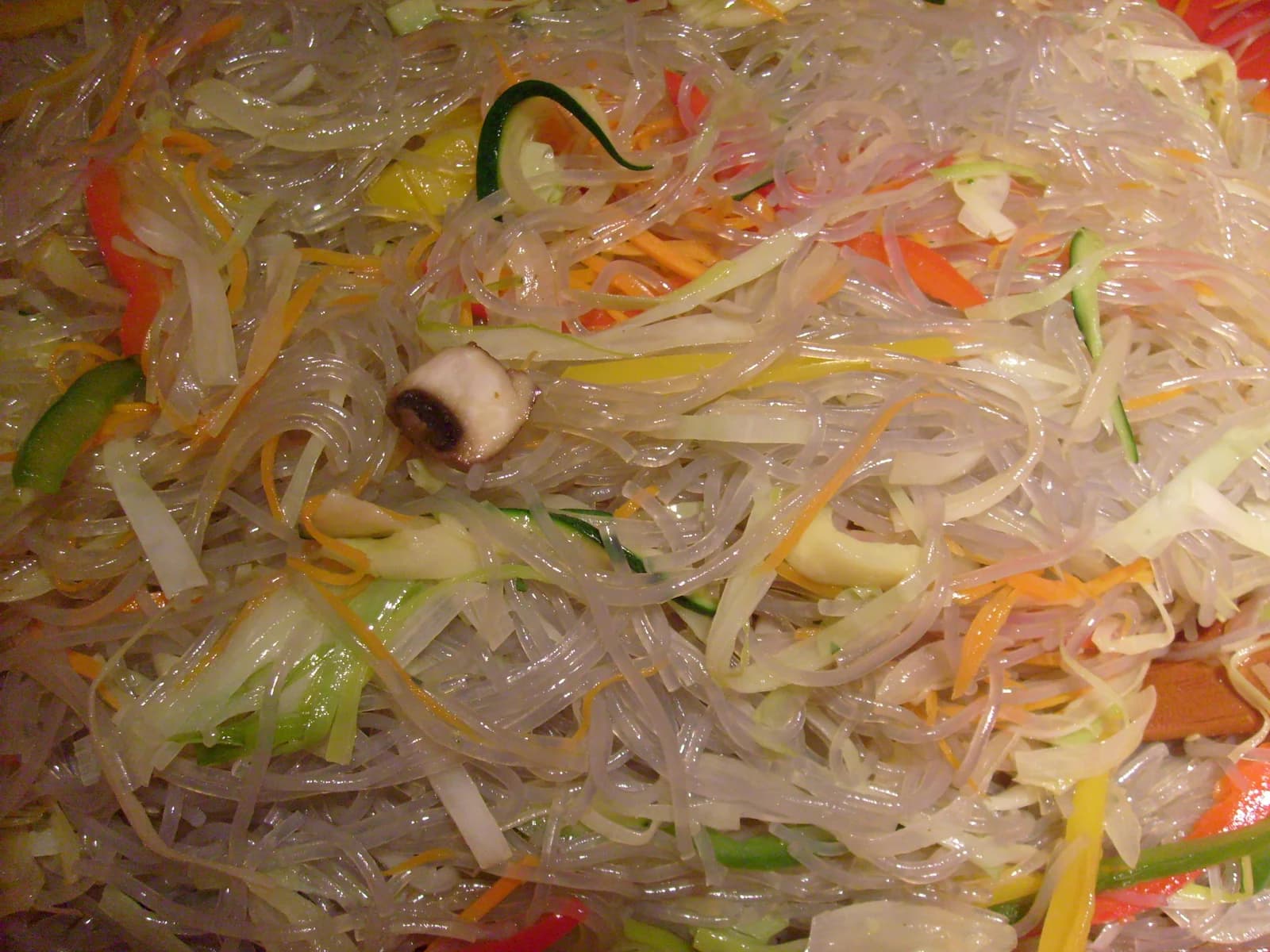
In the archive photograph above, the translucent noodles are easy to distinguish from the sliced vegetables. The image shows their appearance, while the official food sources establish the ingredient explanation. A photograph alone cannot prove which starch a cook used.
A vegetable dish can still contain meat or egg
Korea.net's recipe, prepared with the Institute of Traditional Korean Food, combines starch noodles with several vegetables, beef and egg garnish. It also notes possible variations involving pork, spinach and oyster mushrooms.
The visible vegetables therefore do not establish that a plate is vegetarian. Nor does knowing the noodle's starch tell you everything about the sauce. When ingredients matter to you, ask about the complete dish rather than only the noodles.
There are named variations as well. The Korea Tourism Organization describes a bean-sprout japchae version without meat. This is a reason to read the menu carefully, not to assume all japchae follows that version.
Why japchae appears beyond noodle restaurants
The Korean Cultural Center's introduction associates japchae with holidays and parties. It can consequently appear as part of a larger spread, rather than arriving as the only dish you ordered.
That also explains why a small serving on a restaurant table need not follow the refill rules for simple side dishes. Our guide to banchan refills explains why labor-intensive dishes can be treated differently.
For another noodle-table surprise, why Koreans use scissors for food covers the utensil question. For japchae itself, keep the two names separate: dangmyeon identifies the noodle; japchae names the dish whose full ingredients can vary.