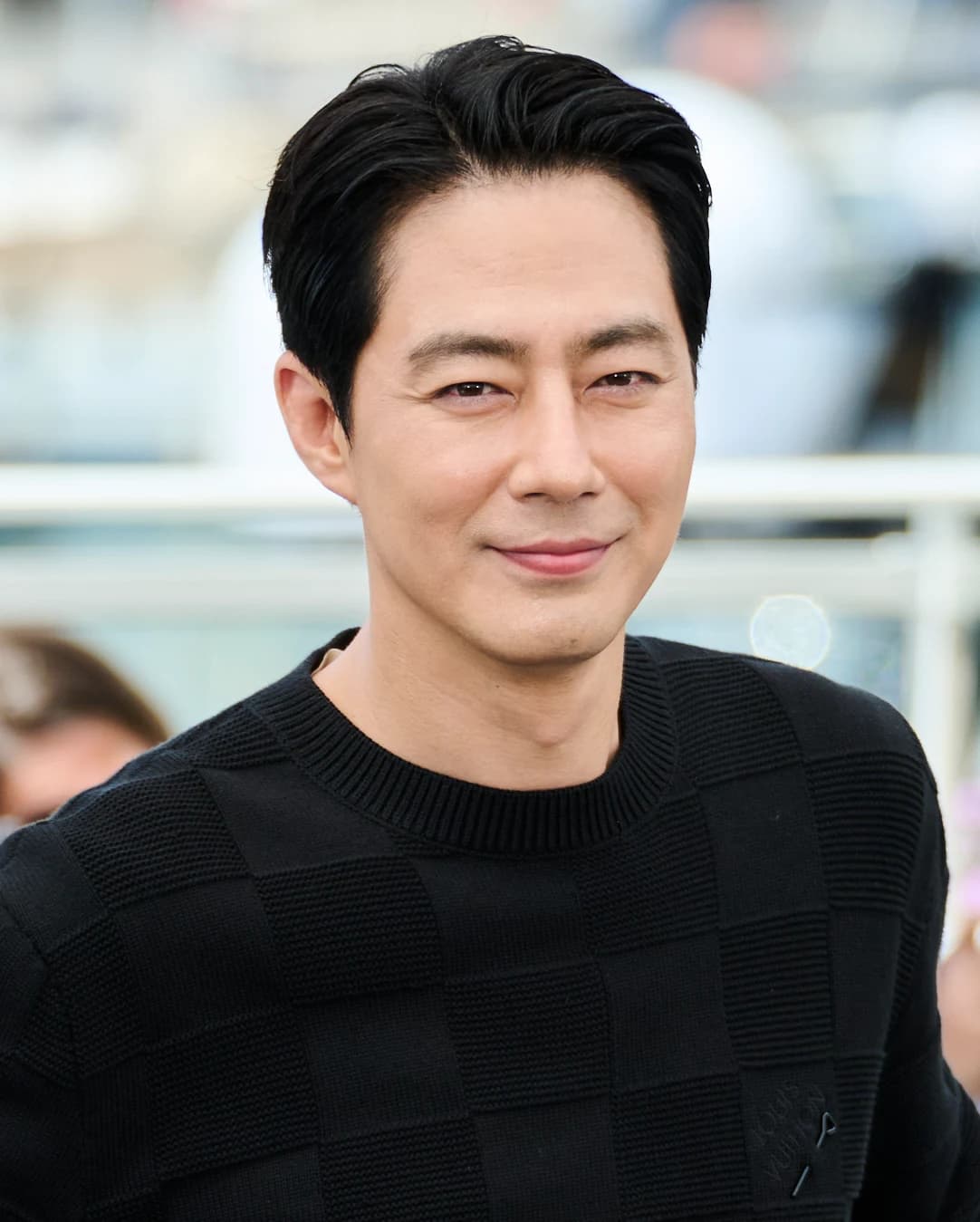
Zo In-sung has played men who want power, men who wield it and men trying to survive its collapse. HOPE gives him Sung-ki: a hunter whose standing makes sense inside one small community, until a threat arrives that the community cannot understand.
That is the interesting shift in his first film with Na Hong-jin. Action is already a substantial part of Zo’s career. Here, familiar physical confidence meets a situation in which knowing how to fight offers no guarantee that you know what you are facing.
Spoiler scope: official premises and limited performance details from actor interviews. No ending or character-fate revelations. The linked interviews contain stronger spoilers.
Sung-ki carries the forest side of HOPE
Cannes officially credits Zo In-sung as Sung-ki. Its synopsis separates two fronts: police outpost chief Bum-seok and officer Sung-ae defend the village, while Sung-ki and other locals search in the mountains. NEON identifies his group as hunters, whose pursuit becomes a struggle to evade the creature themselves. Cannes cast and synopsis, NEON.
That gives his place in the ensemble a clear foundation. Sung-ki is part of the community’s response, alongside the police response, rather than another officer in the same chain of command. For the wider setup and the verified official trailer, see our HOPE film guide.
Our reading of this arrangement is that the film can test different kinds of authority simultaneously: an official role, influence among neighbors and the confidence of a person used to acting. Those positions need not confer the same ability to understand a crisis.
Local importance can fit inside a much larger hierarchy
In his July Cine21 interview, Zo placed Sung-ki’s youthful group below the fishing-community seniors, with Bum-seok above them. He approached Sung-ki as a local leader with a boyish streak. This is the actor’s account of the role. July interview.
His May interview adds a complication: Sung-ki lacks a settled occupation but belongs in a community where neighbors help each other with different jobs. Zo cautioned against assigning HOPE a precise period. May interview.
For an overseas viewer, the useful point is that an employment label does not exhaust a person’s social position. In Zo’s description, Sung-ki can have little formal standing and still command attention within his own circle. This explains the fictional character’s environment; it is not a claim about every Korean village or contemporary rural employment.
The Korean term 형님 (hyeongnim) appears in the interview’s discussion of older men in that hierarchy. The National Institute of Korean Language’s dictionary includes its respectful use between men who are not siblings. Here, “older brother” should not automatically be read as a family-tree entry. Familiarity and acknowledged seniority can coexist. This is context for the interview’s wording, not a claim that we have checked every address or speech-level change in the film. Dictionary entry.
For the professional position on the other side of that relationship, our Sung-ae and Jung Ho-yeon profile follows the preparation behind the officer’s role.
The action depends on a moment he cannot classify
For a forest close-up, Zo described a pause caused by encountering something outside Sung-ki’s experience. The character cannot immediately understand what he sees. This is the actor’s stated performance intention, rather than our inference from a trailer frame. July interview.
Our interpretation is that this briefly separates looking capable from possessing useful knowledge. Sung-ki’s body may be ready to respond before his understanding catches up. It makes an established action performer useful to a film about uncertainty: the audience can recognize physical assurance while the character loses his bearings.
Zo’s May interview describes coordinating a horse and vehicle for the action. Physical performance and planning work together here; his account does not establish that every dangerous shot was performed without stunt or visual-effects assistance. May interview.
His screen history already complicates the leading-man image
Viewers arriving through The Classic (2003) or television melodrama may carry one image of Zo into HOPE. His film work has long supplied others. KOFIC’s profile identifies A Dirty Carnival (2006), in which he plays a gangster, as a major acting breakthrough. It also records his return to director Yoo Ha for A Frozen Flower (2008), a historical story of desire and conflict. KOFIC career profile.
Those credits make a simple “romantic star turns tough” narrative inadequate. The more productive comparison concerns the kind of power available to each character:
- The King (2017): Park Tae-su seeks influence through a prosecutor’s office and powerful connections. His ambition operates inside recognizable institutions. KOFIC’s role announcement.
- Escape from Mogadishu (2021): Zo appears as a South Korean embassy counselor in a survival story involving people from the two Koreas. The ensemble must find a way out of a civil-war emergency. KOFIC’s film introduction.
- Smugglers (2023): he plays a powerful smuggling figure within Ryoo Seung-wan’s ensemble centered on women divers. Authority and physical menace are already part of this screen persona. Director interview and role account carried by KOFIC.
The roles are documented; the comparison is ours. HOPE relocates that history into the life of a man whose influence is much smaller than the danger he encounters. It lets the recognizable star and the character’s limited place in the world pull in different directions.
Working with Na expands the assignment, not just the scale
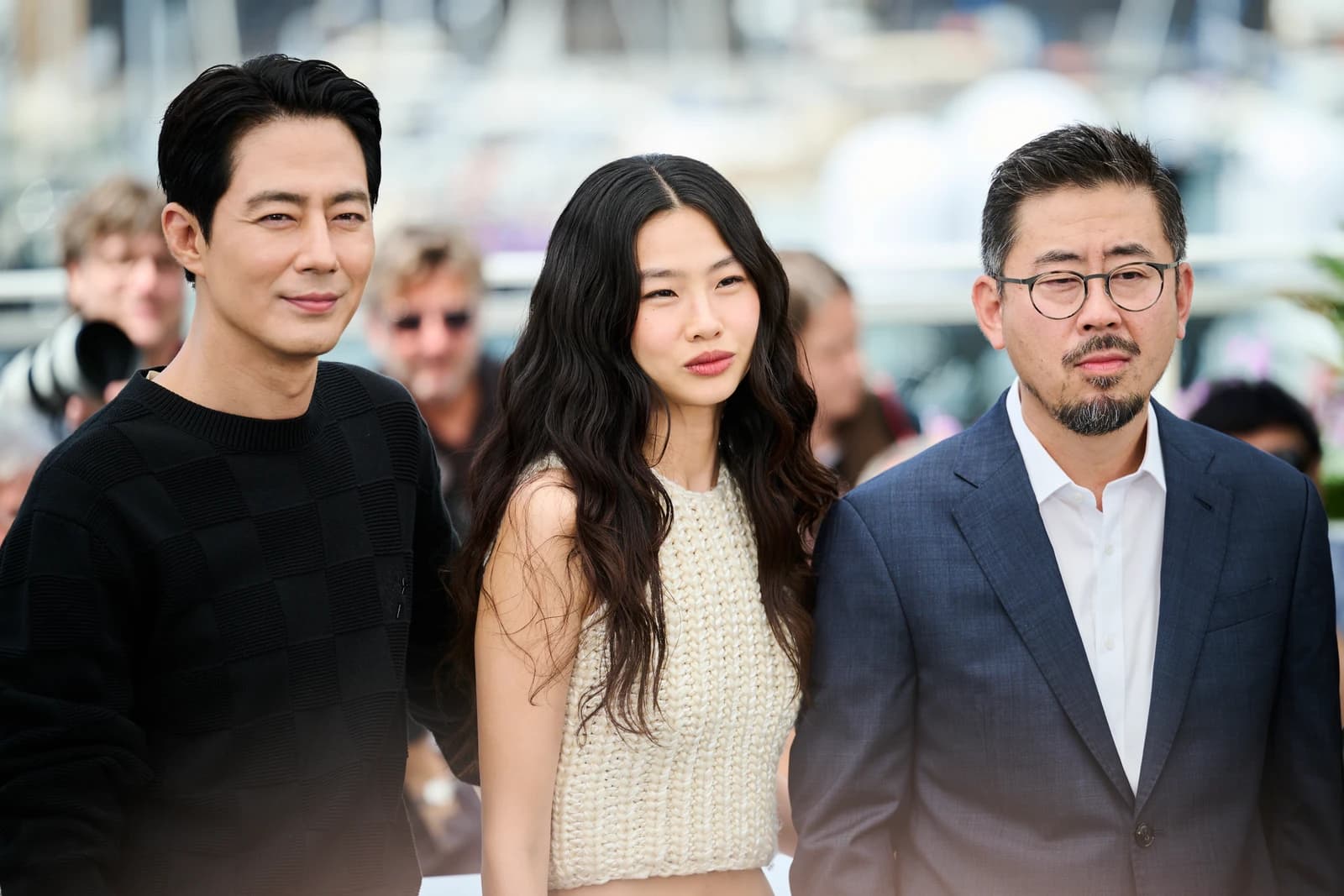
Discussing his first collaboration with Na, Zo compared him with Ryoo Seung-wan and Lee Chang-dong: different working styles, with a shared commitment to the film. Cine21.
The broader career record remains varied: KOFIC lists HUMINT and Possible Love alongside HOPE among his 2026 films. That supports seeing HOPE as one direction within an active film career, rather than proof that he has permanently exchanged one genre for another. KOFIC filmography.
Internationally, Cannes identifies HOPE as a South Korean production, while NEON and Madman provide distinct US and Australian release platforms. A multinational cast and overseas distribution broaden the audience for the work; they do not turn it into a Hollywood production or establish a future overseas career. Cannes, NEON, Madman.
For a fuller account of the filmmaker’s methods, read our Na Hong-jin director deep dive. Sung-ki offers a specific way into that work: a man with a recognizable place among neighbors, tested beyond the knowledge that once made that place feel secure.
Evidence note: official credits establish the role; the actor’s published interviews supply the performance and community context; comparisons between films are KSPILL’s interpretation. No audience theory, unverified dialogue transcript or private-life inference is used to explain Sung-ki.
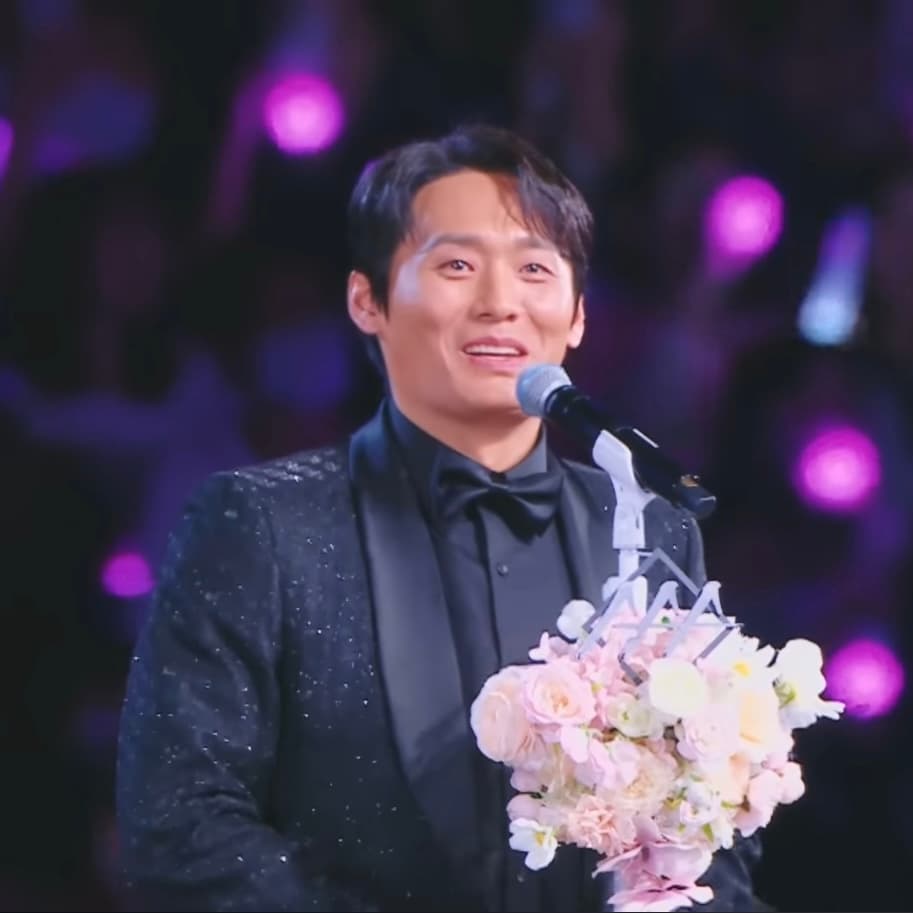
Hero: Zo In-sung at the HOPE photocall in Cannes, May 18, 2026. This is the actor at a press event, not Sung-ki in costume. Gabriel Hutchinson / WikiPortraits via Wikimedia Commons, CC BY-SA 4.0. The locked Commons crop and dimensions are retained; KSPILL converted the photograph to WebP. The adapted photograph retains the same license.




.jpg)