
Finding the danger should make a thriller easier to understand. With Na Hong-jin, it can make the next decision harder. Who can act? Who deserves your trust? What if the person trying to help has understood everything wrong?
That is our way into HOPE, the South Korean director’s move into science fiction. Its international ensemble is an obvious attraction. The deeper interest lies in what happens when a filmmaker associated with pursuit, violence and uncertain judgment gives those concerns a different kind of threat.
This is a reading of his career through documented premises, production records and interviews. It discusses early setups and casting, without explaining the films’ endings.
The Chaser makes pursuit morally uncomfortable
Na’s feature debut, The Chaser (2008), puts a former detective turned pimp on the trail of missing women. His initial concern is financial. The official Cannes synopsis then turns the pursuit into a race to find a woman who may still be alive—even after a suspect is caught. (Cannes synopsis)
The distinction matters: identifying a suspect and protecting someone are separate problems. Our reading is that the premise denies viewers the comfort of a spotless rescuer. You can want the search to succeed while finding its central figure deeply troubling.
There is direct support for discussing moral inversion here. In Cannes’ 2008 account, Na described the film as a tribute to noir and connected it to social deterioration. He also stressed realism as a means of communicating a story. Those are his stated concerns; the idea of an uncomfortable rescue is our interpretation of the setup. (Na’s Cannes remarks)
The Yellow Sea turns distance into pressure
The Yellow Sea (2010) broadens the terrain. Its official press kit introduces Gu-nam as a debt-burdened taxi driver in Yanji, in China’s Yanbian region. His wife has gone to South Korea for work; a killing offers a route out of his financial predicament.
For overseas viewers, one distinction is crucial: the Korean-Chinese community described here is not interchangeable with South Korean society. Crossing the sea carries questions of money, work and belonging into the thriller. The criminal plot should not be read as a portrait of an entire ethnic community.
The production notes document filming in China and across South Korean locations. Our comparison with The Chaser is about pressure: the first film tightens a search through urban streets; this one makes movement across borders part of the trap. Violence sits within that precarious situation, rather than offering a clean measure of who is right. (Official press kit, synopsis and production notes)
The Wailing moves the crisis into judgment itself
In The Wailing (2016), a rural police officer faces a mystery that reaches his own daughter. The official press kit foregrounds rumor and suspicion. It also describes a shaman whom the father cannot confidently judge but feels compelled to rely on.
That overlap is useful cultural context: the same character is both a public official and a frightened parent. His uniform does not remove his private vulnerability. Nor should the film’s ritual imagery be taken as a guide to what all Koreans believe.
Na gave a precise account of his method in a KoBiz interview. He said the editing differed from his earlier films and took time because he was working out its psychological effect on viewers. Actor Kwak Do-won separately emphasized the father’s love for his daughter. The filmmaker’s account concerns construction; the actor’s concerns motivation. (KoBiz interview)
Our reading: tension comes from having to decide before you feel qualified to decide. That is a different pleasure from simply solving a mystery.
The landscape is constructed just as carefully. The press kit records scouting across multiple locations and selecting the central house for its layout and gate. Its fictional village is an assembled cinematic space, even where real places supply the material. (Official press kit, character and location notes)
HOPE changes the threat and keeps the unstable footing
NEON’s premise places a mysterious creature near a remote Korean village and explicitly questions perception. That gives the career comparison a factual starting point: people must respond to something they do not adequately understand. (NEON)
Science fiction expands the possible threat beyond the crime and supernatural frameworks of the earlier films. But a new genre does not mean a simple, predictable emotional register.
In a September 6, 2026 direct interview with Slant, Na said he wanted viewers to be uncertain whether a moment invited laughter or fear. He also explained that he chooses a genre before writing, then experiments within it. That supports discussing tonal shifts as a deliberate method, rather than diagnosing them from trailer fragments. (Slant interview)
The community remains the point of contact. Cannes’ synopsis gives the local police an elderly population to protect with communications cut and reinforcements elsewhere. Our inference is that an enlarged threat can make local limits more important: distance from help becomes part of the dramatic problem. (Cannes)
International collaboration has a history here
HOPE brings Michael Fassbender, Alicia Vikander and Taylor Russell into an ensemble alongside Hwang Jung-min, Zo In-sung and Hoyeon. Cannes credits Forged Films, Plus M and Westworld in production roles, and Plus M for international sales. NEON and Madman provide separate US and Australian distribution routes. This establishes the collaboration’s reach without requiring an unverified budget or a “biggest ever” claim. (Cannes credits, NEON, Madman)
The casting also has a stated creative basis. In the Slant interview, Na connected it to the pronunciation of an invented language and the emotional demands of the nonhuman characters. Those are his explanations, not evidence that every casting choice followed a single commercial strategy. (Direct interview)
International involvement itself is not new. KOFIC records Fox financing on The Yellow Sea and Fox’s Korean production involvement in The Wailing. HOPE extends a career already working across national industry boundaries. (KOFIC career profile)
A place in Korean cinema, and a way to watch
Na’s position joins commercial genre filmmaking to festival circulation. KOFIC documents The Chaser’s domestic breakthrough; the earlier films’ Cannes appearances precede HOPE’s 2026 Competition selection. That history explains why his name carries expectations beyond a new cast announcement. It does not make him a stand-in for every Korean filmmaker. (KOFIC, Cannes)
Try following three questions across these films: Who has information? Who has the power to act? Who bears the cost of a mistake? This is our suggested viewing lens, not a secret key supplied by the director. It makes room for differences between the films while explaining why his move into sci-fi is worth examining.
This director profile is the companion to KSPILL’s HOPE (2026): Inside Na Hong-jin’s Korean Sci-Fi Thriller, which focuses on the cast, official trailer and release information. Browse our Film coverage for available stories, or visit Madman’s HOPE page for the official trailer.
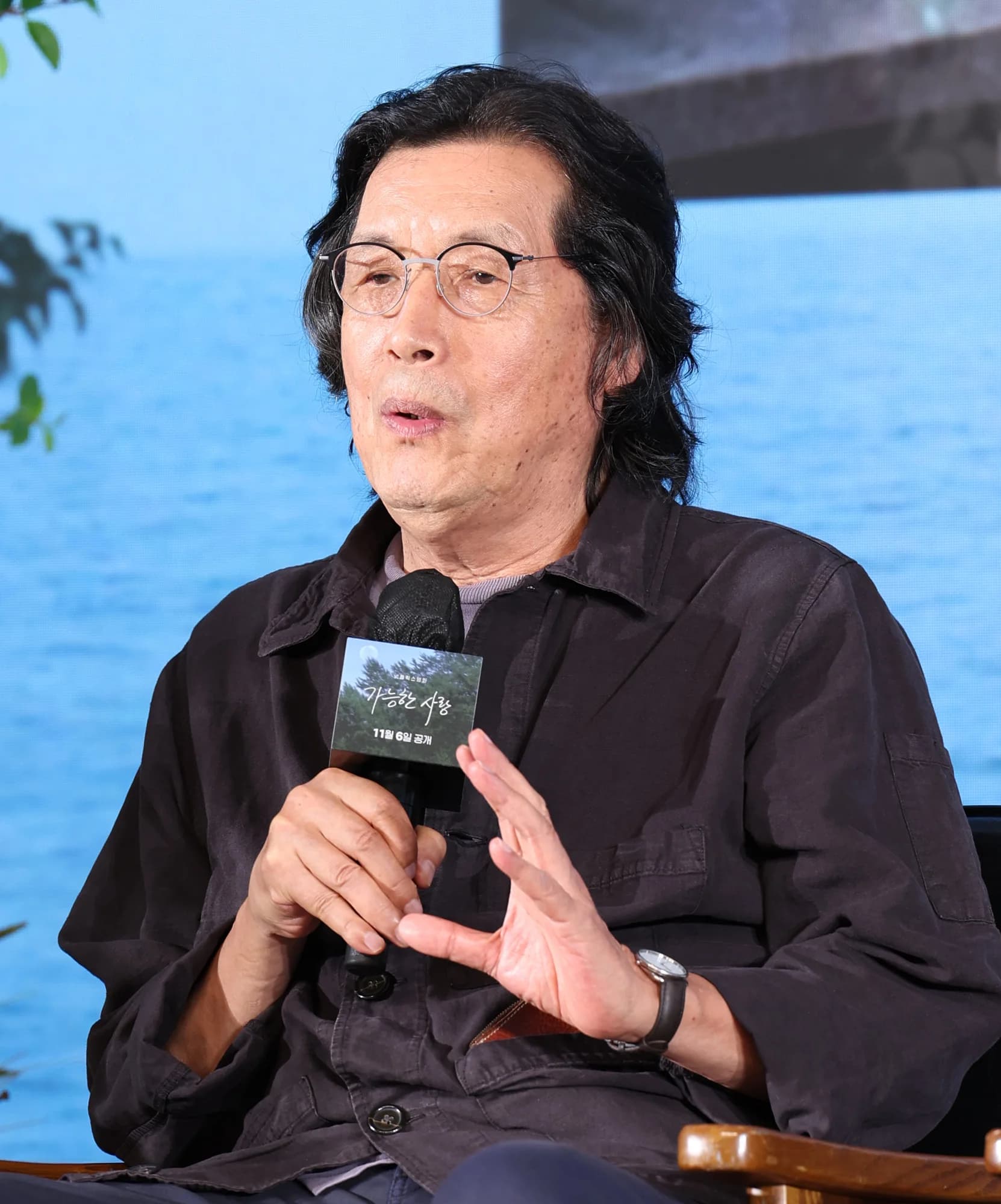
Portrait: Na Hong-jin at the HOPE photocall in Cannes on May 18, 2026, not a production still. Gabriel Hutchinson / WikiPortraits via Wikimedia Commons, CC BY-SA 4.0. The existing Commons crop is retained; KSPILL resized and converted it to WebP. The adapted photograph retains the same license.











.jpg)