The loose green leaves beside Korean barbecue are often lettuce and perilla leaves, provided for making ssam: a small wrap around a piece of food. They are an edible part of the meal. You can put cooked meat inside a leaf, add a little paste, fold it around the filling and eat it.
If the basket looks like an unfinished salad, that is the missing step: the diner assembles the bite at the table.
The leaves on the plate
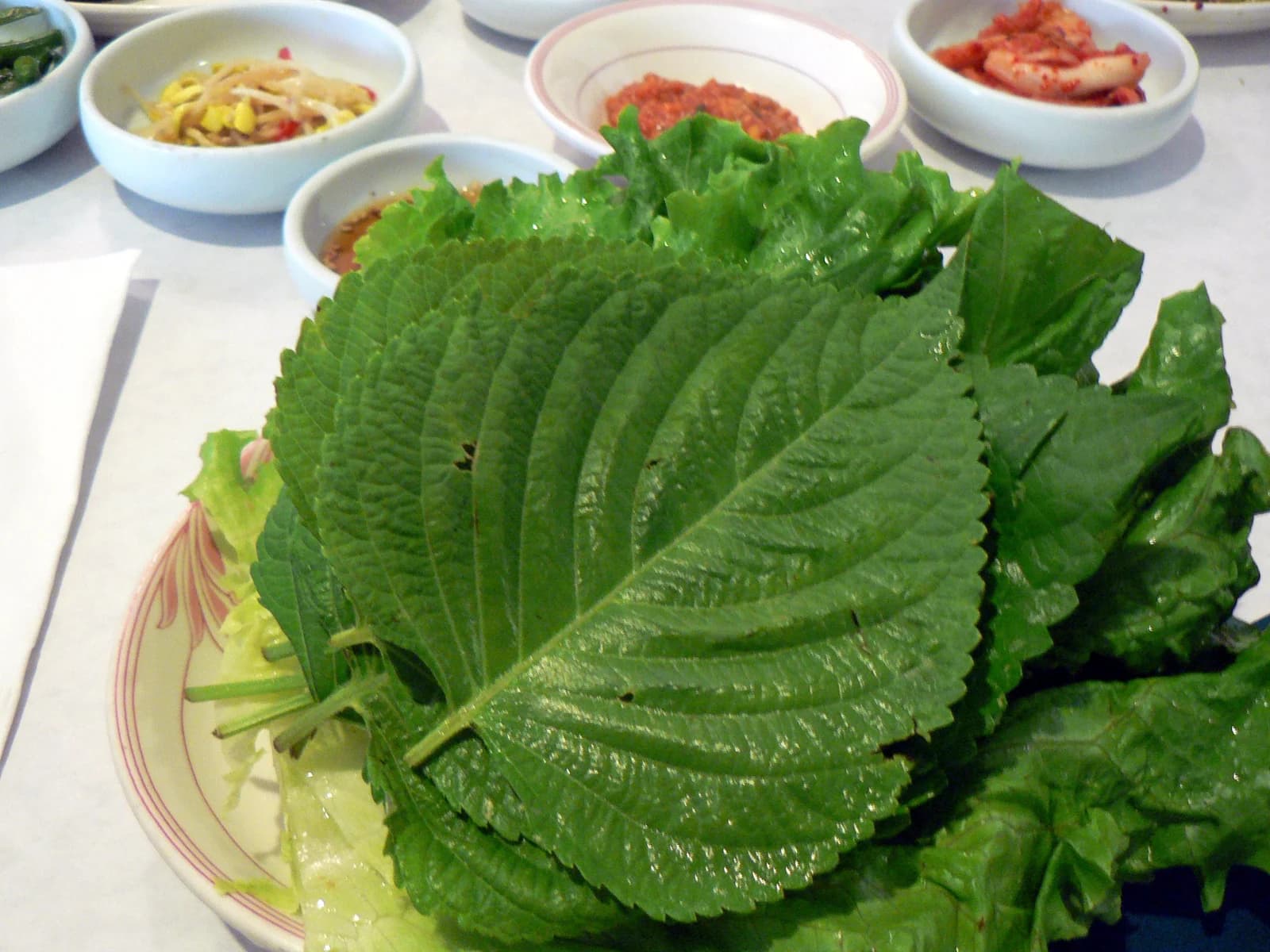
The archive photograph above shows broad, toothed perilla leaves in front of lettuce. It is an example of wrapping greens, not a guarantee of what every restaurant supplies. The Korea Tourism Organization lists lettuce and perilla alongside cabbage and napa cabbage among the leaves used for ssambap, rice eaten in leaf wraps.
That distinction is useful when ordering. Ssam describes the wrap; ssambap puts rice into the picture. You do not need to order a separate ssambap set to encounter leaves beside grilled meat.
Build a small bite, then adjust
For a first try, keep the filling modest:
- Choose one of the supplied leaves.
- Add a small piece of cooked meat.
- Add a little ssamjang if you want seasoning.
- Fold the leaf around the filling.
Rice can be part of the wrap, too. The tourism organization's ssambap guide describes rice, meat or fish, optional paste, garlic and chili combined in bite-sized portions. Treat those as choices rather than a checklist: the first wrap need not contain everything on the table.
A smaller wrap is easier to manage than an overloaded one. If your first attempt falls apart, use less filling next time.
What is the paste beside the greens?
Ssamjang is a red chili and soybean paste mixture used with the wrap. The official galbi guide describes adding it or garlic according to preference. It also explicitly allows eating the cooked meat on its own. Wrapping every piece is not an obligation.
This makes the table more flexible than a single finished plate. One diner can take a plain piece of meat while another combines it with leaves and seasoning.
For the other objects and dishes around the grill, see why Korean restaurants use food scissors and how banchan refills work. The leaves have a specific job: they let you assemble your next mouthful.