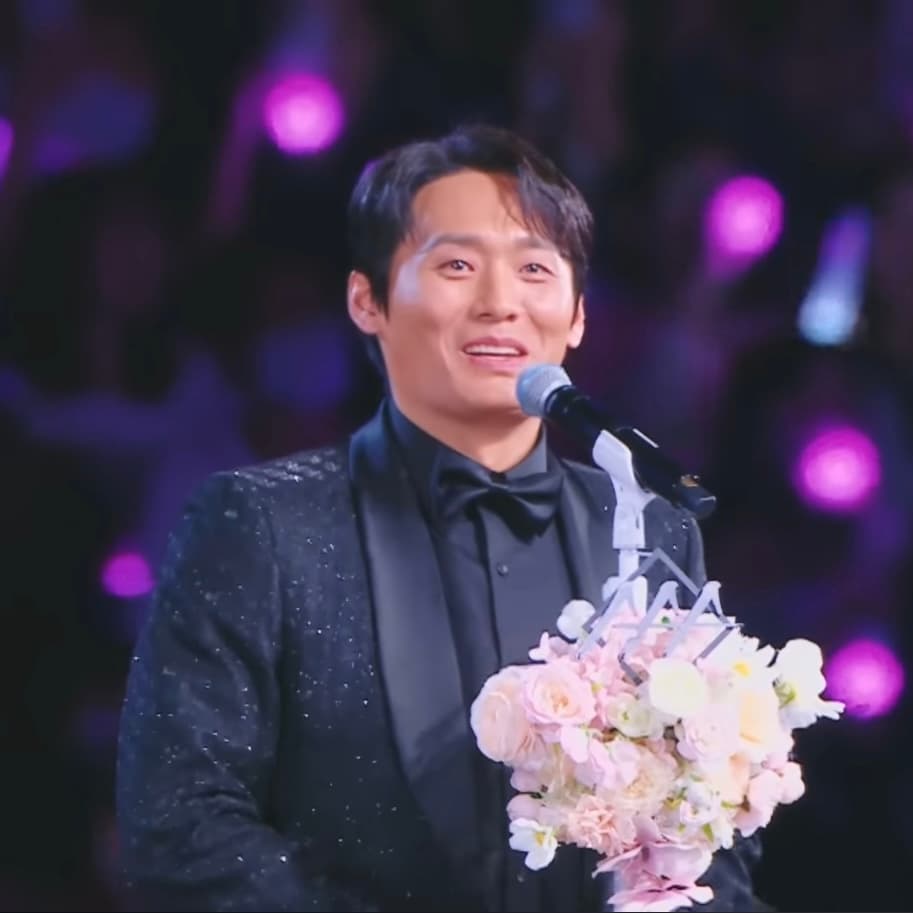
You may recognize Choi Dae-hoon before you recognize his name. Perhaps it is Bu Sang-gil from When Life Gives You Tangerines, the character associated with the Korean catchphrase “Hak-ssi.” Perhaps it is the man whose hands acquire a particularly inconvenient superpower in The WONDERfools. Or perhaps you remember him from the much less playful world of Beyond Evil.
Those connections are a better introduction than a long list of credits. Choi is a South Korean actor whose recent roles ask audiences to respond to very different kinds of men: someone caught inside a crime drama’s web of relationships, someone remembered through a family saga, and someone struggling to become a hero. His current career is interesting precisely because one recognizable face does not promise one familiar personality.
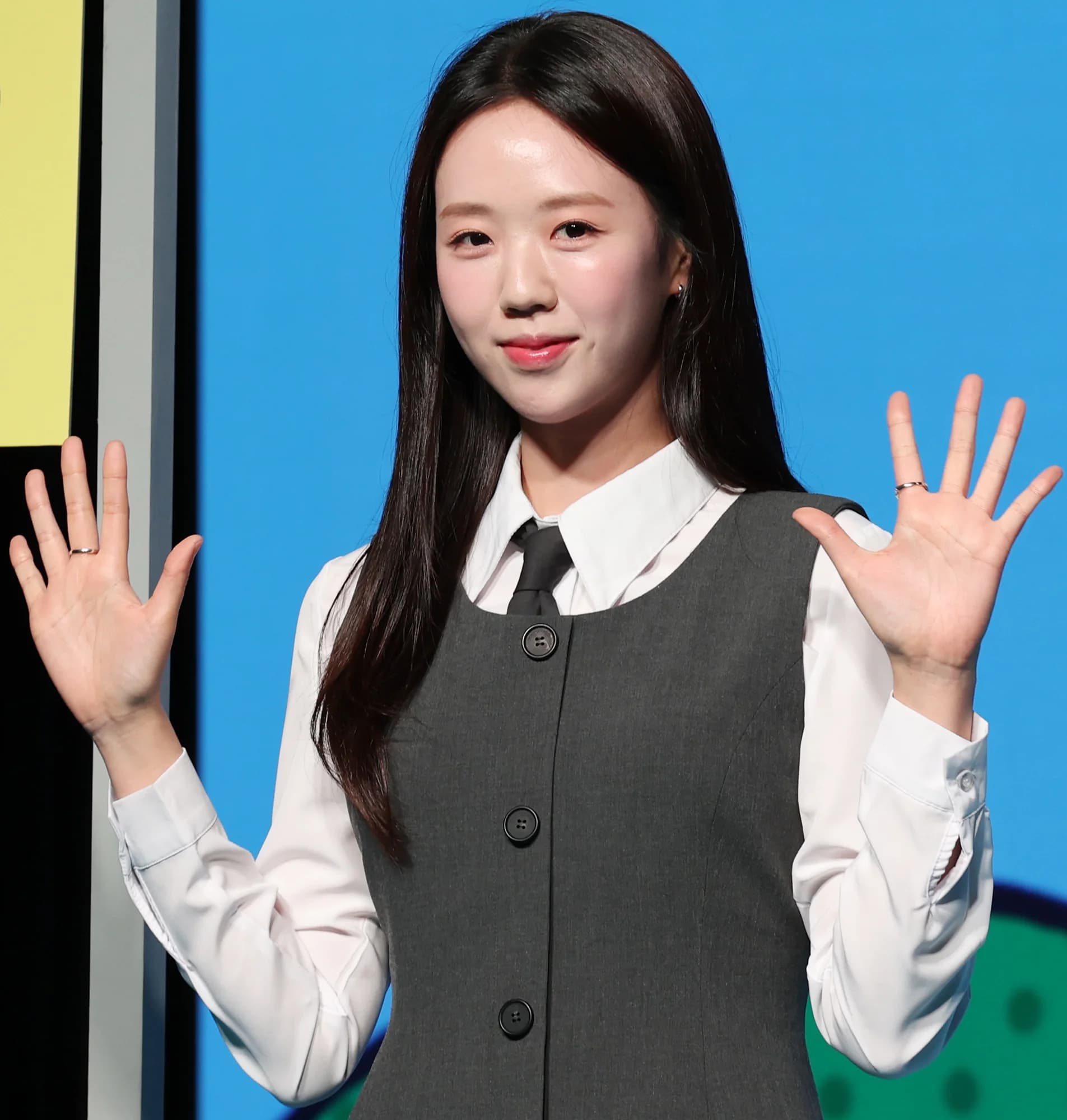
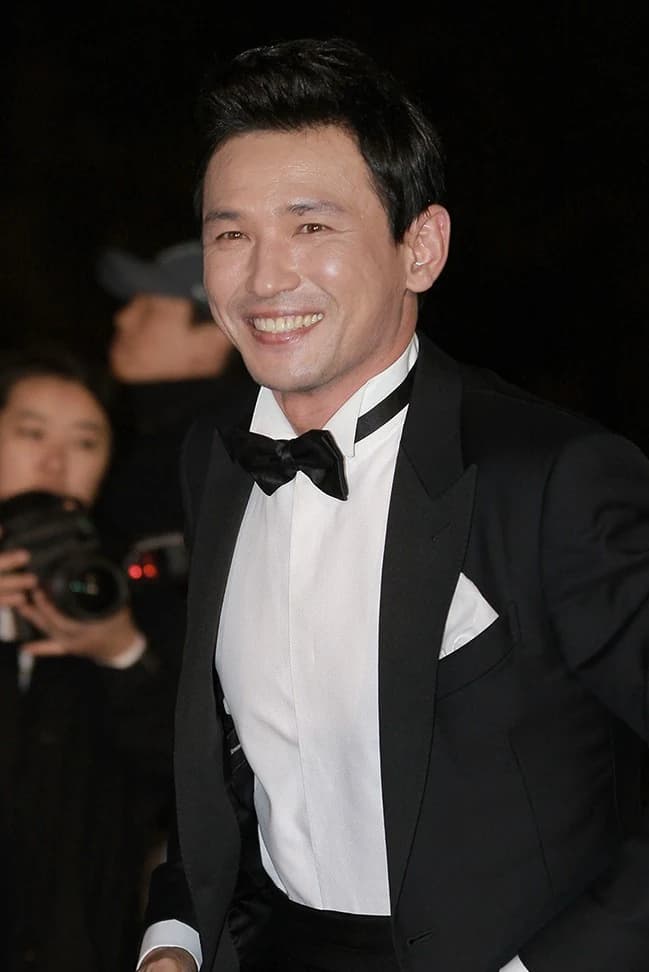
Image context: The selected Hero shows Choi at the Asia Artist Awards on December 6, 2025. It is an archival still from the credited video, not a scene from any drama discussed here or a photograph of a 2026 appearance. Credit: @star_setn, via Wikimedia Commons, CC BY 4.0. The Commons image is reproduced without modification.
Spoiler scope: This career guide discusses official character premises and professional interviews. It does not reveal the resolutions of Beyond Evil or the later plot turns of the other series.
A breakthrough can arrive after you already know the face
For viewers arriving through When Life Gives You Tangerines, the first useful connection is straightforward: Choi plays Bu Sang-gil, whom Netflix’s cast guide identifies as someone who grew up with Gwan-sik. The same guide records Choi’s Best Supporting Actor award at the 61st Baeksang Arts Awards. That recognition belongs to his performance in the series; the AAA event pictured above is a separate occasion. Netflix’s cast and awards guide
“Supporting” describes a character’s place in an ensemble, not how little the performance matters. A family saga needs more than its central couple: the surrounding people help establish what that couple must live with, accommodate or resist. Netflix’s own presentation pairs Sang-gil and Yeong-ran among the people who shape Ae-sun and Gwan-sik’s journey. Netflix’s official introduction
That distinction helps explain a familiar international viewing experience: you finish remembering a face from outside the central romance, then discover the actor has been moving through dramas you already know. Here, the award is a clear point of recognition, rather than evidence that his career began with this one role.
Before Hak-ssi, there was Park Jeong-je
Look back to JTBC’s Beyond Evil in 2021. Choi’s Park Jeong-je is a police lieutenant working in investigation support, but his official profile spends considerable space on everything that makes his position more complicated than a job title.
He grew up with Lee Dong-sik, comes from a wealthy family and has a mother involved in local politics. He also studied art in the United States. JTBC presents a man whose friendships, family standing and working life are intertwined. These are details of a fictional character, not facts about Choi’s personal history. JTBC’s Park Jeong-je profile
For a viewer meeting Choi through comedy, that is a useful change of register. The starting question is no longer simply whether someone will make you laugh. It is how much you can understand about a person when everyone around him already has a history with him.
A career comparison can make that contrast without solving the mystery. It also shows why treating Choi as a newly discovered comic actor leaves out an important part of his screen identity.
The challenge after a catchphrase: becoming someone else
By July 2026, SBS was using the association between Choi and “Hak-ssi” as shorthand when discussing his newer work. For an overseas reader, the essential distinction is that Hak-ssi is the catchphrase associated with a role, not the actor’s name or the character’s formal name. Search for Choi Dae-hoon to follow the performer; search for Bu Sang-gil to follow the character. SBS’s career report
Choi himself described the pressure of following Tangerines in a May 18 interview with Star Today. He said he approached the next project with a fresh-start mindset and did not want to remain confined to that character. This is his account of a professional challenge, rather than a conclusion drawn from an expression or a publicity photograph. The Korean-language interview
A memorable mannerism can become an audience’s shortcut to an actor. The interesting next step is whether another role changes that shortcut. Choi’s 2026 work offers two quite different tests.
In The WONDERfools, power does not erase awkwardness
Netflix introduced Son Gyeong-hun as Haeseong City Hall’s persistent complainer, one of the ordinary townspeople who unexpectedly receive superpowers. Early English publicity spells the name “Son Kyung-hoon”; Korean materials identify him as 손경훈. These are romanization differences, not separate characters. Netflix’s character announcement
The series, released on May 15, 2026, is set in 1999. Its premise puts imperfect people into a superhero story before they have acquired anything like a superhero’s confidence. Gyeong-hun belongs to that comic ensemble alongside characters played by Park Eun-bin, Cha Eun-woo and Im Seong-jae. Netflix’s release announcement
In his interview, Choi described the awkward practical work behind the fantasy: acting as though he were high above the ground or flying when the filming conditions were nothing of the sort. He also credited Im Seong-jae’s responses with helping an improvised moment work. The useful insight is into acting as collaboration: a comic beat depends on another performer receiving it, not just one actor producing a funny line. Star Today’s interview
That gives international viewers something more useful to watch for than a promise of “Korean humor.” Notice how confidence and capability fail to line up, and how the group responds. This is a viewing lens suggested by the premise and the actor’s account, not a claim that one comic personality represents Korean people generally.
Agent Kim Reactivated changes the equation again
In SBS’s Agent Kim Reactivated—the Korean title is 김부장, also encountered as Manager Kim—Choi plays Seong Han-su. SBS’s July report emphasizes the character’s intelligence, martial-arts ability and interaction with the characters played by So Ji-sub and Yoon Kyung-ho. It also describes Choi bringing a playful rhythm into the action ensemble. SBS’s report on Seong Han-su
Placed beside The WONDERfools, the difference is instructive. One premise gives an awkward person extraordinary ability he must learn to manage; the other introduces a man already defined by considerable competence. The same actor can therefore occupy a different position in the group, changing what viewers expect from his arrival.
This is a stronger reason to follow Choi than an unsupported claim that he “steals every scene.” The roles create different demands, and the official descriptions give you a concrete basis for comparing them.
Follow the role changes, not just the meme
There is no need to watch this career in chronological order. Start with the kind of story that interests you, then use a second role to challenge your first impression: Beyond Evil for a police character embedded in local relationships, Tangerines for his award-winning place in a generational ensemble, or The WONDERfools for the movement into superhero comedy. Netflix’s current series guide confirms that The WONDERfools is streaming; availability of individual titles can vary by region. The WONDERfools guide
If the Jeju setting in Tangerines raises a different question, our guide to Jeju’s working haenyeo culture explores the real diving tradition that informs the series’ wider world. It is cultural background, not an explanation of Choi’s character.
The rewarding connection is between the performances. Once “the Hak-ssi actor” becomes Choi Dae-hoon, a new role stops being another sighting of a familiar face. It becomes a chance to see what he does with a different place in the story.