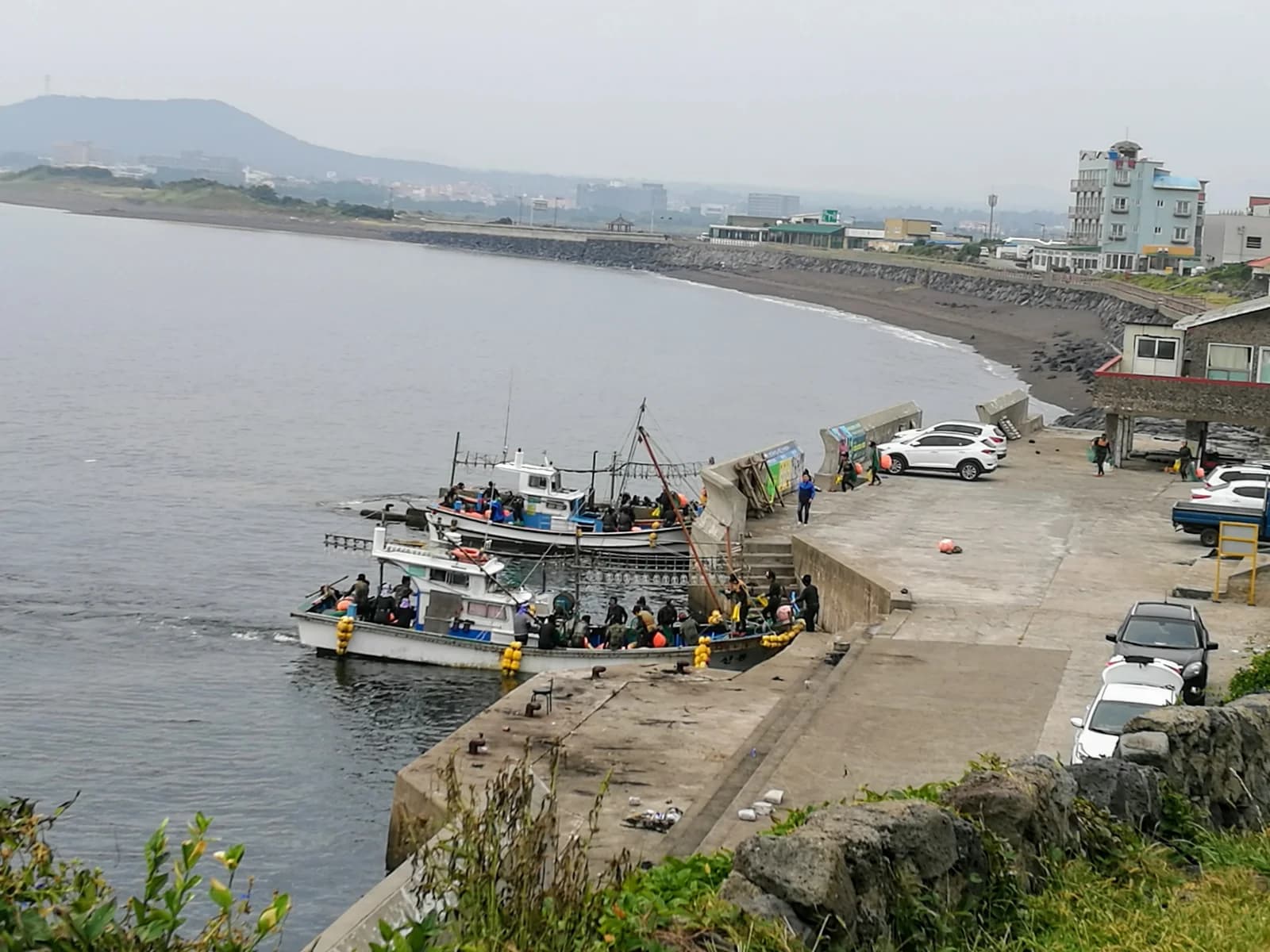
Photo: Teemeah’s original photograph, taken on 19 September 2017. The resized WebP photograph remains under CC BY-SA 4.0.
One breath, then back to the surface. On Korea’s Jeju Island, haenyeo—women divers—harvest marine life for a livelihood without scuba breathing equipment. The skill begins before they enter the water: knowing the sea, the catch and the people they work alongside.
That helps explain why UNESCO recognized the culture of Jeju haenyeo as intangible heritage in 2016. The designation covers knowledge and practices carried between people.
What does a haenyeo need to know?
UNESCO describes a working community with knowledge of the sea and marine life, supported by collective fishing practices. Experienced divers guide others; learning includes understanding a shared working environment as well as the physical act of diving. UNESCO’s inscription record
For an overseas reader, “women divers” captures the activity but only part of the culture. Family connections, local associations and fishery cooperatives help carry that knowledge from one generation to the next. Watching a dive reveals one moment in a much longer process of learning.
How newcomers learn the sea
The techniques are learned. UNESCO’s safeguarding case study describes Haenyeo Schools combining classroom instruction, practical training and individual mentorship. Training covers the community’s history and the marine ecosystem alongside diving skills.
After their courses, trainees continue learning in coastal communities with experienced sanggun, or upper-skilled divers. A course therefore sits within a wider teaching network. The Haenyeo Museum also runs youth education, including encounters with practitioners and their stories. UNESCO’s education case study
Why protecting haenyeo culture includes the water
The same case study identifies aging practitioners and damage to marine ecosystems from climate change and pollution as pressures on continuity. Passing on a skill depends partly on whether people can keep using it.
UNESCO also records community efforts to collect underwater debris. This connects the heritage question to daily work: teaching new divers and caring for the sea both matter to the practice’s future.
Reading the photograph beyond the postcard
The photograph above shows departure preparations in 2017. It provides historical context for collective work, not evidence of today’s boats, participants or conditions.
Keep that distinction in mind when encountering haenyeo imagery: a striking coastal scene is the visible part of a working culture sustained by knowledge, instruction and shared responsibility.