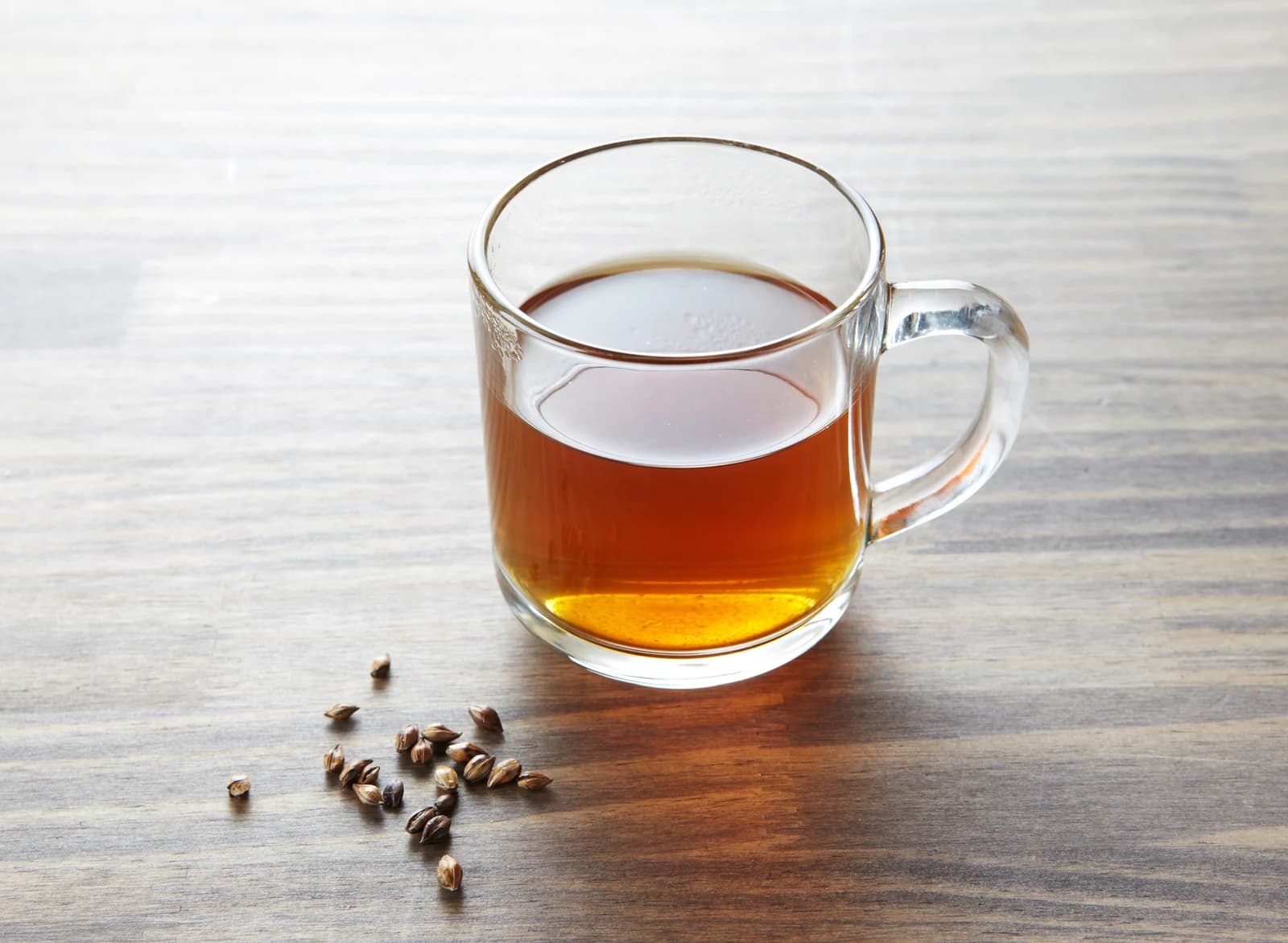
Boricha (보리차) is a drink made by brewing roasted barley in water. The National Institute of Korean Language defines it through that preparation: roasted barley is boiled to make the tea. Its amber color comes from the grain infusion, rather than a requirement to add sugar or tea leaves.
A toasted taste from a grain
Korean recipe writer Sue of My Korean Kitchen describes boricha as mild and nutty, with a slightly sweet taste. Her recipe uses roasted barley and water, and explains both loose-grain and tea-bag approaches. The roast is central to the drink you are trying to recognize; an uncooked bowl of ordinary barley is not a ready-to-brew substitute for every commercial product.
The photograph pairs the finished infusion with barley grains. It shows the ingredient and drink together, but it is not a promise that every cup will be the same shade. Amounts and brewing instructions differ, so follow the directions for the barley or tea bags you buy.
Hot and cold are both ordinary options
H Mart’s Dongsuh barley-tea listing gives both hot and cold serving options. A chilled jug and a warm mug can therefore contain the same kind of drink. Temperature alone does not identify a different Korean tea.
In her personal account, Sue recalls different roasted-grain drinks in friends’ homes and a different tea in her own family. That is a useful reminder that household habits vary. It should not be turned into a claim that every Korean family drinks boricha instead of water.
Brown restaurant water is a clue, not an identification
If a restaurant serves a pale brown drink, boricha is one possibility. Color alone cannot confirm the ingredients. Asking what the drink is will give you a better answer than assuming every refill jug follows the same recipe.
Nor is barley tea the same as sungnyung, the drink made with scorched rice. The distinction is useful even when both taste toasted: one begins with roasted barley, while the other belongs to the story of rice left on a cooking pot. Learning the name makes the cup easier to understand without inventing a rule for every Korean table.
Archive photograph, before 2012-11-01: 국립국어원 (National Institute of Korean Language) / Wikimedia Commons. CC BY-SA 2.0 kr. Resized without cropping and converted to WebP; image reuse remains under the stated license.
.jpg)