A browned layer left at the bottom of a rice pot can become something worth keeping. Nurungji (누룽지) is that firm, toasted rice crust. Sungnyung (숭늉) is the rice-infused drink made by adding water to scorched rice. They are closely connected, but the words direct your attention to different things: a crust you can eat and a liquid you can drink.
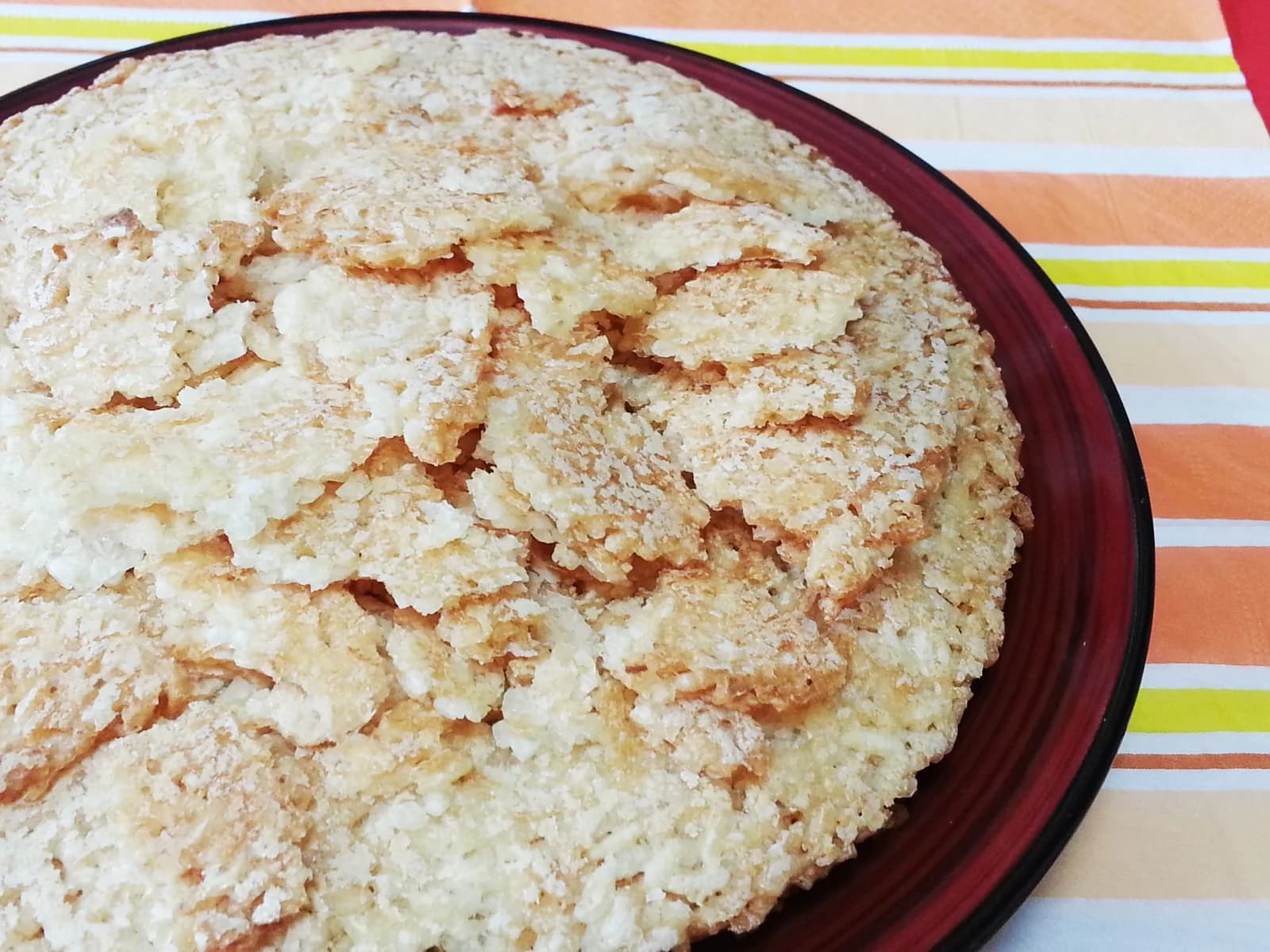
Archive photograph: Nurungji.jpg by Hyeon-Jeong Suk, CC BY 2.0. 2013 archive photograph of dry nurungji. Shows the browned rice crust and grain texture; no claims about exact added ingredients. Resized and converted to WebP.
Start with the dry crust
The Korea Tourism Organization’s definition describes rice that becomes golden and firm against the bottom of a pot or rice cooker, developing a toasted aroma. It can be lifted out and eaten dry. Nurungji is also produced separately as a snack, so it need not come directly from the pot at your table.
The hero photograph makes the texture visible: individual grains have joined into a broad, thin piece. It is a useful clue to the food’s starting material. A picture can show those grains and browned patches, but cannot tell you whether anything else has been added to that particular serving.
Add water and the experience changes
With water, the rice softens and flavors the liquid. This is the connection behind sungnyung, sometimes translated as “scorched rice tea.” The word tea here describes the drink; the basic preparation uses rice and water, without tea leaves.
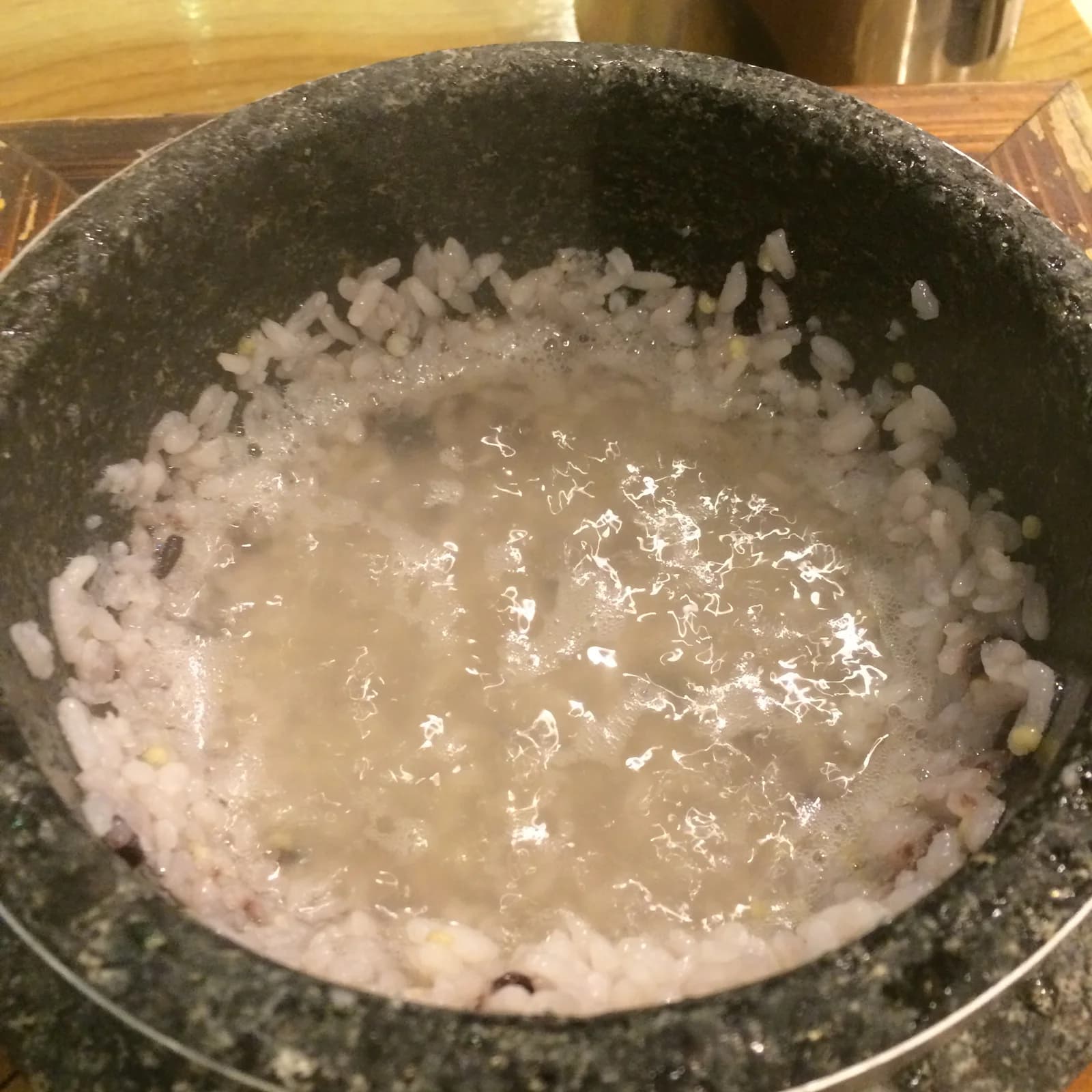
The two photos show why the distinction helps. The dry crust can be picked up as a piece. In the stone pot, rice sits in liquid. It is the change in preparation, rather than a completely different grain, that explains the contrast.
One pot, several stages
Cookbook author Maangchi demonstrates a pot method that produces cooked rice, a crust and then sungnyung. She removes the cooked rice, separates the crust, and adds water to the remaining scorched rice to make the drink. Her instructions give a concrete example of how these foods can follow one another.
That example is more informative than a single universal cooking time. Equipment and preparation matter: Maangchi specifically distinguishes her pot method from the way she normally uses a rice cooker. Follow the full method for your equipment if you want to cook it, rather than leaving rice heating simply because you hope a crust will form.
What to look for on the menu
Use nurungji as your clue to the toasted rice itself, and sungnyung as your clue to the water-based preparation. Then check the actual description or ask how the dish is served. A snack packet and a pot of softened rice can share the same starting idea while offering quite different textures.
If the unfamiliar part is the vessel, KSPILL’s guide to ttukbaegi and how it differs from a stone pot explains that separate question. The food’s name and the pot’s material tell you different things about what is on the table.