Yes—bibimbap is normally mixed before you eat it. The separate patches of vegetables, rice and sauce are the presentation. Combining them is how the dish is finished at the table. You are not spoiling the arrangement by putting your spoon into it.
The name itself helps: bibimbap means mixed rice. The Korean Food Promotion Institute describes it as cooked rice combined with vegetables and red pepper paste, with other ingredients depending on the version.
From separate colors to a seasoned bowl
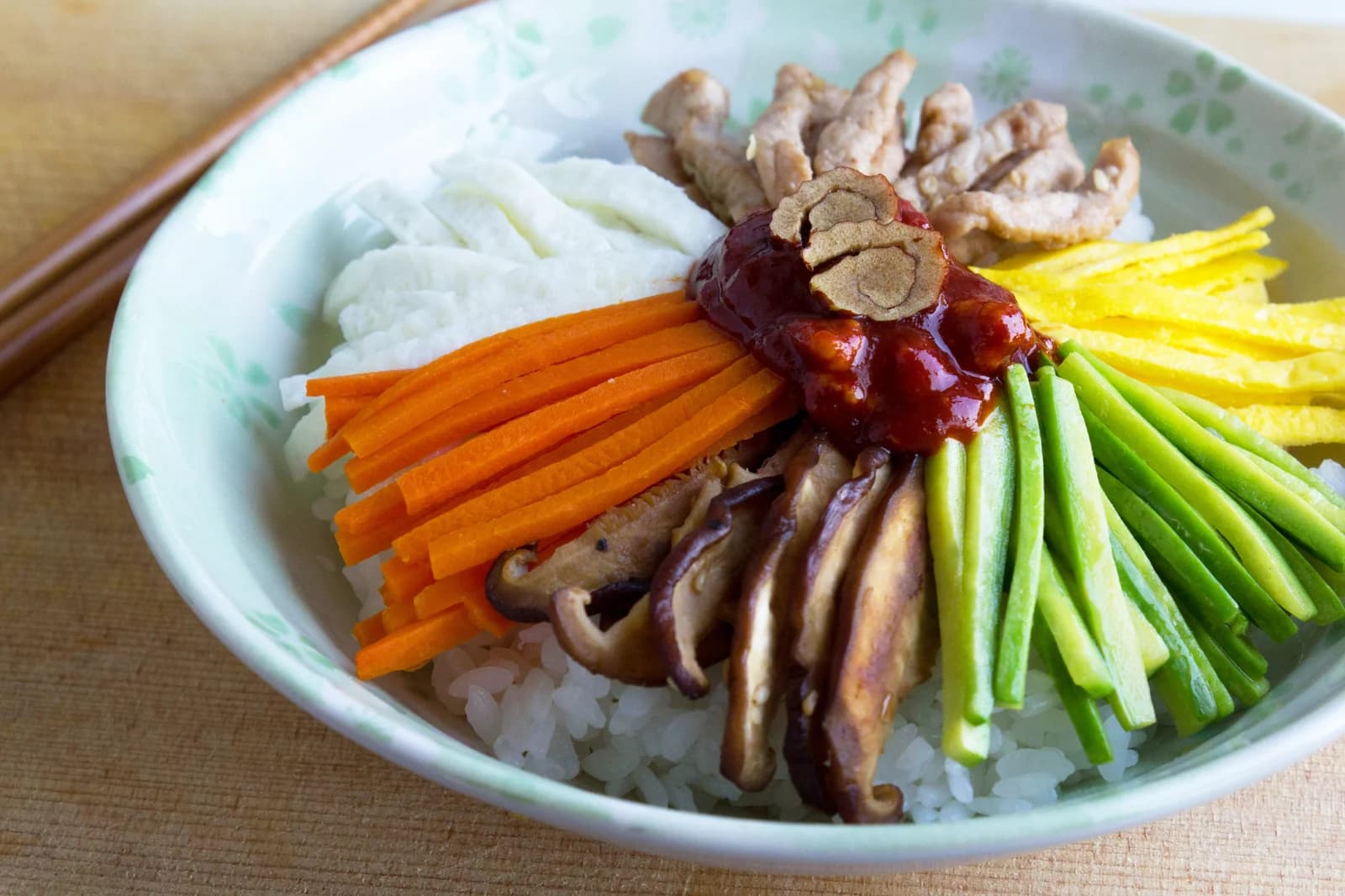
Look at the unmixed bowl in the photograph: some bites would otherwise be mostly plain rice, others mostly sauce. Mixing distributes those elements through the serving.
Use the spoon to bring rice up from underneath the toppings and turn the ingredients together. If sauce comes separately, a practical approach is to begin with a little, mix and taste before adding more. The official Let's Go Korea guide likewise describes adding red pepper paste and sesame oil to taste.
There is no reason to force the entire sauce portion into the bowl at once. The useful goal is a combination you enjoy, rather than a particular shade of red.
Dolsot changes the bowl, not the idea
Dolsot bibimbap comes in a hot stone vessel. Korea.net's guide explains that this keeps the food hot and can make rice against the bottom crunchy. It is still mixed rice, though the container changes the eating experience.
Treat that vessel as hot and leave it on its support. The photograph here shows a different presentation, not a dolsot demonstration.
If the crisp rice is the part that interests you, nurungji and sungnyung explain another place where browned rice appears in a Korean meal.
Mix the bibimbap, not every dish on the table
The instruction applies to the rice bowl and its toppings. It does not mean you need to empty every accompanying dish into it. Start with the serving you ordered, then make individual choices about the sides.
Nor does the name specify a single ingredient list. Korea.net documents variations with meat, seafood or vegetables, and versions with or without red pepper paste. Check the actual menu rather than assuming every bowl contains the same egg, meat or sauce.
For a visitor, the main uncertainty has a simple answer: take the spoon and mix. The familiar Korean spoon-and-chopstick pairing is useful here—the spoon can both combine the rice and carry a complete bite.