You get off a bus, walk into a subway station and tap again. The gate lets you through—but it may still deduct money. Did the transfer fail?
Not necessarily. Seoul links eligible bus and subway trips through the same transit card, while fare differences and distance can still add charges. A discount does not promise that every later tap will show zero.
The Connection Has a Clock and a Limit
For ordinary metropolitan transit-card travel, Seoul lists a 30-minute connection window, extended to 60 minutes between 9 p.m. and 7 a.m. Its Korean guidance determines that daytime/nighttime window from the subsequent boarding time. Up to **four transfers—five boardings—**can form a linked journey.
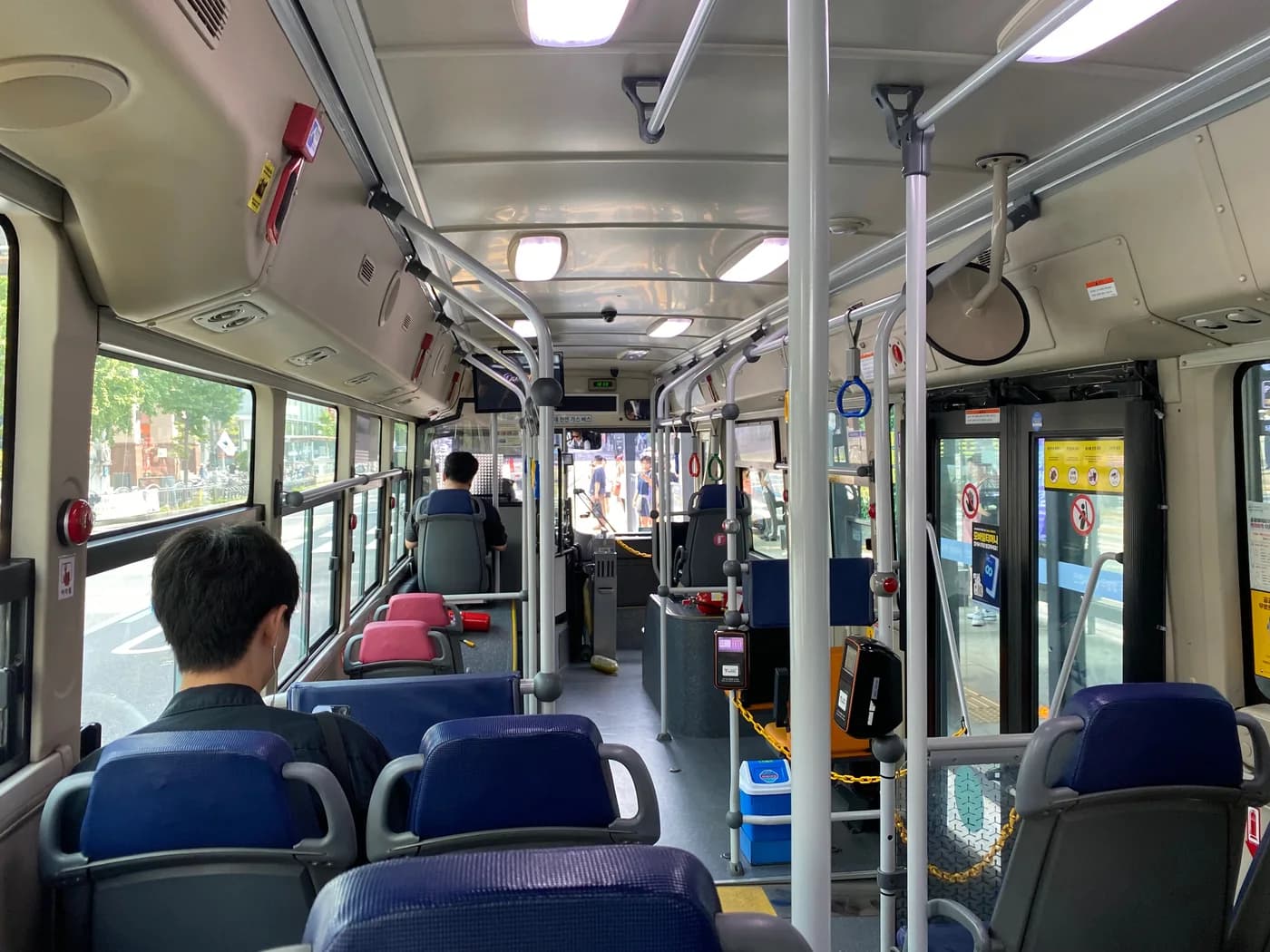
Use one card per person. Tap out of the first service, then use that same card to enter the next eligible service. Keep the walking time between stop and station inside your plan; the clock does not pause while you buy coffee.
These rules were checked against Seoul's official guidance on September 16, 2026. Special passes and excluded services need their own checks.
A Worked Connection Without a Misleading Fixed Price
Imagine taking a local bus to a subway station. You tap off the bus, walk to the entrance, and enter the subway within the applicable window using the same card.
The fare system can link those legs. It applies the relevant higher base fare and any distance additions, rather than promising an entirely free subway ride. The amount depends on the services and journey, so a single sample price would be less useful than the sequence.
On the return trip, make the checks again. A transfer allowance is not a day pass. The route's bus color helps identify its network role, but color alone cannot calculate your final fare.
Three Connections That Need Extra Care
- The same bus route again: Seoul excludes same-route and same-vehicle transfers from the ordinary discount. Stepping off briefly does not reset the route into a new eligible connection.
- Several people on one bus card: a driver-assisted group bus payment does not give the group a subway transfer discount. Each subway rider needs their own journey record.
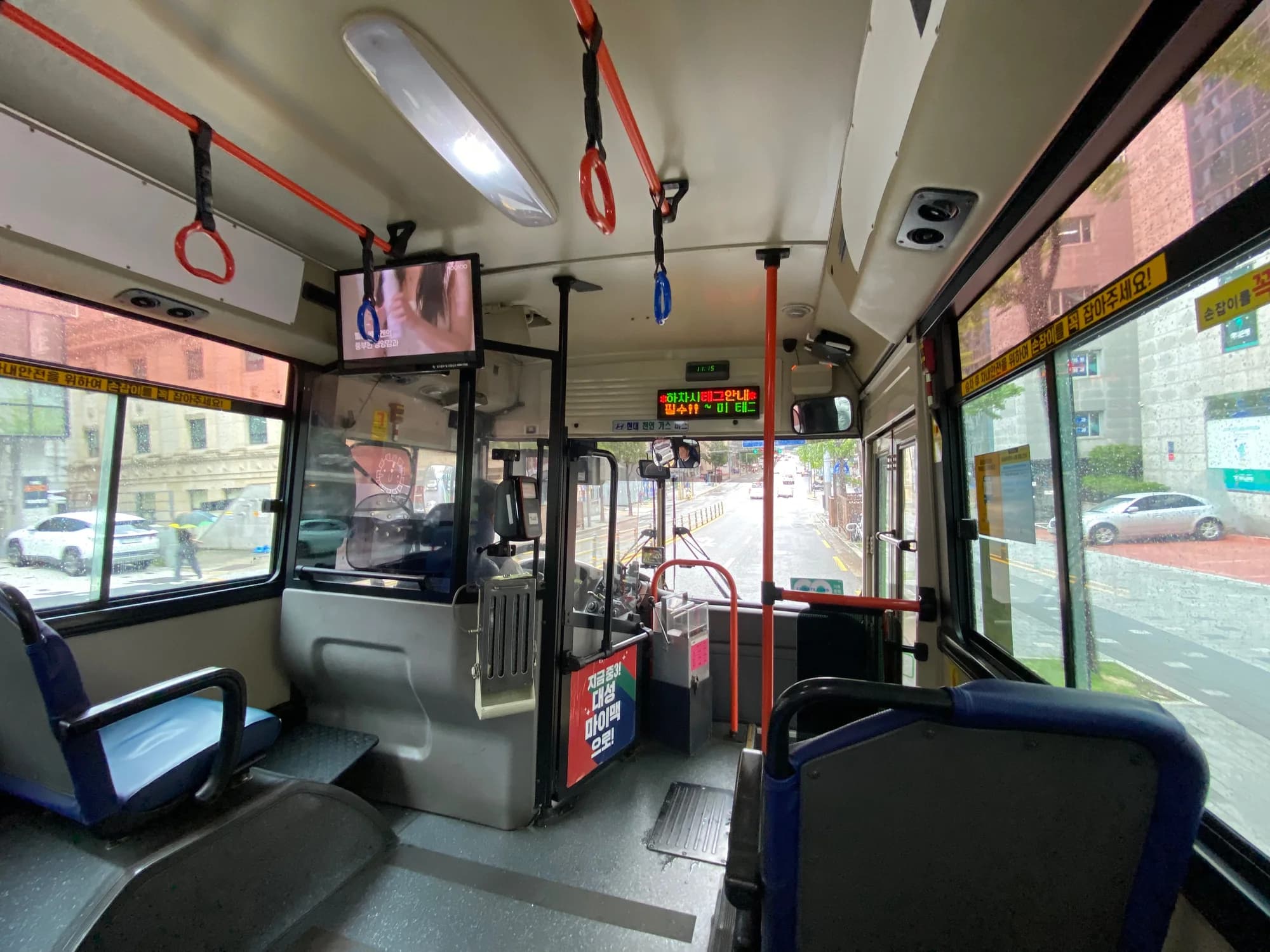
- A missed exit tap: the previous leg may not be linked correctly. The bus tap-off guide explains why the endpoint is needed.
If two travelers are taking the same itinerary, their cards still need separate taps. Passing a card back through a subway gate is not a substitute for individual payment.
Street Transfers and Subway Corridors Are Different Problems
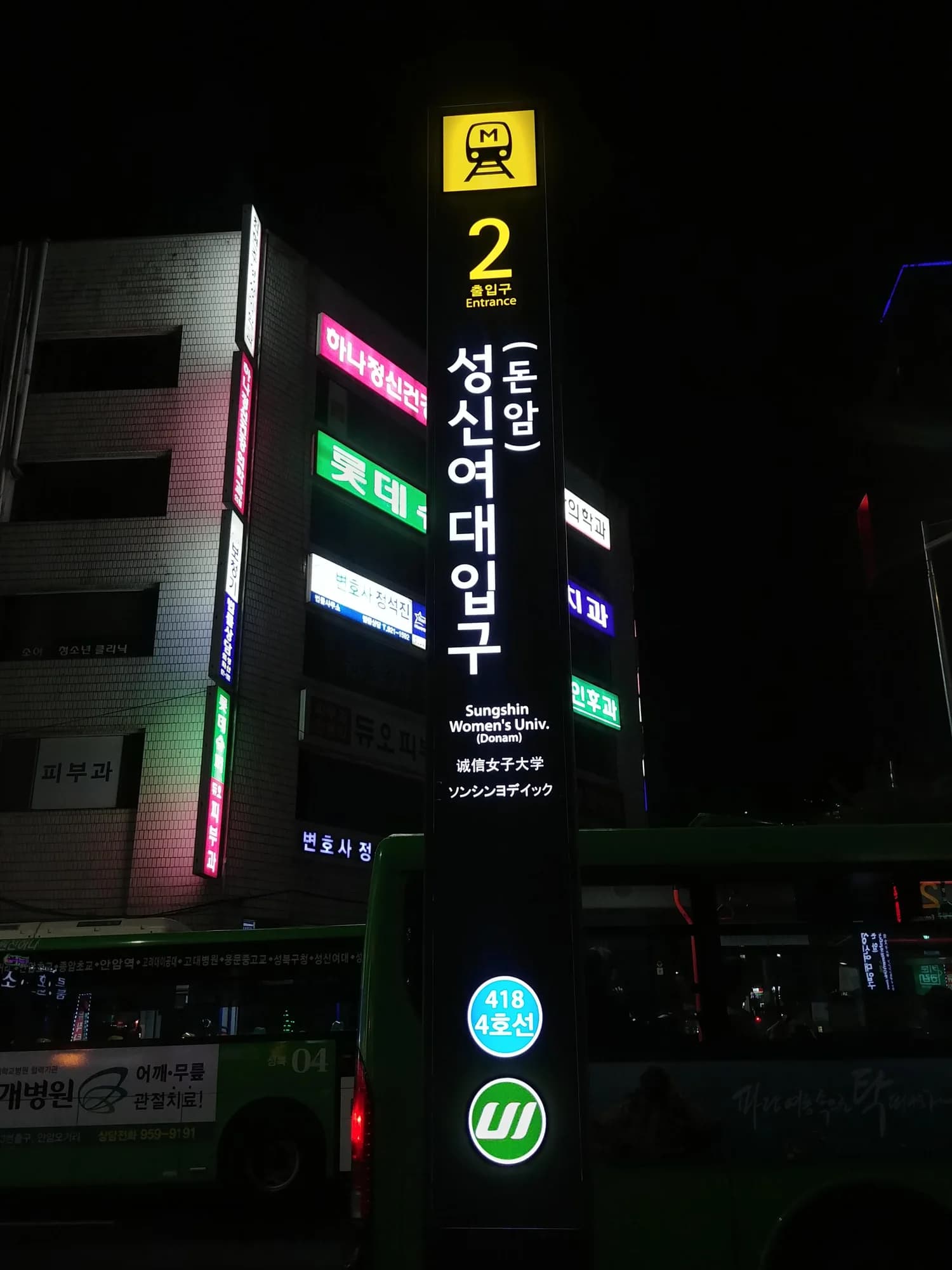
This is a fare connection across transport modes, often with a walk outside. Once inside the subway, changing train lines is a navigation task: follow the subway transfer signs toward the next platform rather than accidentally leaving through a street exit.
Before boarding your first bus, confirm that the T-money card is loaded and ready. Before leaving it, tap off. Before the next gate, check the time and keep the same card in hand. Those checks give the system the information it needs; the final fare then follows the actual trip.
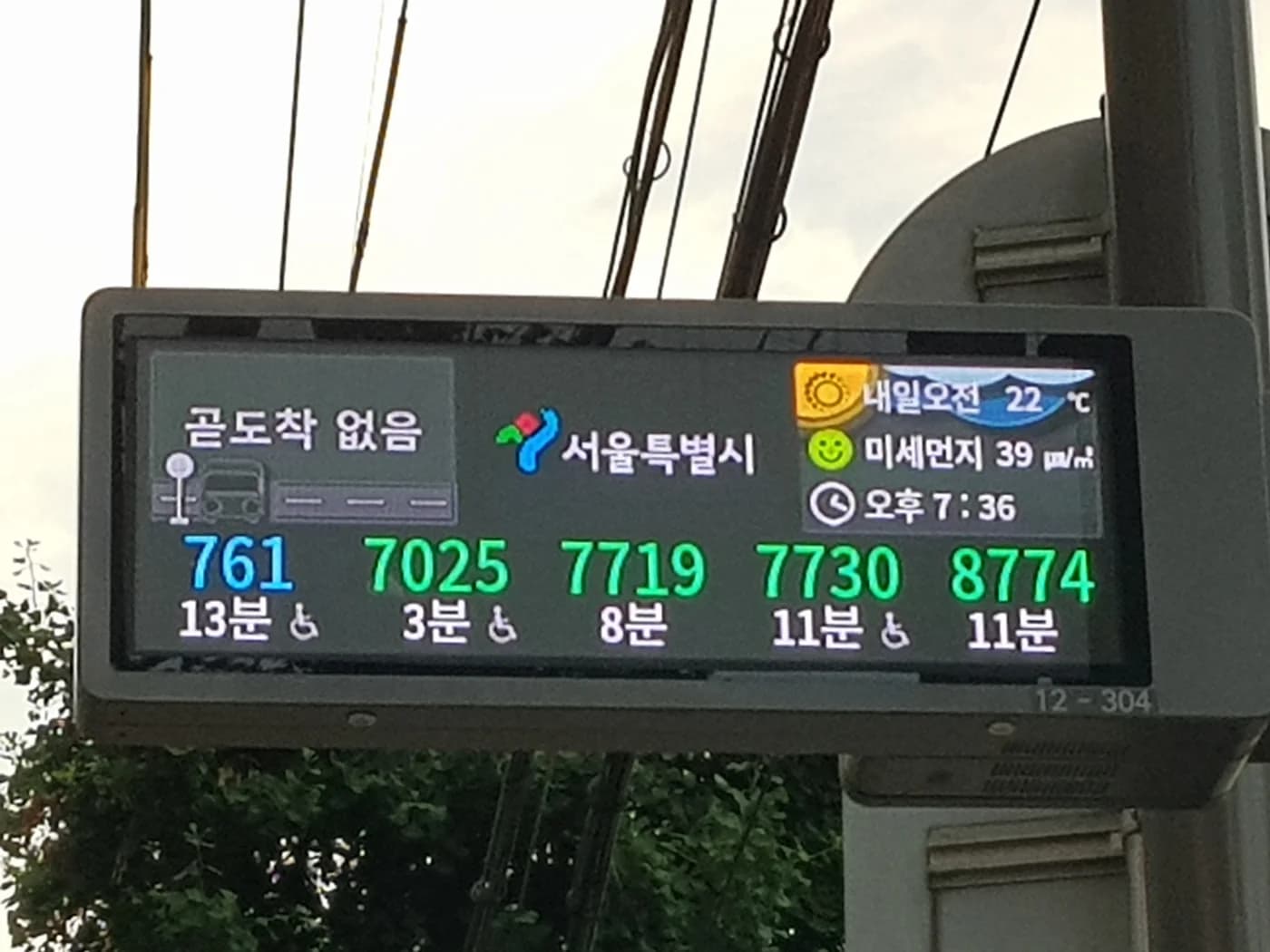
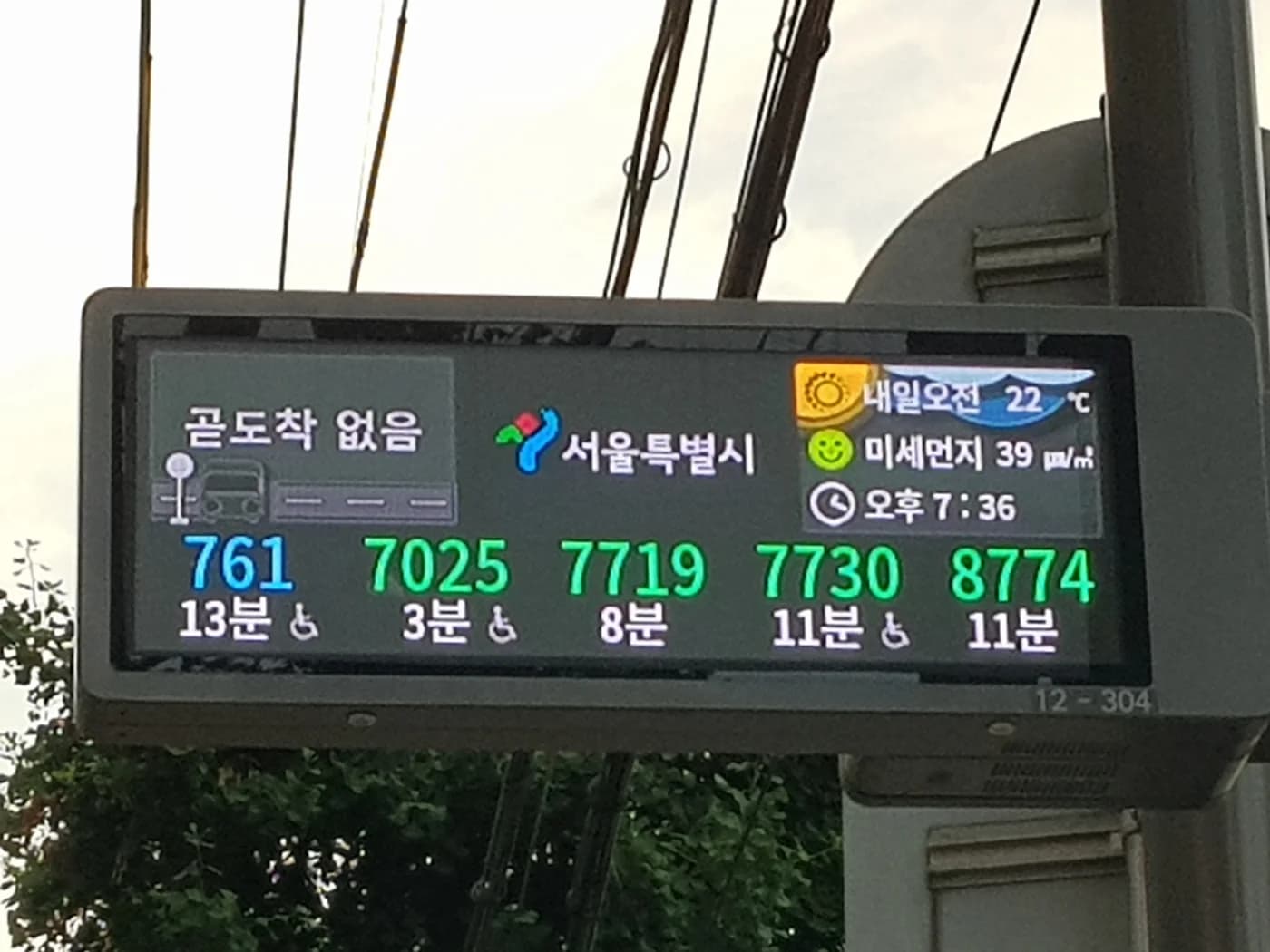
Photo context: Archive photograph, June 20, 2021. An ordinary bus-arrival display illustrates checking the next connection. The pictured services are not Owl Bus routes, and its times are not current. Wikiwater2020 / Wikimedia Commons, CC BY-SA 3.0; resized and converted to WebP by KSPILL. Source photograph; license.