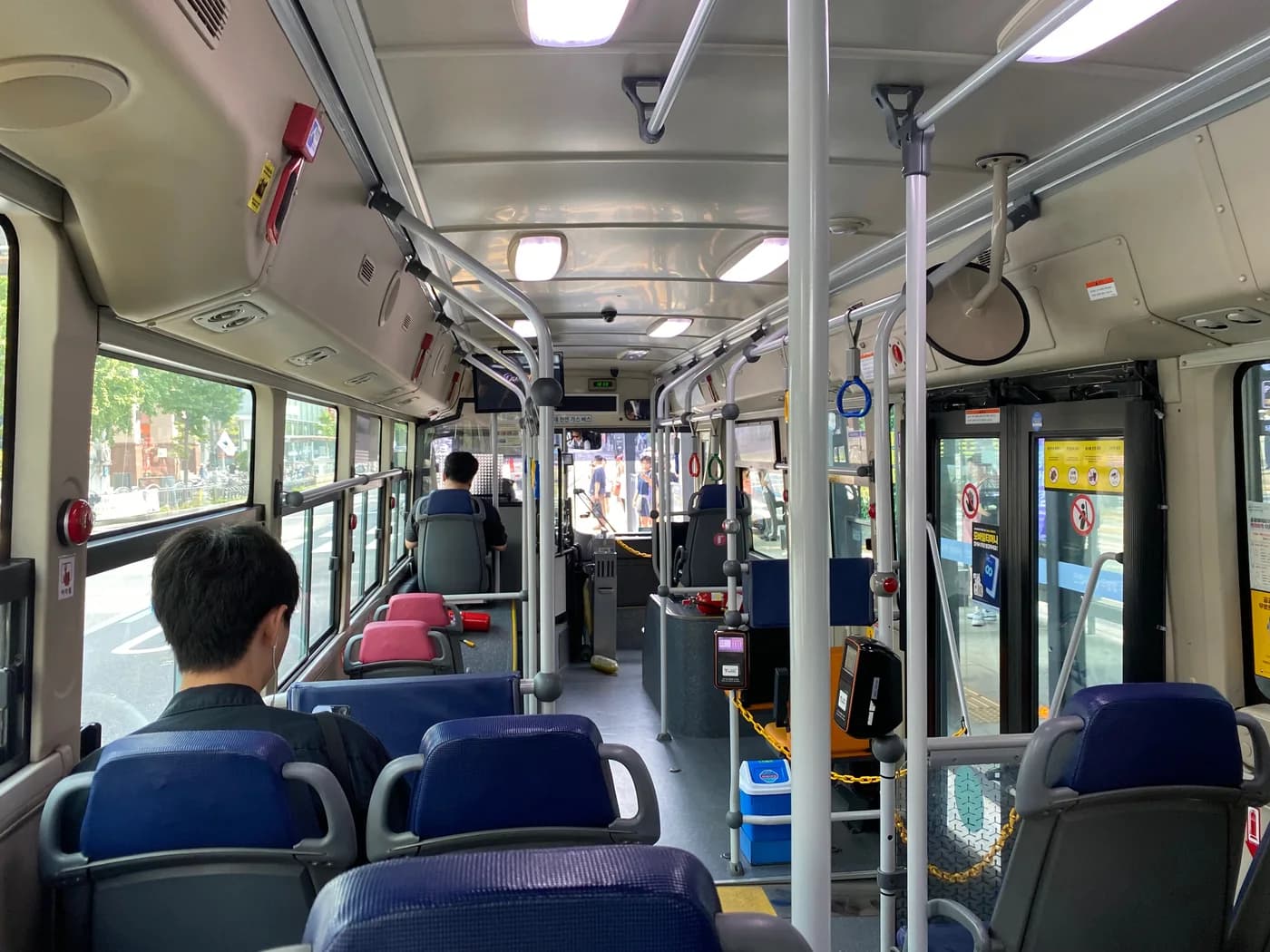
There is a red button beside the window, another near the door, and a card reader waiting at the exit. Which one tells the driver you want to get off?
Press the stop-request bell before the bus reaches your destination. The card reader has a separate job. Tapping your card does not replace asking for the stop.
Seoul's official riding guide tells passengers to use the display or announcement to recognize the approaching destination and press the bell in advance. Waiting until the bus has already reached the stop can confuse the driver.
Find the Bell Before You Need It
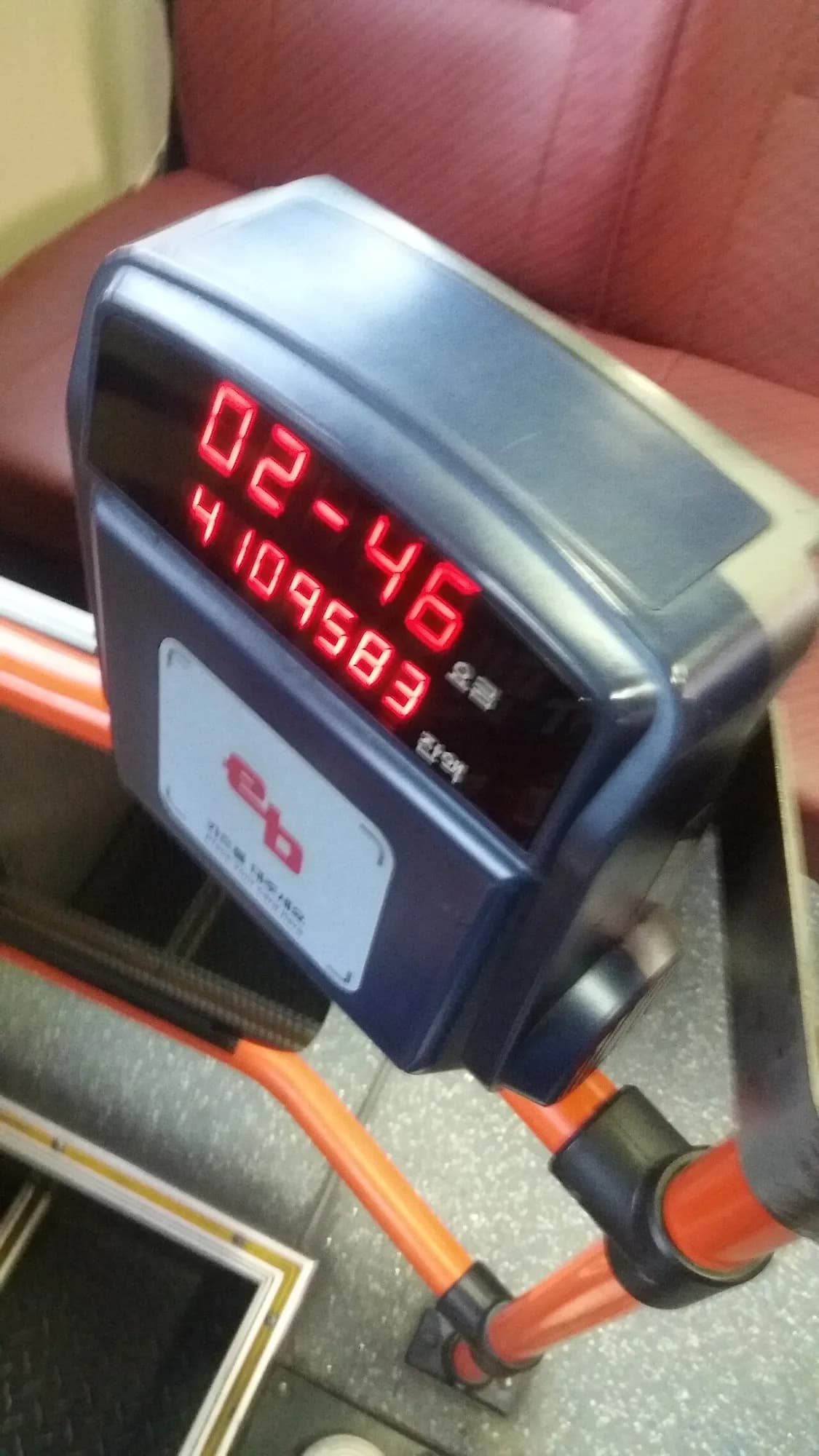
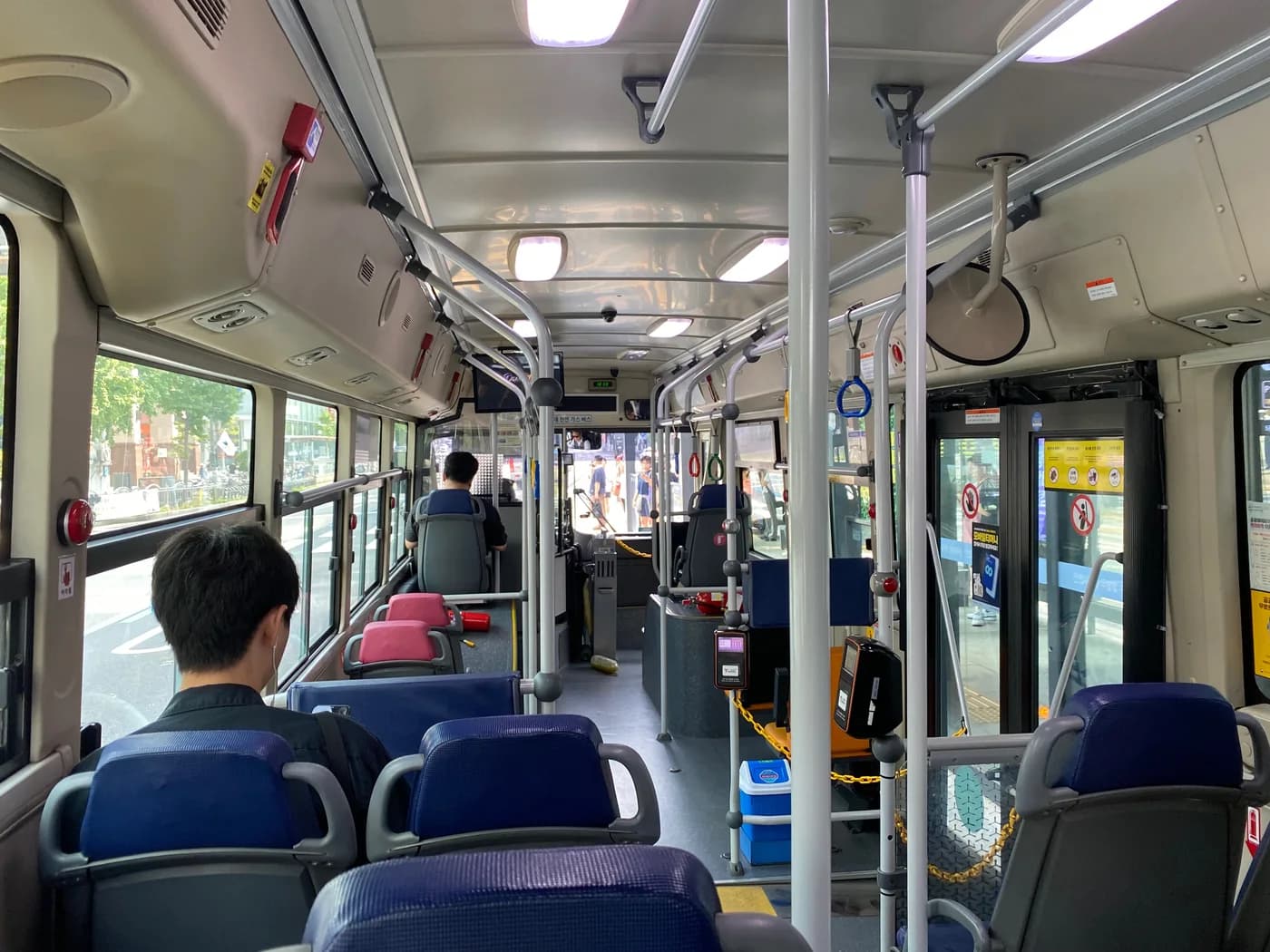
Look around after boarding, while you have time. The archive photograph here shows red buttons beside a window and on a pole near the exit; it also shows the card reader as a separate device. Their position and appearance vary between vehicles.
The Korean word 하차 (hacha) means getting off. 하차벨 (hacha-bel) is the stop bell. These are useful words to recognize or use when asking another passenger which button to press.
Do not confuse a stop-request button with emergency equipment. If a label or control is unclear, ask instead of trying every red object in reach. A quick 하차벨 어디 있어요? (hacha-bel eodi isseoyo?) means “Where is the stop bell?”
Match the Announcement to the Next Stop
Before the ride, save your destination stop's name in Korean as well as the form used by your map. Keep an eye on the sequence of stops so a similar-sounding name does not catch you out.
When the announcement or display identifies your destination as the upcoming stop, request it. You are asking for the next scheduled stopping place, not an immediate stop wherever the bus happens to be.
Avoid treating the number of minutes left on a phone as the only cue. Traffic can change the timing; the named upcoming stop is what matters. Route and direction matter too, even when two buses share the same Seoul bus color.
The Bell and the Exit Tap Finish Different Jobs
After requesting the stop, get your card ready while keeping a secure hold. Move toward the normal exit only when it is safe, and let the vehicle stop before stepping down. Do not rush into the doorway to prove that you intend to leave.
Use the exit reader with the card you boarded with. The second tap closes the fare record; the bell has already communicated your stopping request. Pressing one is not a substitute for the other.
If another passenger has already requested your stop and the request indicator is on, there is no need to repeatedly press the button. Watch for the stop itself and prepare to exit.
If You Pressed Too Soon or Missed the Stop
Do not assume another press cancels the request. If necessary, briefly explain the mistake to the driver when doing so is safe. Stay clear of the door and do not demand an unscheduled roadside exit.
If your stop has passed, get off safely at a suitable following stop and check the route back. A small detour is easier to fix than a hurried exit. For the next ride, locating the bell early removes most of the last-second guesswork.
Photo context: Archive photograph, August 20, 2024. Red stop buttons and the separate exit card reader are visible. Vehicle layouts vary; this is not a photograph of a missed-tap incident. Sgroey / Wikimedia Commons, CC BY-SA 4.0; resized and converted to WebP by KSPILL. Source photograph; license.