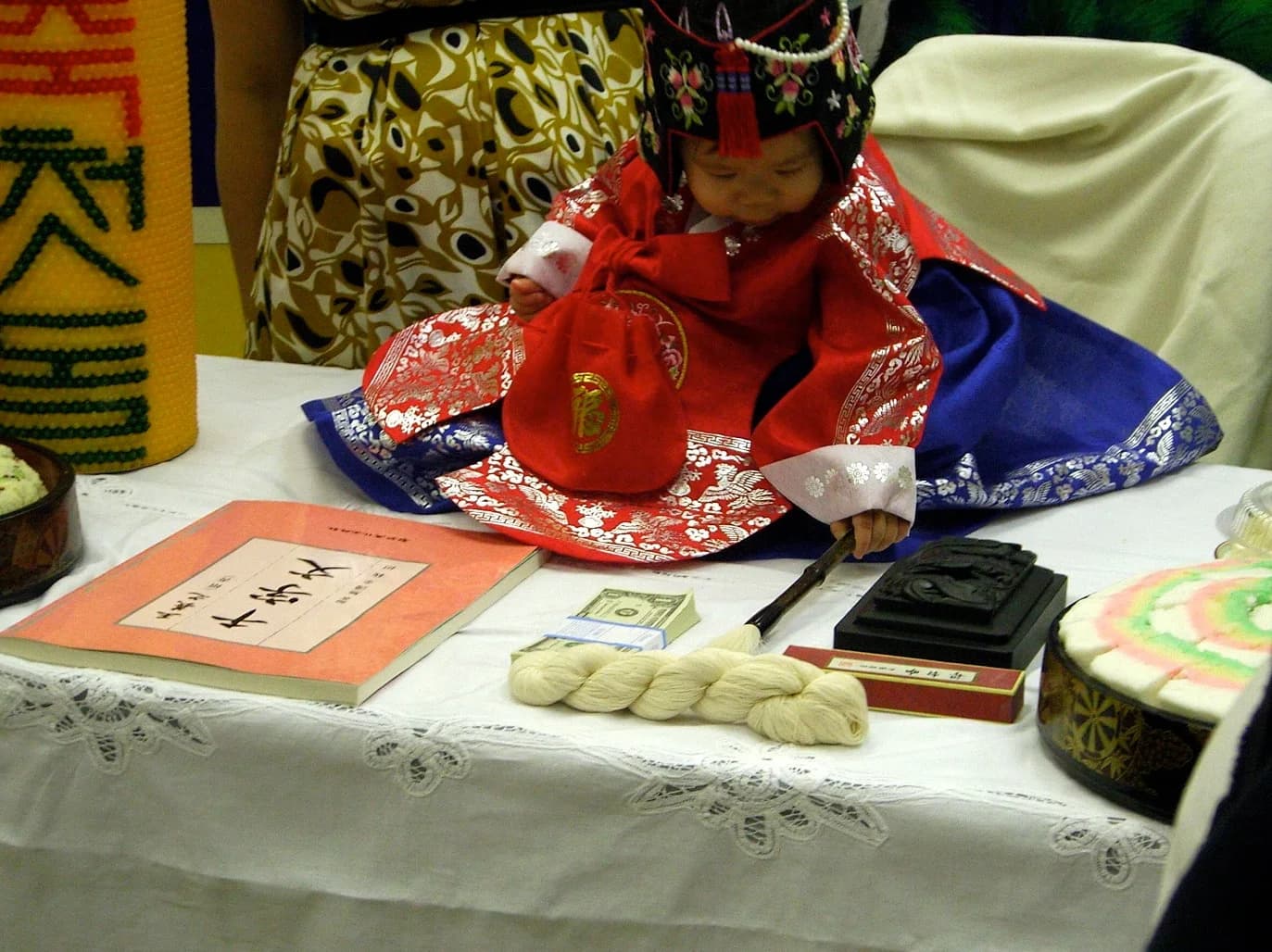
“How old are you in Korea?” used to invite three possible answers. In 2026, the legal answer is much cleaner—but the social answer can still need one extra sentence.
South Korea now uses 만 나이 (man nai, full age) as the default in civil and administrative matters. You begin at zero and add a year on each birthday. The older “Korean age” count did not, however, evaporate from every conversation the morning the law changed.
The Legal Answer Changed in June 2023
Revisions to the Civil Act and Framework Act on Administrative Affairs took effect on June 28, 2023. Unless another law states a special rule, an age written in a law, contract or official document is interpreted as full age.
That means a person born on September 10, 2000 is 25 on September 3, 2026, then turns 26 on September 10. The birthday—not January 1—moves the number, while traditions such as birthday miyeok-guk mark the occasion in a different way.
This did not suddenly alter pensions, banking contracts or every eligibility date. Government guidance emphasized that many systems already used full age. The reform mainly wrote one default into law and reduced the room for ambiguous age wording.
Three Clocks Once Ran at the Same Time
The famous traditional count, 세는나이 (seneun nai), treated a baby as one at birth and added a year to everyone on January 1. That is the number international headlines usually mean by “Korean age.”
A second system, 연 나이 (yeon nai, year age), subtracts the birth year from the current year. A baby starts at zero, but everyone still changes together on January 1.
Then there is full age, which follows birthdays. Before the reform, people could switch among the three depending on whether they were chatting, filling out a form or checking a rule. That context-switching is what the 2023 standard tried to simplify.
The Exceptions Never Fully Disappeared
Some rules still use a birth-year calculation because everyone in the same cohort needs the same cutoff. The Ministry of Government Legislation points to the Youth Protection Act as an example: its definition excludes people from youth status beginning January 1 of the year they turn 19 by full age.
School entry, military administration and age-restricted sales are often discussed alongside these cohort rules. The safe move is not to convert from a remembered “Korean age.” Check the exact law or service requirement, because a special provision wins over the general full-age default.
In other words, Korea standardized the default. It did not ban every calendar-year rule.
Conversations Can Lag Behind the Paperwork
Age still helps establish Korean speech level and kinship-style titles, so people may ask for a birth year—몇 년생이에요? (myeot nyeonsaeng-ieyo?, “What year were you born?”)—instead of calculating an exact age. That social context also helps explain why someone may turn aside when drinking with an elder or senior, where the relationship and occasion matter alongside age.
That does not prove everyone is secretly using the old formula. Birth year is fast social information: two people can learn whether they are likely same-year friends without comparing birthdays.
The government’s own FAQ says classmates do not need to change from friend speech to 형, 누나, 언니 or 오빠 as individual birthdays pass. Social relationships were never designed to reset monthly like an app subscription.
Ask for the Birth Year When Precision Matters
If someone gives you an age and the exact number matters, ask which system they mean: 만 나이예요? (man naiyeyo?, “Is that full age?”). For ordinary introductions, sharing your birth year is often clearer than performing three calculations.
So, does Korea still use Korean age? Not as the legal default. The traditional count survives as cultural memory and occasional conversational shorthand, while year-age rules continue where specific laws keep them. The modern Korean answer is no longer one magic number; it is knowing which clock the situation actually uses.