Tteokguk is eaten at Seollal, Korean Lunar New Year, to mark a new beginning. The bowl of rice-cake soup brings together wishes for a clean start, good fortune and another year of life. It is a holiday custom expressed through food, rather than a rule that every Korean household observes identically.
For a visitor, the pale slices in the broth can look like noodles or dumplings. They are pieces of rice cake.
What the white slices stand for
The familiar version uses garaetteok, a long white rice cake cut into thin pieces. Korea.net's account, produced with the Institute of Traditional Korean Food, connects the white color with renewal and a fresh beginning.
The same account explains the small rounded slices through their resemblance to old Korean coins, linking them with wishes for prosperity. These are cultural interpretations of the food, not a promise that eating it brings wealth.
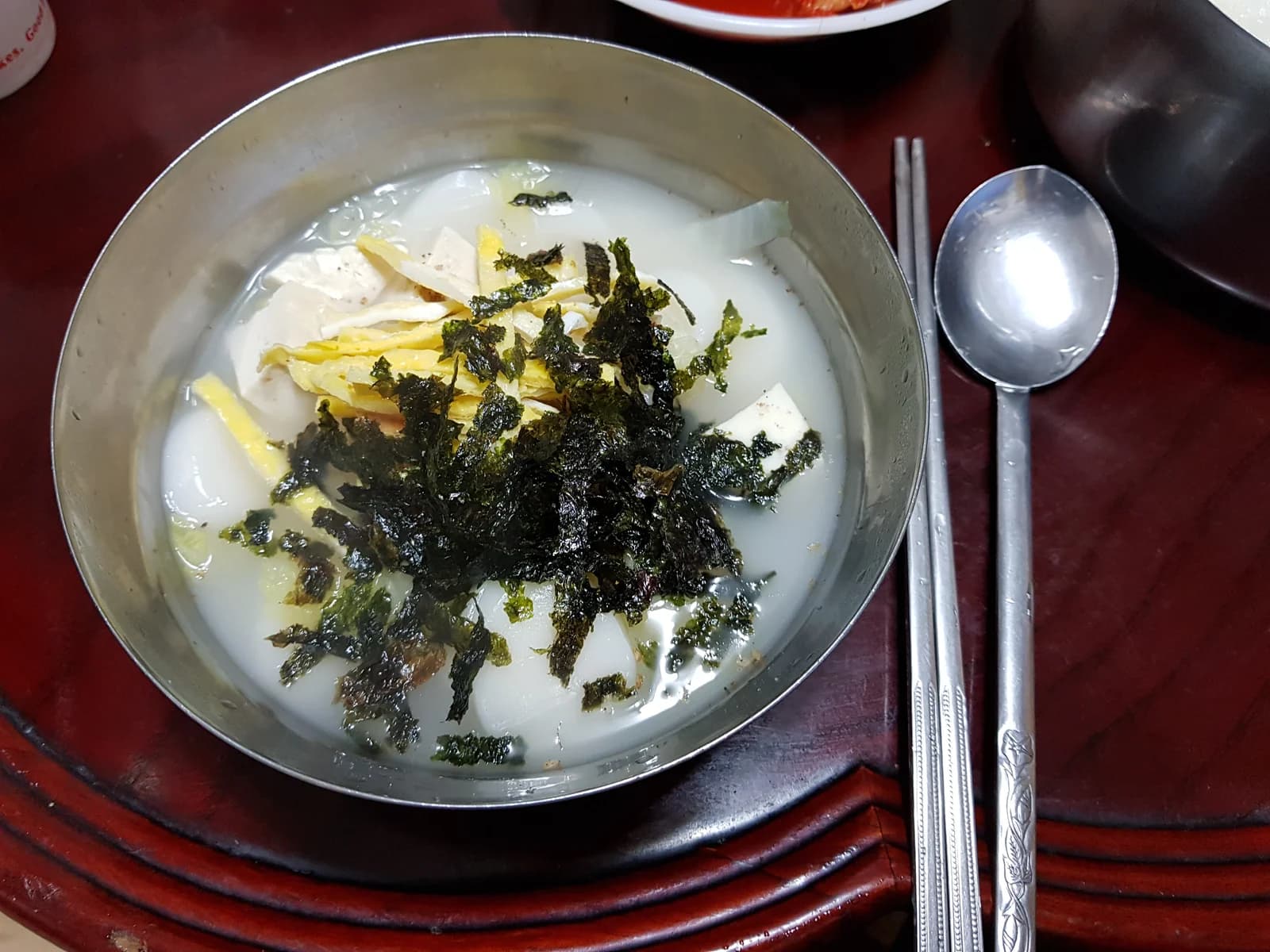
The photograph shows one homemade bowl from 2018. Its rice cakes sit beneath egg and seaweed; it illustrates the dish, not this year's holiday or a universal recipe.
Why a bowl can mean another year
Korea.net's Seollal coverage also describes the traditional connection between eating tteokguk and becoming a year older. The soup helps make a shared calendar transition tangible: people gather and eat a food associated with the new year.
For readers familiar with gaining a year only on a birthday, that association can sound literal. It is better understood here as holiday language and custom. Eating an extra serving does not change your date of birth. For the separate question of age calculation, see whether Korea still uses Korean age.
Families do not all make the same soup
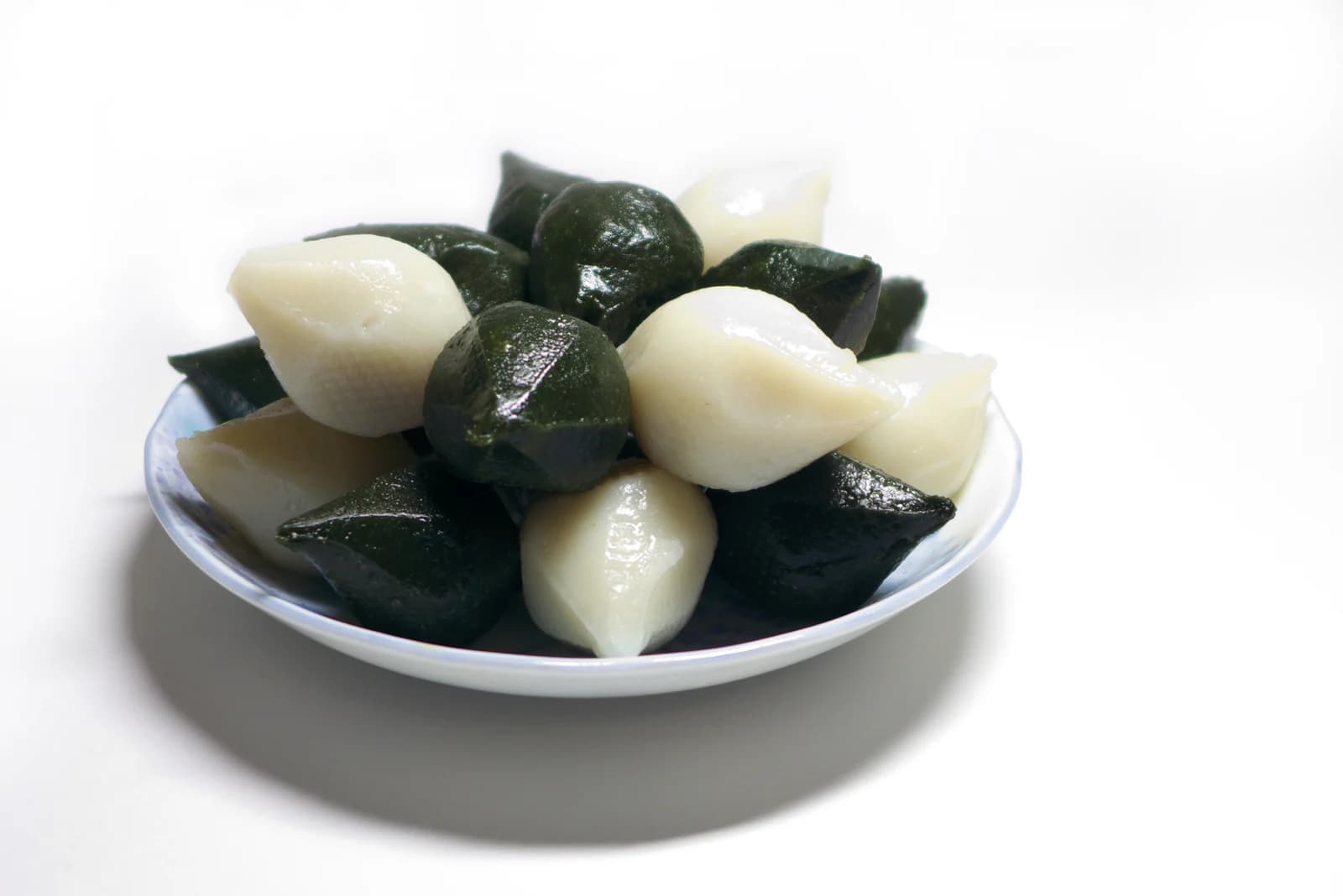
The official food guide records regional differences, including Gaeseong's gourd-shaped jogaengi rice cakes and a stronger dumpling-soup tradition in northern areas. Even the familiar sliced-rice-cake bowl should not be treated as the only possible Seollal meal.
When someone serves you tteokguk, asking how their household makes it can be more useful than looking for a single correct garnish. The occasion supplies the common context; the bowl can still reflect a particular family.
Korean food customs often make more sense when you ask which occasion a dish belongs to. Birthday seaweed soup and rice cakes shared after moving house have their own stories. Tteokguk's place is the new year's beginning.