An idol faces a hard rehearsal. A student walks into an exam. A friend starts a Monday shift. Someone raises a fist and says, “Fighting!”
No one is proposing violence. In Korean, 파이팅 (paiting) is a compact burst of encouragement: “You’ve got this,” “Go for it,” “Good luck” or “Let’s do this,” depending on who is speaking and what comes next.
It Means “You’ve Got This,” Not “Start a Fight”
The National Institute of Korean Language classifies paiting as an interjection used by athletes or supporters to urge people to do well. In everyday speech, the meaning has stretched far beyond sport.
A coworker can say it before a presentation. Friends can use it at the end of a message about a difficult week. A group can shout 우리 파이팅! (uri paiting, roughly “Let’s go, team!”) before starting something together.
The word does not describe the task. It supplies morale. That is why subtitles choose different English phrases in different scenes even though the Korean sound stays the same.
Paiting Is the Dictionary Spelling; Hwaiting Is Everywhere
The official standard spelling is 파이팅. The language institute explains that the initial English f is represented with ㅍ, producing paiting.
Yet 화이팅 (hwaiting) is extremely common in speech, messages and subtitles. It is not a different cheer with a different meaning; it is a widely used variant. Romanization makes the gap look bigger because fans may write fighting, paiting or hwaiting for closely related pronunciations.
If you are writing a formal Korean sentence, use 파이팅. If a drama character clearly sounds closer to “hwaiting,” your ears are not broken.
One Word Covers Exams, Workouts and Comebacks
The cheer can point toward one person or include the speaker.
- 파이팅! — “You’ve got this!”
- 오늘도 파이팅! (oneuldo paiting) — “Let’s get through today too!”
- 시험 파이팅! (siheom paiting) — “Good luck on the exam!”
- 우리 모두 파이팅! (uri modu paiting) — “Let’s all do this!”
It often appears just before effort, but it can also answer someone who has described an ongoing struggle. Tone decides whether it feels bright, gentle, ironic or exhausted.
That flexibility is why a literal translation fails. “Fight!” sounds aggressive in ordinary English; Korean paiting usually sounds supportive.
The Fist Is Part of the Punctuation
The familiar gesture is a bent elbow with a small clenched fist near the shoulder. One person may make it while speaking; a group may stack hands or raise several fists before shouting together.
The movement adds energy but is optional. In a text, the same warmth may come from an exclamation mark, a fist emoji, Korean laughter such as ㅋㅋㅋ or a playful stretched spelling. In a quiet conversation, a soft paiting can be sincere without any pose.
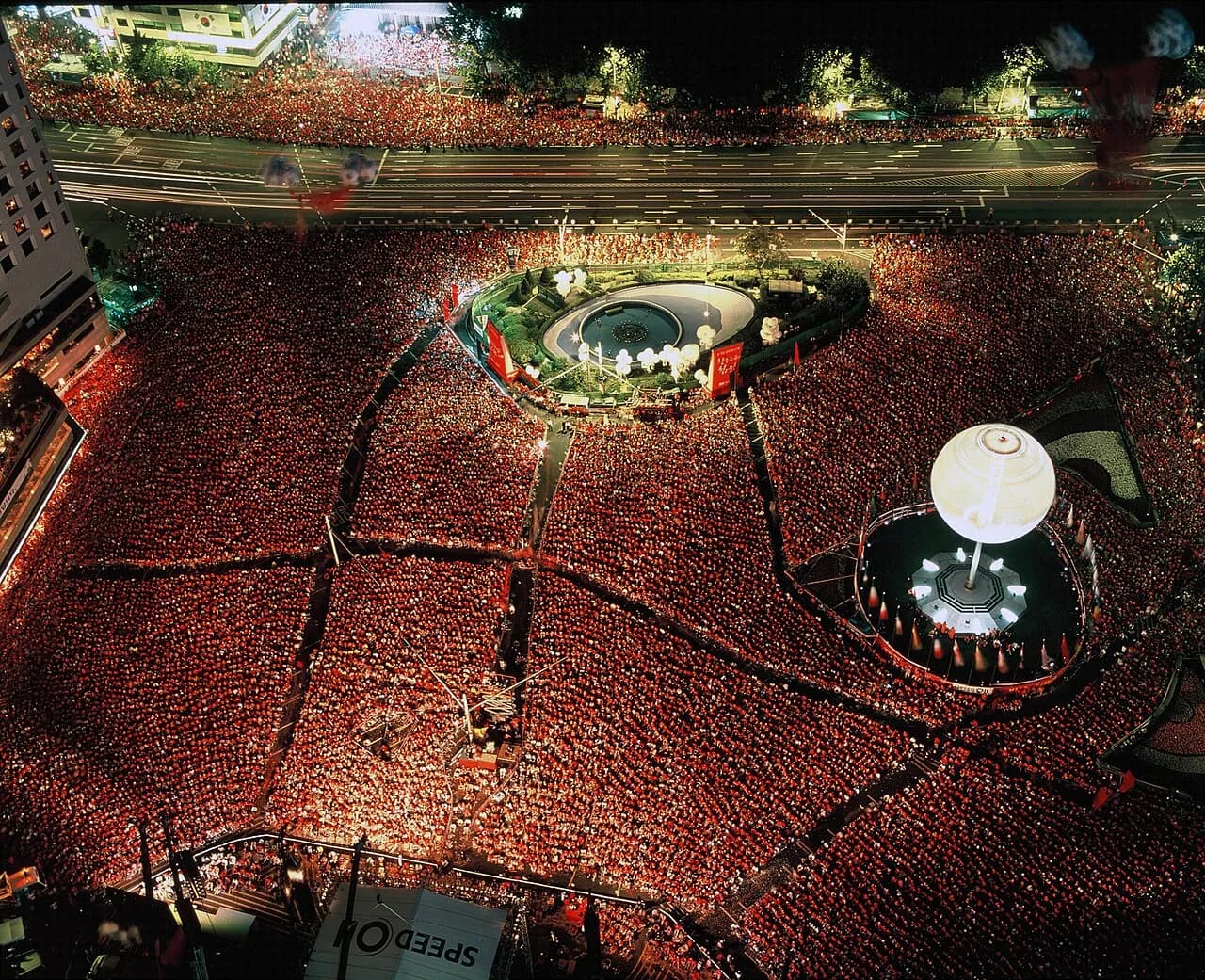
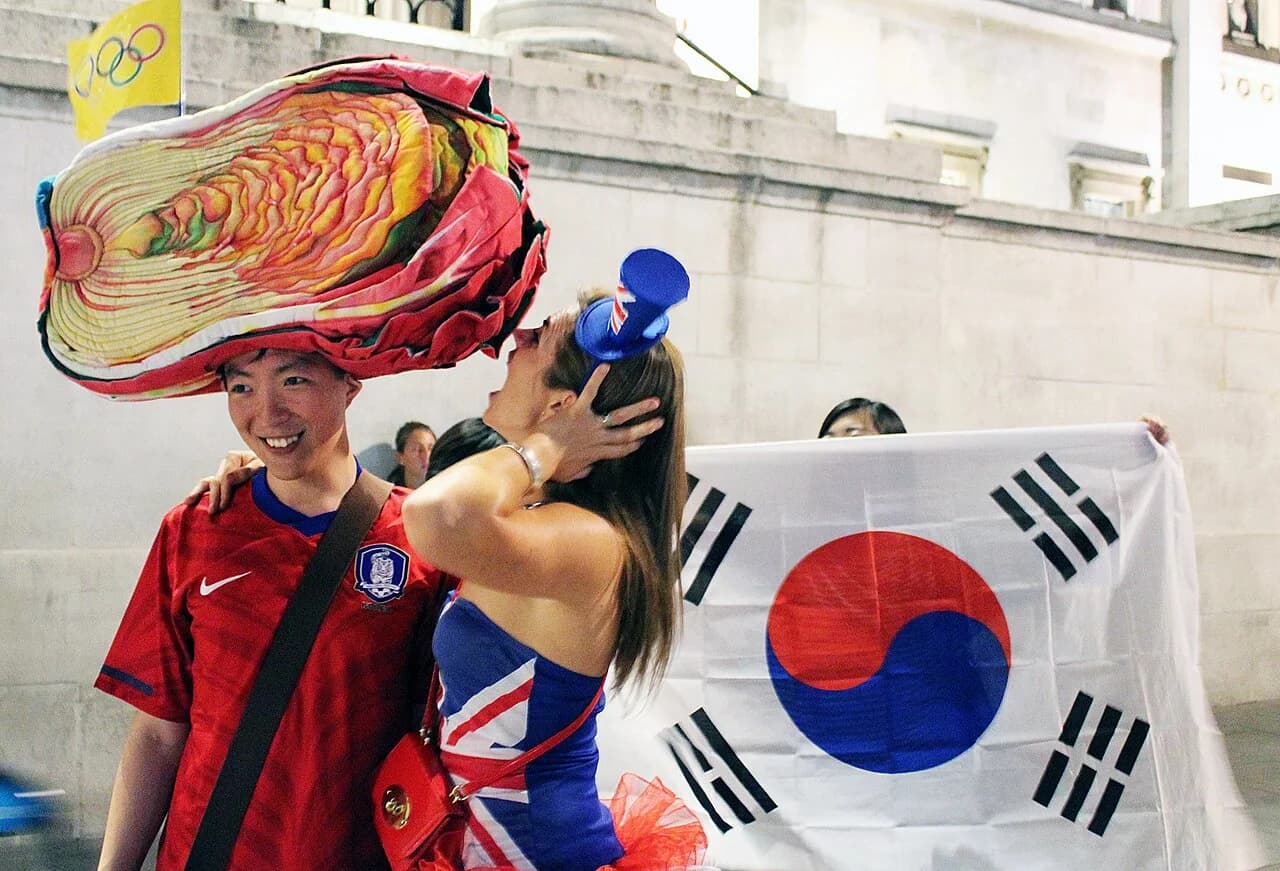
Sports crowds made the cheer highly visible, and K-pop and television carried it globally. Still, it is not only an idol catchphrase. Linguistic research treats “fighting!” as a Koreanized English expression with recognizable functions in real Korean discourse.
Use It Warmly, Not as an Order
Say it when the other person has a challenge they have chosen or must face. It works well before a test, performance, job interview, workout or long day.
It can sound shallow if someone has shared grief, burnout or a serious problem and needs listening rather than motivational confetti. It can also feel like pressure when a manager uses “fighting” to dismiss an impossible workload.
For a safer supportive sentence, pair it with recognition: 힘들겠다. 그래도 파이팅. (Himdeulgetda. Geuraedo paiting.) — “That sounds hard. Still, I’m rooting for you.”
So when a K-drama subtitle turns one shouted word into “Good luck,” it is not cleaning up an impending brawl. It is translating the social job of the word—and sometimes one tiny raised fist is doing the rest.