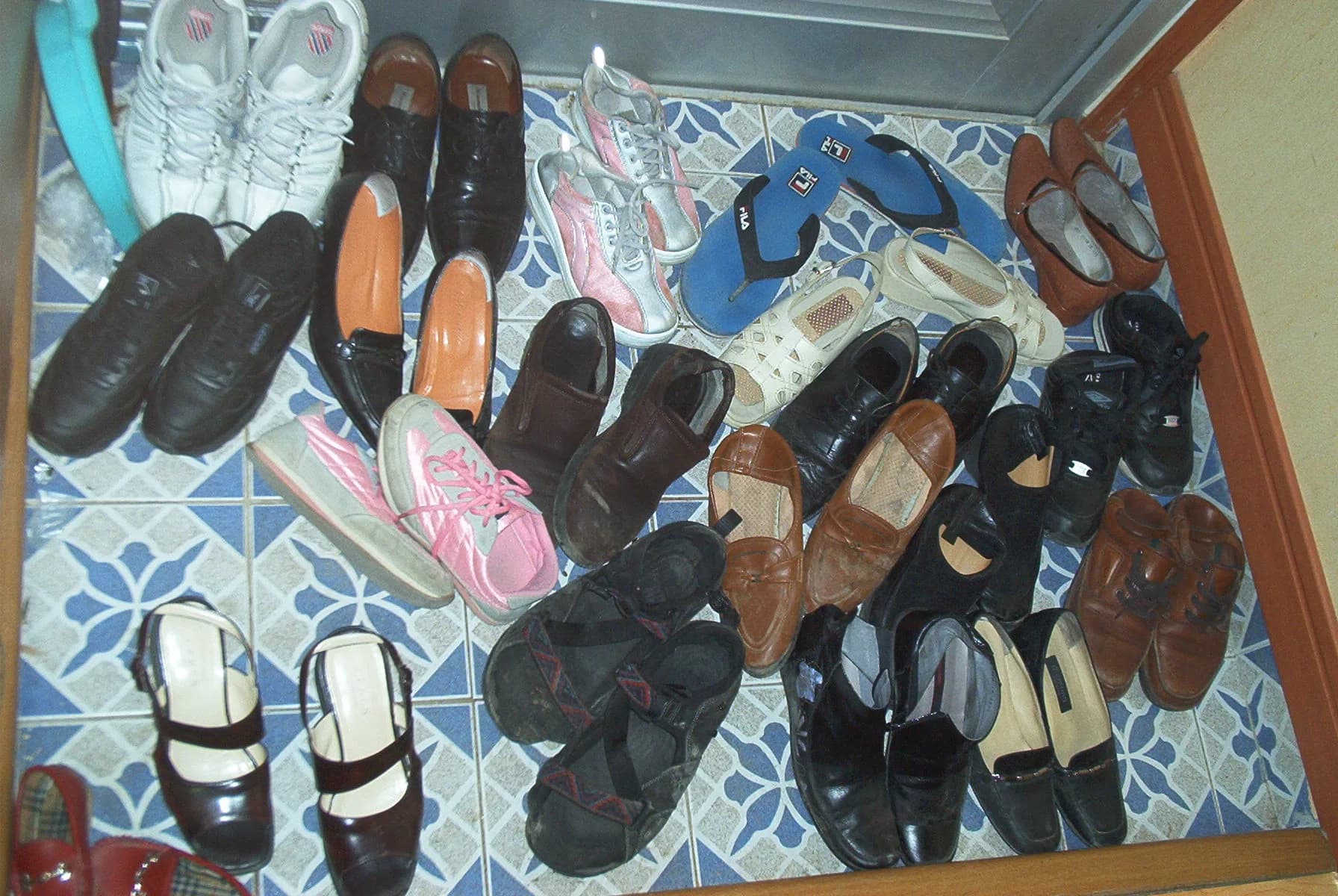
The front door opens, but the real border is a few centimeters inside it: tile below, warm floor above, shoes stopping exactly at the step.
Taking off outdoor shoes in a Korean home is not a decorative bit of “Asian etiquette.” It belongs to a living system in which the floor has long worked as heater, seat, table zone and sometimes bed. The trick for visitors is learning where that system begins.
The Floor Is Furniture Here
Traditional 온돌 (ondol) sent heat beneath masonry floors. Modern apartments usually circulate hot water through pipes, but the result is familiar: the floor itself warms the room.
That architecture encouraged sitting, eating and sleeping close to the floor. Korea.net’s history of ondol directly connects warm-floor living with the convention that wearing street shoes inside is frowned upon. An Academy of Korean Studies account makes the same larger point: even modern Korean housing carries the influence of ondol.
Clean-floor logic matters as much as warmth. A surface touched by hands, bedding and bodies is not treated like an outdoor path.
The Entrance Step Is a Quiet Stop Sign
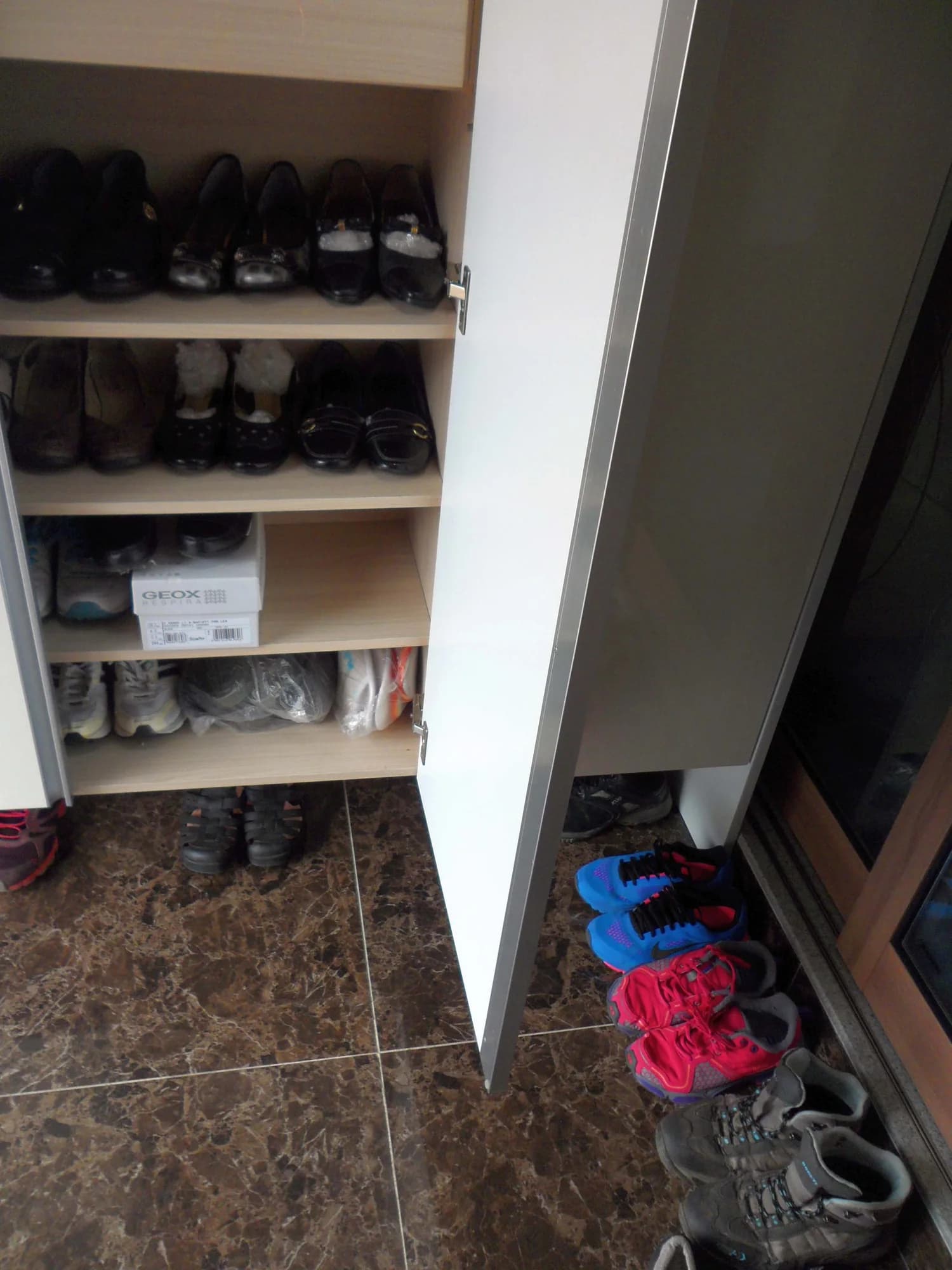
In many apartments, the 현관 (hyeongwan, entrance) has a lower tiled zone beside a built-in shoe cabinet. Outdoor shoes stay there; socks, bare feet or indoor slippers cross onto the raised interior floor.
Watch the sequence rather than hunting for an English sign:
- Step into the tiled entrance.
- Remove your shoes without placing socked feet back on the outdoor zone.
- Move the shoes neatly aside or into the rack.
- Use slippers only if the host offers them.
Do not balance against a fragile cabinet or scatter luggage over the threshold. The entrance is often compact and shared.
Not Every Roof Creates a Shoes-Off Zone
Korean shops, cafés, offices and most modern restaurants are ordinary shoes-on spaces. A doorway alone is not an instruction.
You are more likely to remove shoes in a private home, a floor-seating restaurant room, a temple interior, some guesthouses, or a place with an obvious raised platform and shoe shelves. Rules can differ between rooms in the same building.
When everyone’s shoes are lined up outside a room, follow them. When customers are walking across the same floor in sneakers, keep yours on. If the visual evidence conflicts, ask 신발 벗어요? (sinbal beoseoyo?, “Do I take off my shoes?”).
Bathroom Slippers Must Stay in the Bathroom
Many homes provide separate plastic slippers for a wet bathroom with a floor drain. They are not general house slippers.
Step into them at the bathroom door and leave them there when you come out. Walking through the living room in bathroom slippers reverses the clean-zone logic that the entrance created. This tiny mistake is memorable precisely because the footwear looks so harmless.
Guesthouses may also provide indoor slippers. Never wear those outdoors, even for a quick convenience-store run.
Socks Are Part of the Social Preparation
A shoes-off visit makes socks unexpectedly public. Clean, intact socks are the low-drama choice; bare feet may be fine in a home, but the host’s setup should guide you.
At a traditional restaurant, shoe lockers or numbered clips may replace the home shoe rack. Keep the key with you and avoid stepping on the dining platform while one foot is still in a shoe.
What outsiders often miss is that the custom is not about ritual purity at every entrance. It is spatial grammar. Once you recognize the lower outdoor zone and the raised living floor, Korean shoes-off etiquette stops feeling like a test and starts reading like a floor plan.