Archive: the September 3–13, 2026 program has ended. This page preserves the announced works and architectural context; it is not a current visit schedule.
For the fall program, Dongdaemun Design Plaza became a screen for media art.
Seoul Light DDP 2026 Fall was scheduled from September 3 with media art spread across the complex’s curved exterior, a laser signature show and live musicians performing inside the projection environment. The free program was scheduled nightly through September 13, from 7:30 to 10:30 p.m.
Its theme is “DAYBREAKER,” with the autumn chapter labeled “K-Original Light.” The idea is not to paste familiar Korean symbols onto a giant wall. It is to trace sources of modern Korean visual culture through video art, abstraction, historic song lyrics and contemporary sound.
A Screen 222 Metres Wide
The main media facade uses 222 metres of DDP’s exterior. Because the building has few straight visual breaks, projected work can move across a surface that feels closer to landscape than cinema.
The scale changes how to watch. Standing very close makes the light physically imposing but can hide the full composition. Moving farther into the plaza lets the building’s curves connect. A useful plan is to watch one cycle from a distance, then move nearer for texture and sound.
Four Works Build the “K-Original Light” Idea
The program joins four major pieces rather than presenting one long projection.
“The Break Point” pairs Nam June Paik’s video-art legacy with media group VERSEDAY. “Finding the Mountain Within” brings Yoo Young-kuk’s abstract language into a new work with artist Kwon Hayoun. “The Night Words Shine” draws on lyrics from the historic Korean song collection Cheongguyeongeon, reinterpreted with 2GREY. A fourth laser work, “Passing Through the Light of the Future, the Echoes of Time,” links DDP 365 Light with Yoon Je-ho.
The sources are deliberately different: screens, painted mountains, words and lasers. Their shared subject is origin—not as a museum label, but as material another artist can activate.
The Music Is Part of the Projection
Live sets make selected nights different from the standard facade loop. IDIOTAPE was scheduled to perform at the opening on September 3 from 8:00 to 8:40 p.m. Sion was scheduled for September 4 and 5; Hypnosis Therapy for September 6 and 12; and Soulscape for September 11 and 13. Those later sets were scheduled from 8:20 to 9:00 p.m. in Oullim Square.
The musicians are not background entertainment added beside an art show. The city describes the performances as connected to the projected work, turning the plaza into a temporary audiovisual stage.
These are the announced 2026 performance times, not confirmation that every set took place.
The Venue and Access Context
The festival dates above have ended. For a separate visit to DDP, Dongdaemun History & Culture Park Station connects to Lines 2, 4 and 5; follow signs for DDP and check the plaza-level route rather than assuming every exit is equally convenient.
The listed program used outdoor spaces. Any future program needs its own dates, weather notices and access checks.
The listed facade program was advertised as free. That does not make every nearby exhibition or commercial space free.
The Archive-Photo Caveat
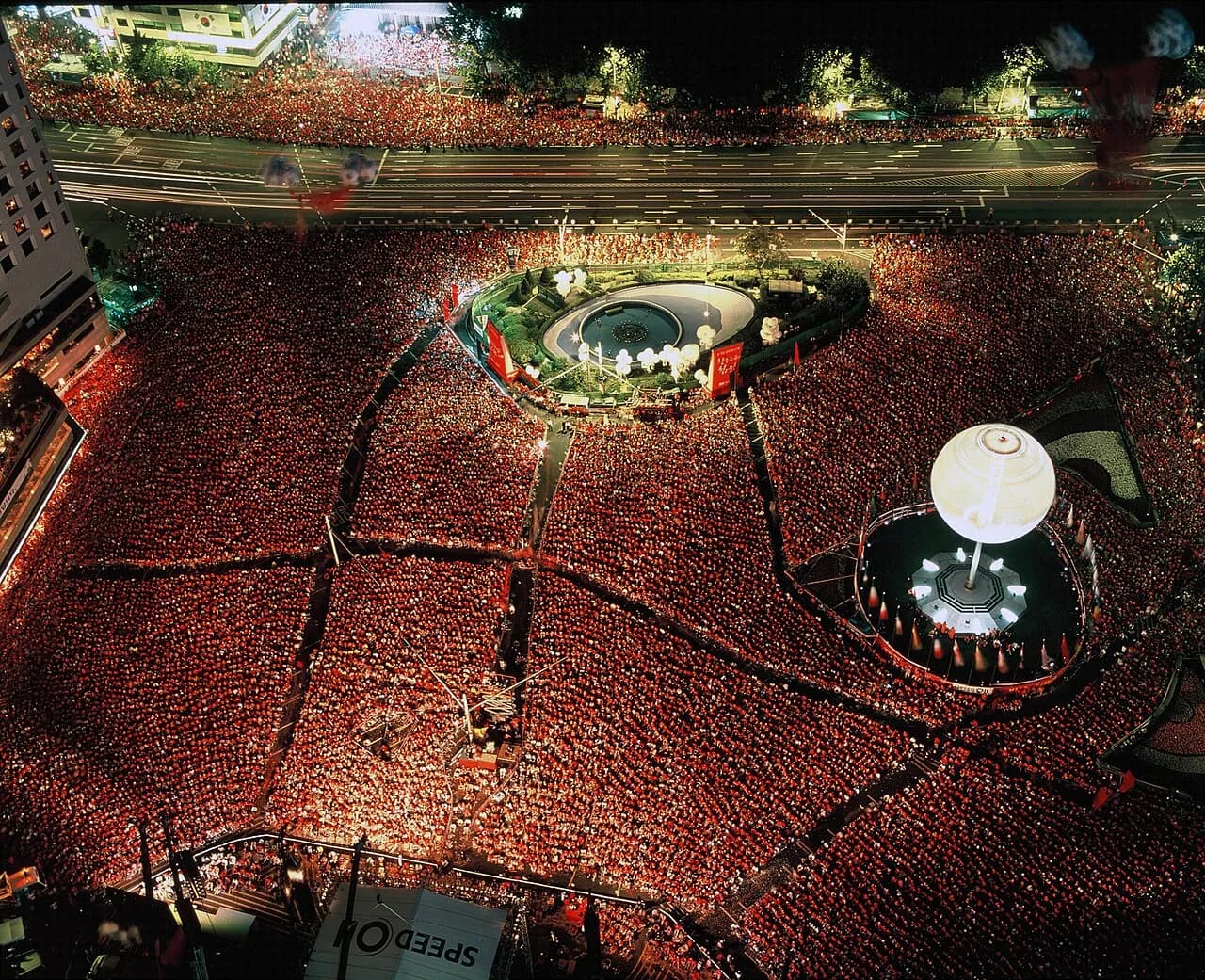
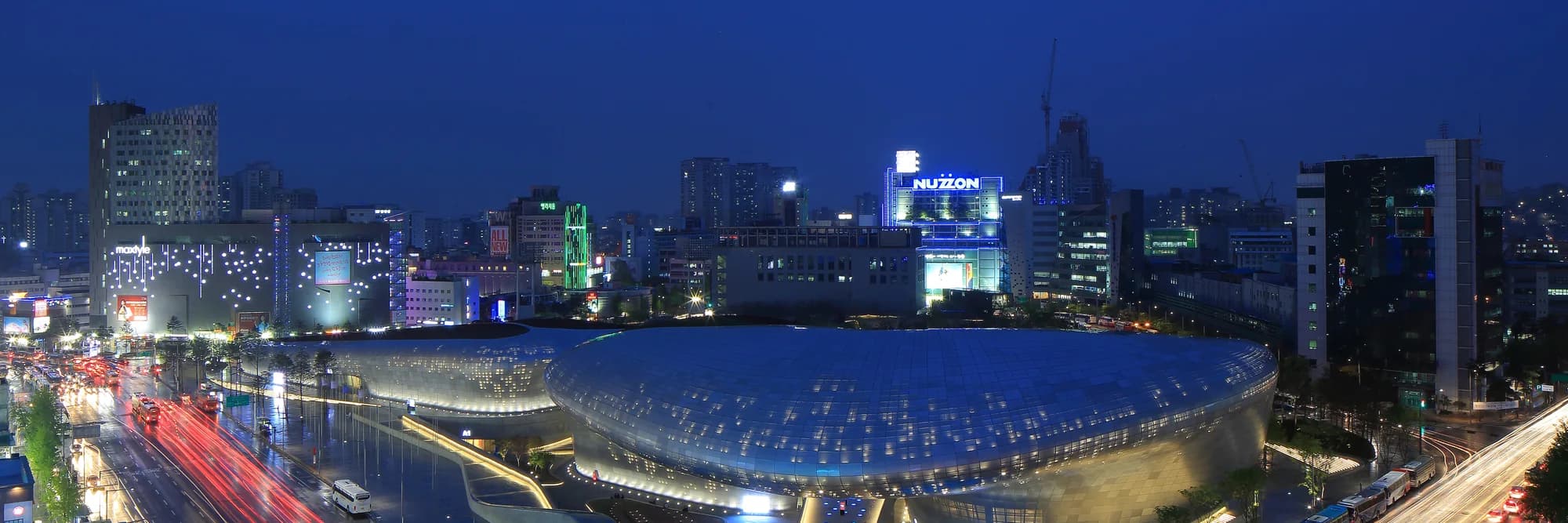
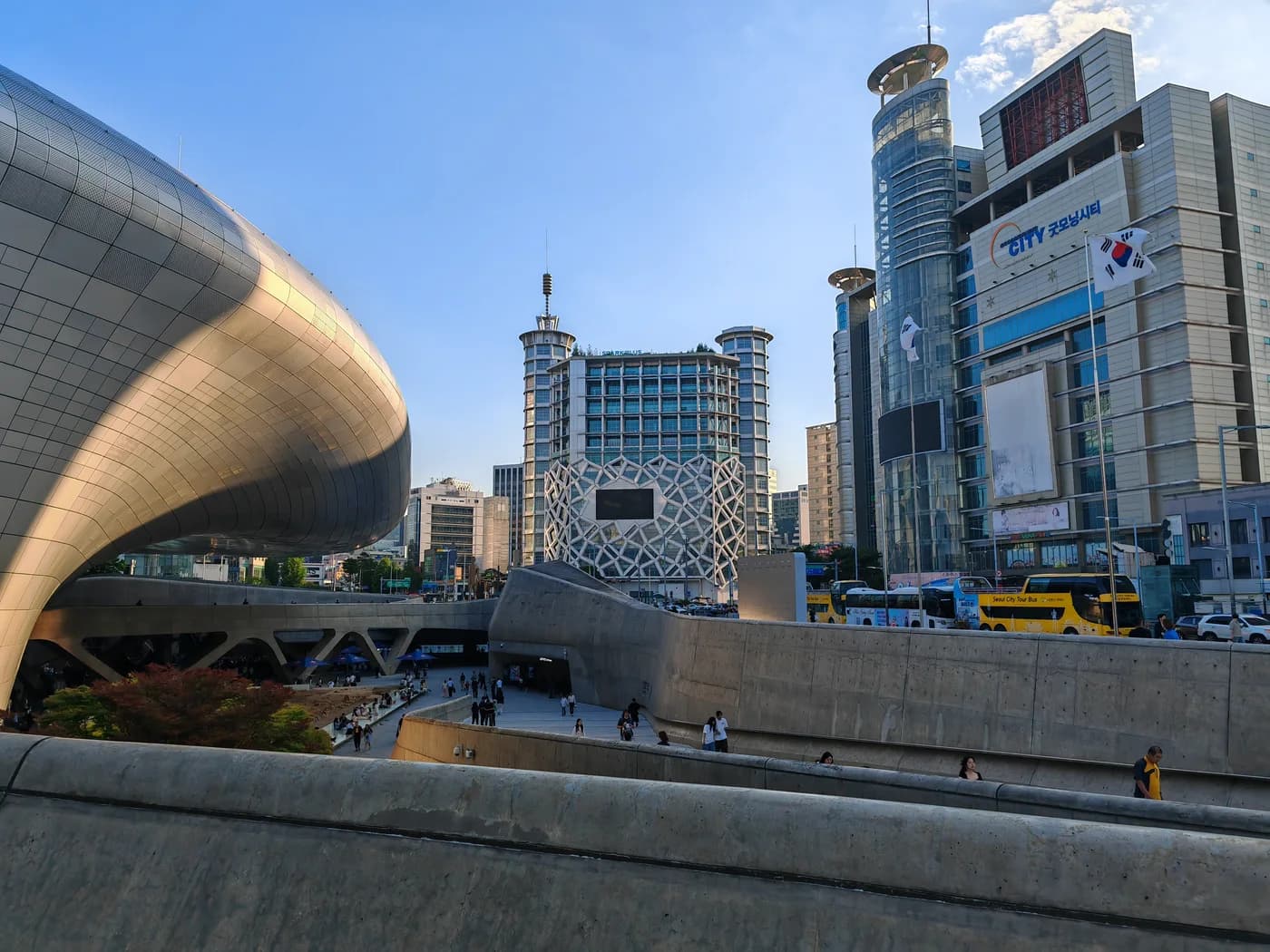
The photographs on this page show DDP itself before the 2026 festival. They are included to explain the unusual architecture that carries the projections, not to preview an installation they do not depict.
That distinction matters with media art. A generic night photograph can suggest the mood, but it cannot substitute for a new work whose exact colour, sequence and sound are part of the event.
Why This Festival Fits DDP
DDP’s aluminium curves were controversial long before they became one of Seoul’s most recognizable contemporary silhouettes. Seoul Light uses that unsettled quality well: the building never becomes a neutral rectangle, so every artist has to negotiate with its form.
For 11 nights, the architecture is not a frame around Korean culture. It is the surface where several generations of it meet.