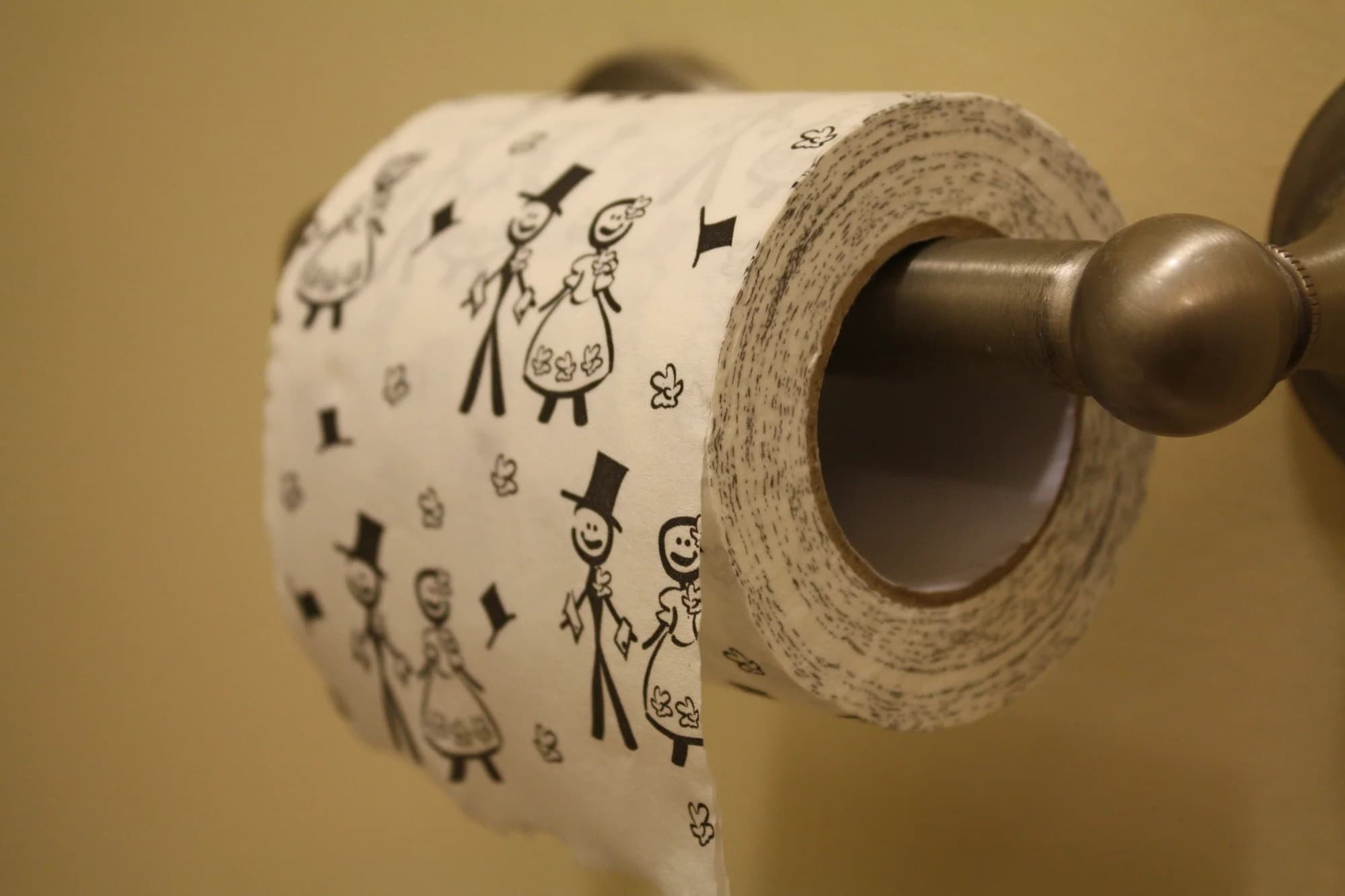
Your friend has a beautiful new apartment. You arrive carrying… a bulk pack of toilet paper.
In Korea, that is not a prank and it does not imply the host forgot to stock the bathroom. Toilet paper is a classic 집들이 (jipdeuri, housewarming) gift: useful on day one, easy to share and wrapped in a wish that life in the new home will unfold without trouble.
The Roll Carries a Wish in Korean
The symbolism leans on 풀리다 (pullida), a Korean verb that can describe something physically unrolling or a problem being solved. As the paper releases cleanly from the roll, the giver hopes the household’s complicated matters will also “unravel” smoothly.
A Korean government newcomer handbook explains the custom directly: guests bring detergent or toilet paper; bubbles suggest growing assets, while the unrolling paper represents a wish that problems will be easily resolved.
It is wordplay with good intentions, not a prediction. No one believes the brand, ply or roll direction controls the resident’s future.
Practicality Made the Symbol Stick
Moving creates a strange shopping list. The big furniture is memorable; soap, tissues, trash bags and cleaning supplies are not. A large pack of toilet paper solves a real problem without forcing the giver to guess the host’s décor.
It also suits the shape of a housewarming. Several friends can arrive with everyday supplies, while some moving traditions focus on sharing sirutteok with new neighbors. Korea.net has documented international residents being surprised by the gift and then learning that its smooth, long unrolling is exactly the point.
That combination—cheap enough for a casual invitation, useful to almost any household and easy to explain—helped an ordinary product become a cultural signal.

Jipdeuri Is the Visit, Not the Gift
집들이 literally combines “house” and “entering,” but in everyday use it means the gathering held after a move. The host may cook, order delivery or simply invite people over for drinks and snacks.
The toilet paper is not an admission ticket. A close friend may ask what the new resident needs. Colleagues may pool money for a household appliance. Guests now bring hand wash, food, gift cards, plants or wine depending on the relationship and the host’s taste.
So “Koreans always give toilet paper” is too strong. It is a recognizable default and an affectionate joke, not a compulsory national rule.
Detergent Is the Foamy Cousin
Laundry detergent is the other gift that appears beside toilet paper in official explanations of the custom. The image is abundance: bubbles expand, so the new household’s prosperity should expand too.
Here again, usefulness does half the work. A person who has just moved will probably clean and do laundry. Symbolism turns the practical purchase into a message instead of leaving it as supermarket inventory.
Before buying detergent, check whether the household uses liquid, powder, sheets or a particular machine. Toilet paper is often the lower-risk version of the same practical idea.
Bring It Without Making the Joke Weird
If you are invited to a Korean friend’s new home, a neat multipack is perfectly understandable. Add a short line such as 새집에서 모든 일이 잘 풀리길 바라요—“I hope everything goes smoothly in your new home.”
You do not need to explain the symbolism to a Korean host unless you are sharing why you chose it. And you certainly do not need to make bathroom humor the center of the party.
When the invitation is formal or the relationship is close, asking is better than performing tradition. 집들이 선물 뭐가 필요해? means “What do you need as a housewarming gift?” The answer may still be toilet paper—but now it will be the right toilet paper.