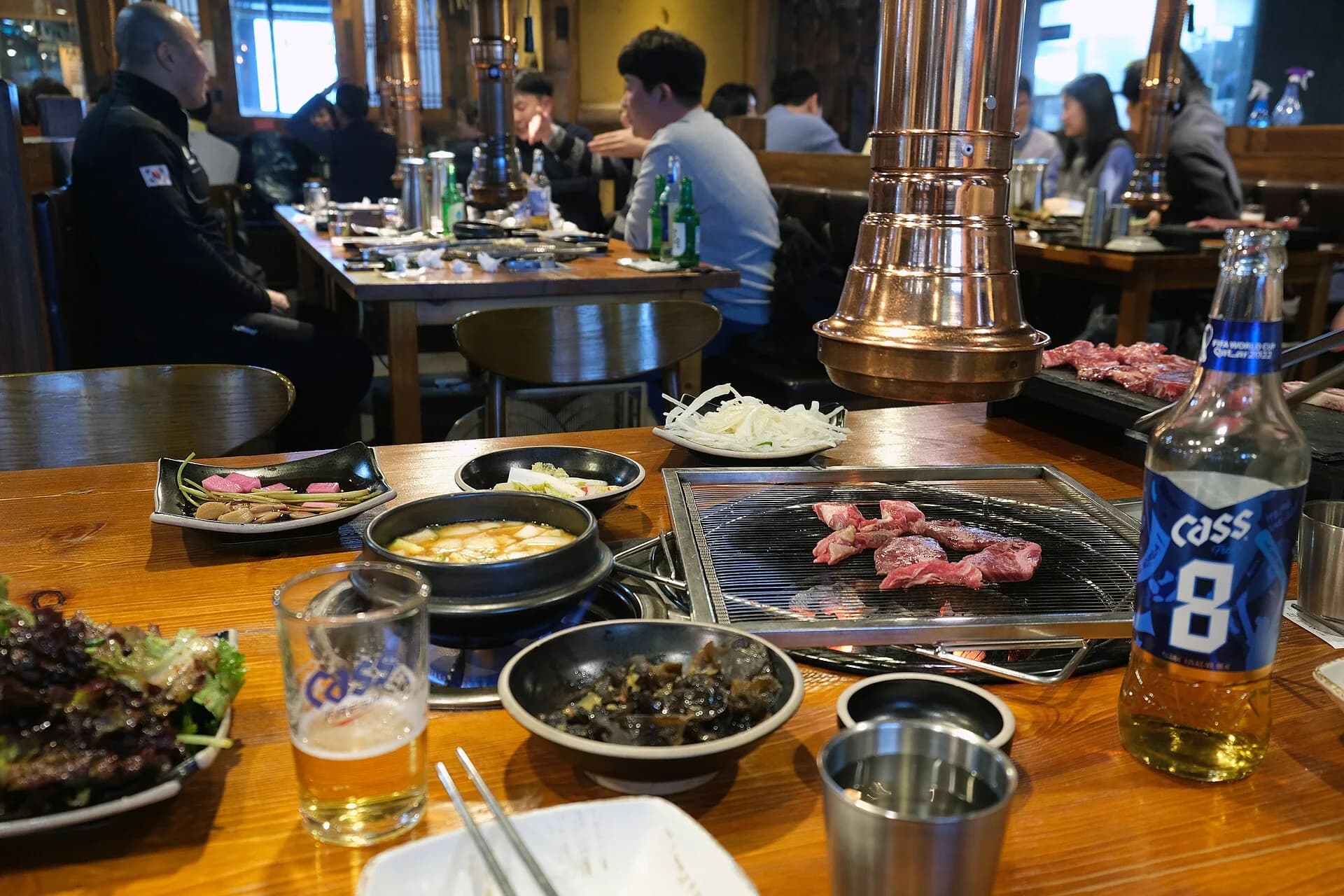
The pork belly is sizzling. The server reaches toward the table, picks up a large pair of scissors and starts cutting dinner directly over the grill.
For a first-time visitor, the tool can look borrowed from a stationery drawer. It is not. Korean restaurant scissors are kitchen shears, and at the table they do a job that a knife and cutting board would handle elsewhere—only faster and without moving the food away from the shared meal.
At the Table, the Shears Are a Serving Tool
Korea.net’s “K-Scissors” feature lists pork barbecue, cold noodles and kimchi among the foods commonly cut with scissors. The shared logic is practical: long, wide or chewy food becomes bite-size while it is already in the bowl or on the grill.
Shears can make repeated cuts without needing a flat board. They also let the cook hold food with tongs, lift it slightly and divide it above the heat. At a busy barbecue table, that is easier than finding room for a knife.
This is not a claim that every Korean dish should be snipped. Rice, soup, delicate pancakes and most small banchan arrive ready to eat. The scissors appear when the food’s shape makes them useful.
Barbecue Is Cut After It Starts Cooking
At many Korean barbecue restaurants, strips of pork belly or marinated meat reach the grill in larger pieces. They cook briefly, then staff or diners cut them into portions and continue grilling the exposed sides.
The timing depends on the meat and the restaurant. Do not treat a generic online timer as a food-safety guarantee. If staff are managing the grill, let them manage it; repeatedly grabbing the tongs can disrupt their sequence.
When your table is expected to cook, use the provided tools and keep raw and cooked contact separate as the venue instructs. The goal is not a theatrical midair snip. It is evenly sized pieces that are easier to turn, cook and wrap in lettuce.
Cold Noodles Get the Optional Snip
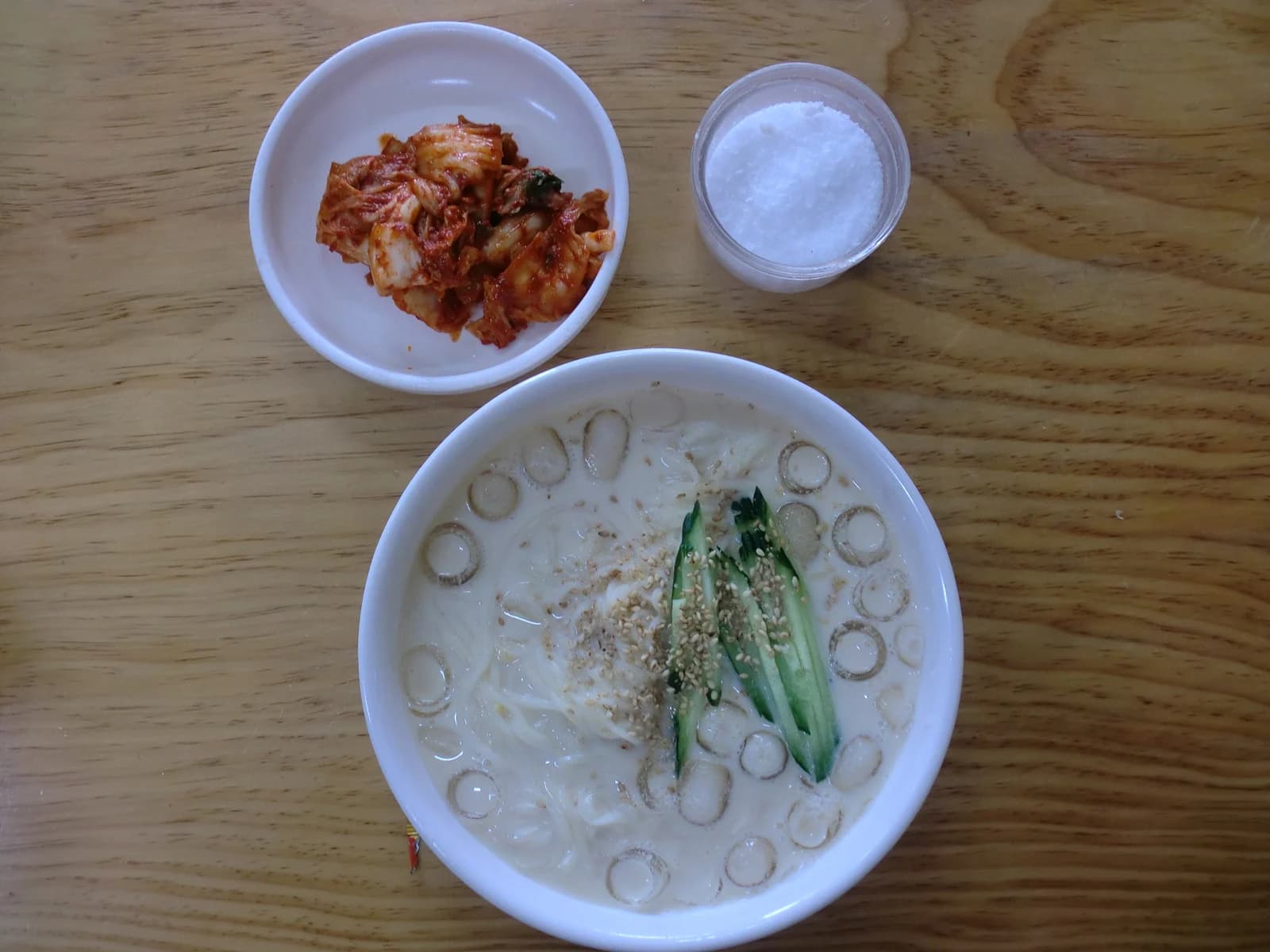
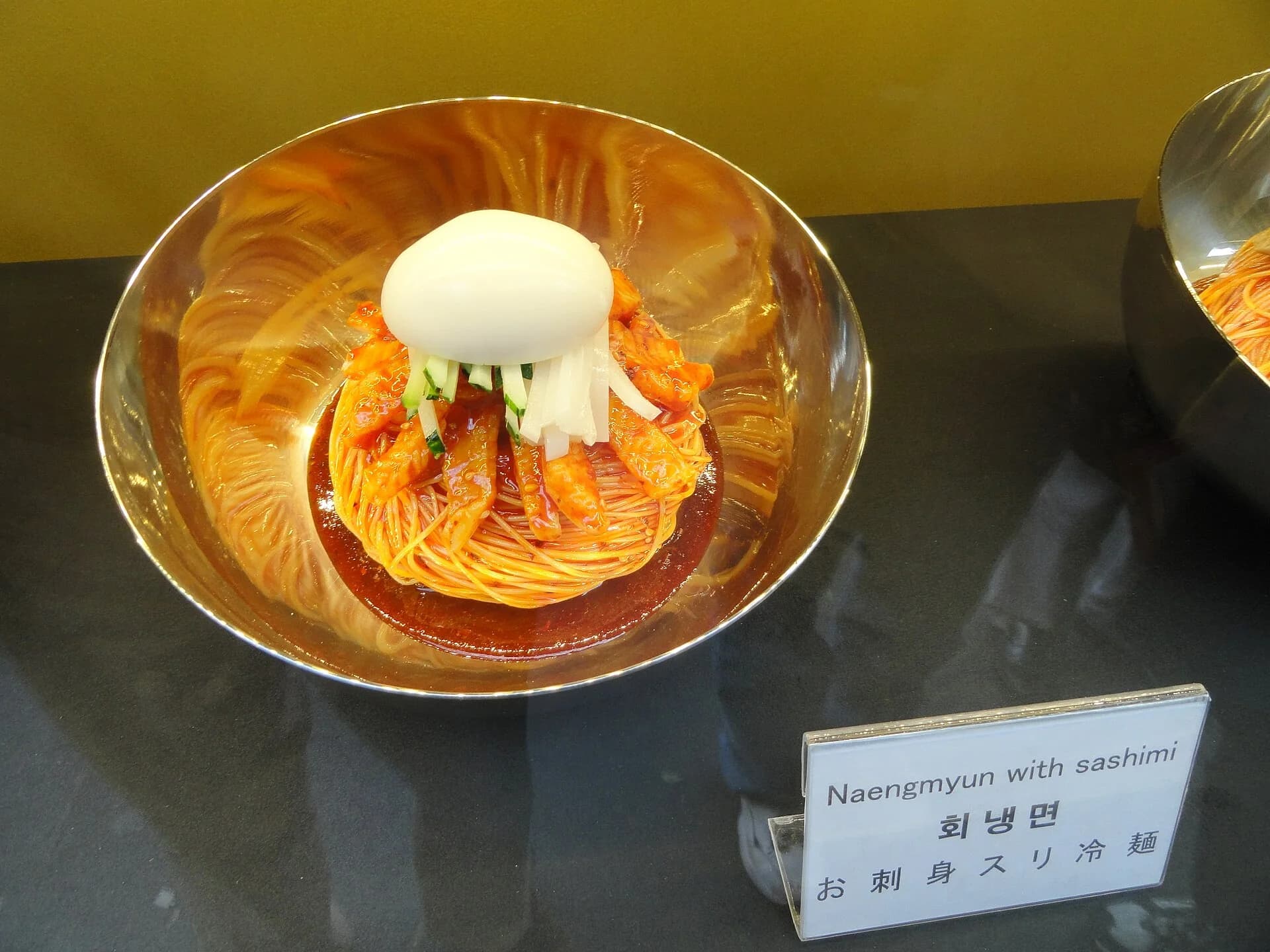
Naengmyeon can arrive as a dense coil of long, resilient noodles in chilled broth or spicy sauce. A server may ask whether you want them cut and make one or two crosswise snips through the bundle.
That is usually about handling the texture and portion, not declaring the noodles impossible to eat whole. Preferences differ. Some diners like the long strands; others want a shorter mouthful that mixes more easily.
Wait for the question or cut only your own bowl. Do not reach across and shorten everyone’s noodles in the name of cultural accuracy.
Kimchi is another common scissors candidate, especially a large leaf or long strip served in a pot or on a shared plate. The same tool turns it into pieces without carrying the spicy juices to a board.
The Tongs and Scissors Have Different Jobs
The tongs grip, turn and move. The scissors divide. At barbecue, the two usually work as a pair: hold the meat steady with the tongs, then cut with the shears.
Do not use personal chopsticks to handle raw meat. Do not place the food scissors on your chair, bag or a dirty surface and return them to the grill. If tools fall or look unclean, call the server for a replacement.
Restaurants may provide more than one pair of tongs to separate raw and cooked food. Follow the table’s setup instead of inventing a colour code that the venue never stated.
When in Doubt, Let the Table Lead
Some restaurants cook the entire meal for you. Others expect diners to take over. A third group starts the meat and leaves the final turning to the table.
Watch the first minute. If staff position the meat and keep returning, give them space. If they place the tools beside you and move on, ask 저희가 구우면 돼요? (jeohuiga guumyeon dwaeyo?)—“Should we grill it ourselves?”
For noodles, 잘라 주세요 (jalla juseyo) means “Please cut it,” while 안 잘라도 돼요 (an jallado dwaeyo) means “You don’t need to cut it.”
Once you see scissors as cooking equipment rather than office supplies, the surprise disappears. Korea did not put craft time beside the grill. It put the cutting board into one hand.