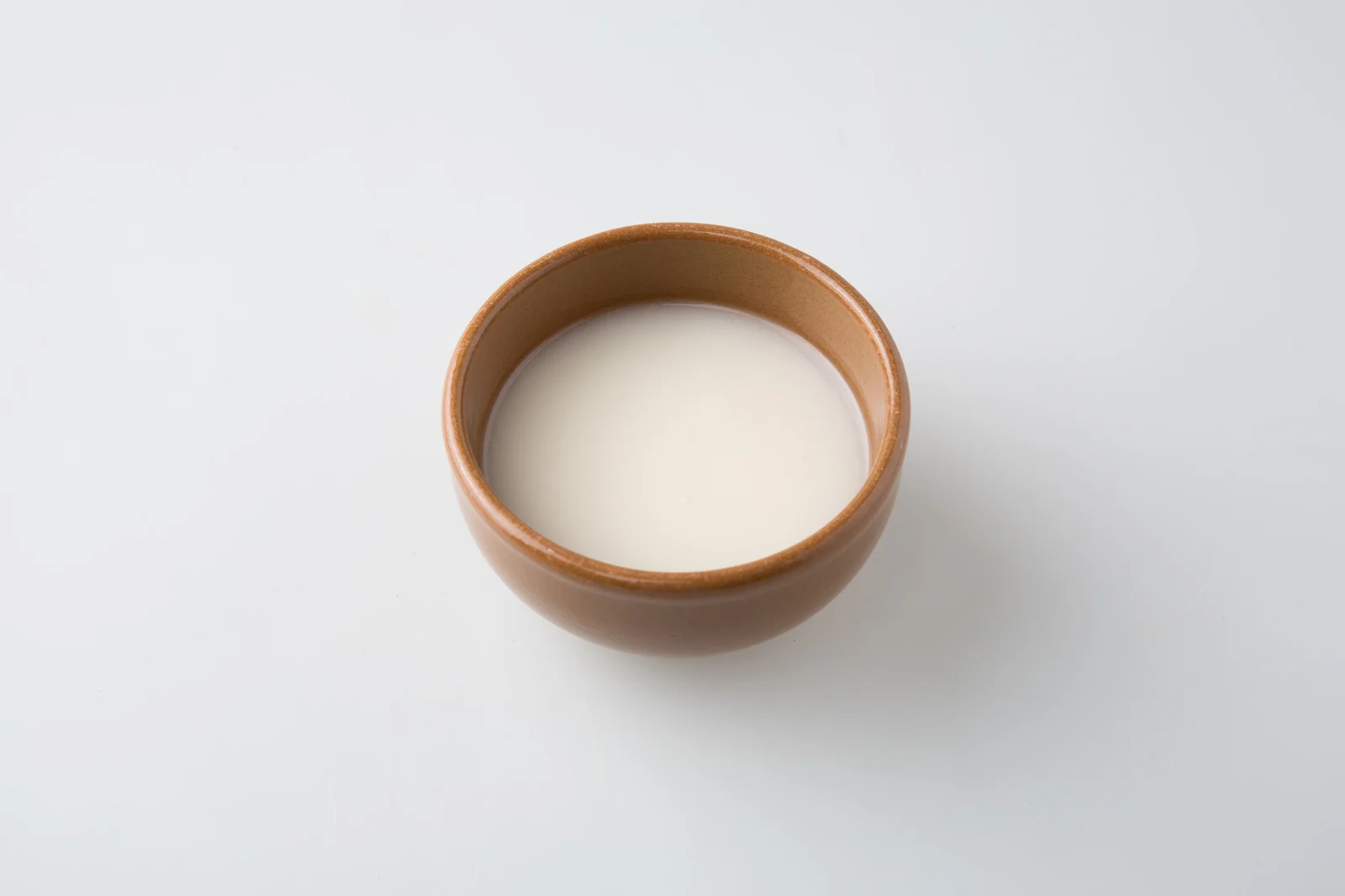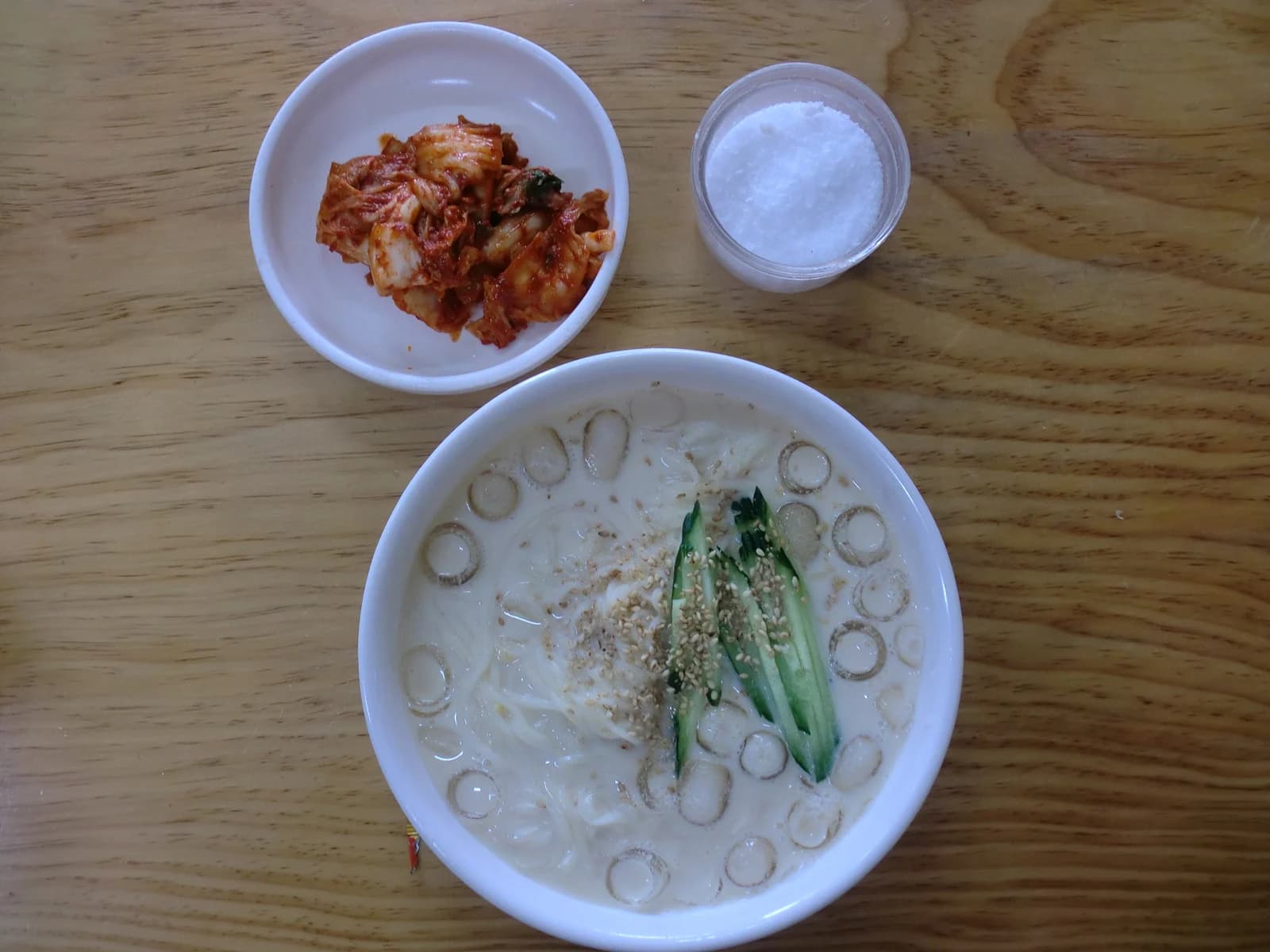
Kongguksu (콩국수) has a pale, creamy-looking broth because it is made with ground soybeans. It is a cold noodle dish, not simply hot noodle soup allowed to cool. VISITKOREA describes noodles served in a thick soybean soup, with the bean flavor at the center of the bowl.
Creaminess does not have to mean cream
VISITKOREA’s description of Jinju Hoegwan explains the preparation in terms of boiled, ground soybeans. That gives a useful answer to the visual puzzle: the base comes from processing beans, rather than the appearance proving that dairy cream was added.
It does not follow that every restaurant’s recipe is identical or that any bowl can be certified dairy-free from a photo. Ask about the actual ingredients if that distinction matters. The dish’s name is a starting point for the question, not a complete ingredient label.
A summer bowl built around soybean flavor
The KTO food entry presents kongguksu as a summer dish with a rich broth and restrained seasoning. Its later summer-food guide describes wheat noodles in ground-soybean broth and notes a black-soybean variation. White is therefore a familiar appearance, not a rule that excludes every darker version.
The archive photograph shows the broth with noodles, cucumber, sesame and ice. Those visible details help identify this particular serving. They do not require every restaurant to reproduce the same arrangement or garnish.
Salt or sugar is not a universal test
VISITKOREA’s summer guide advises tasting the soup and describes salt or sugar as seasoning options according to preference. Its shorter food entry emphasizes salt. Read together, these accounts make a useful distinction between a basic description and the choices diners may encounter.
Taste the broth first and add a small amount if you want to change it. There is no need to declare another table’s preference wrong. Nor can you identify a white condiment in a photograph reliably enough to call it salt or sugar without further evidence.
The name helps separate it from other cold noodles
콩 is kong, bean, and 국수 is guksu, noodles. Remembering the soybean base helps distinguish this bowl from cold noodles in a clearer stock or a spicy dressing.
If the utensils are also unfamiliar, our explanation of Korean metal chopsticks covers that separate table detail. The key to understanding kongguksu itself is simpler: start with the beans, the cold broth and the seasoning offered in front of you.
Archive photograph, 2014-10-05 (EXIF): hyolee2 / Wikimedia Commons. CC BY-SA 3.0. Resized without cropping and converted to WebP; image reuse remains under the stated license.