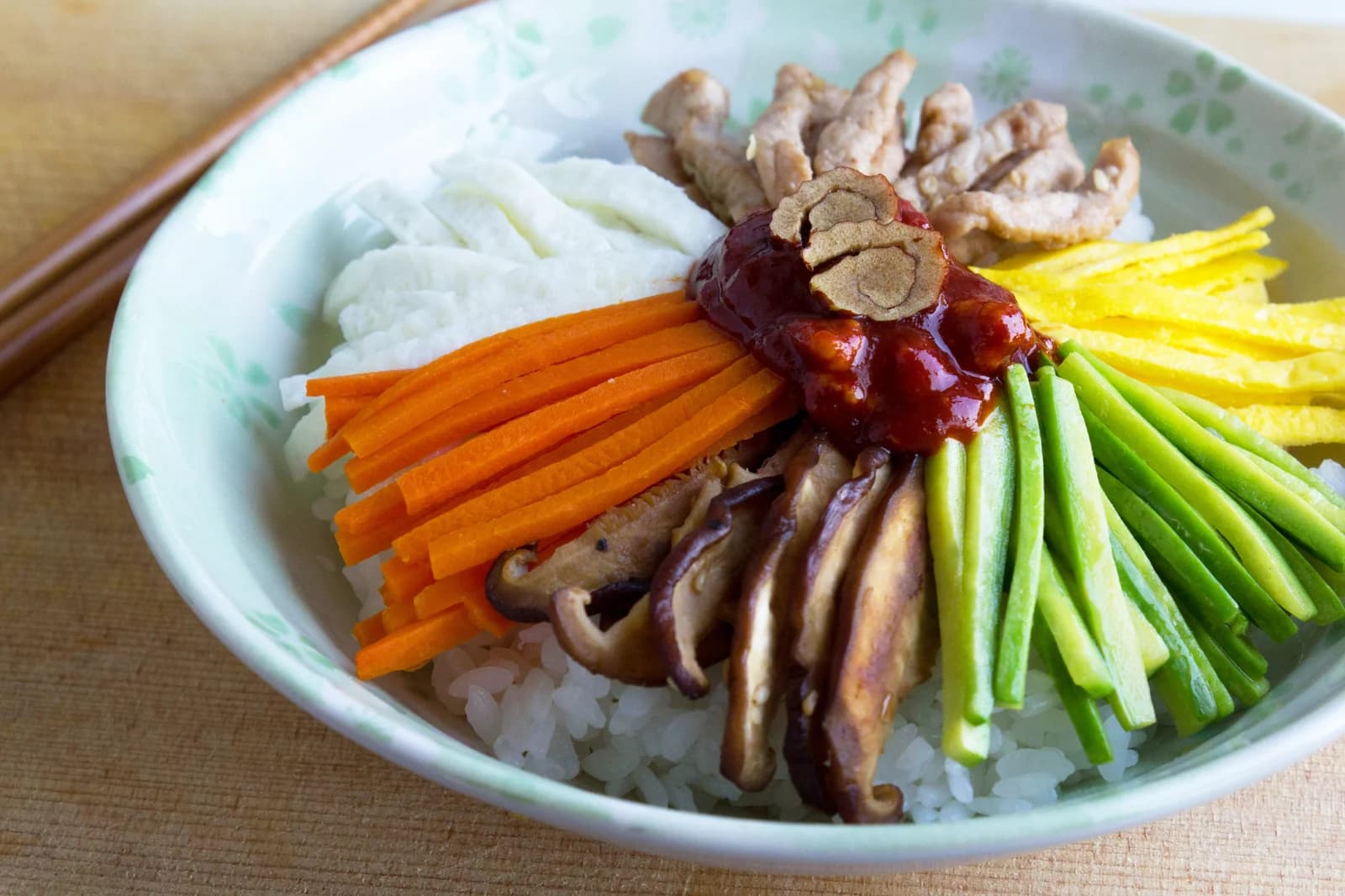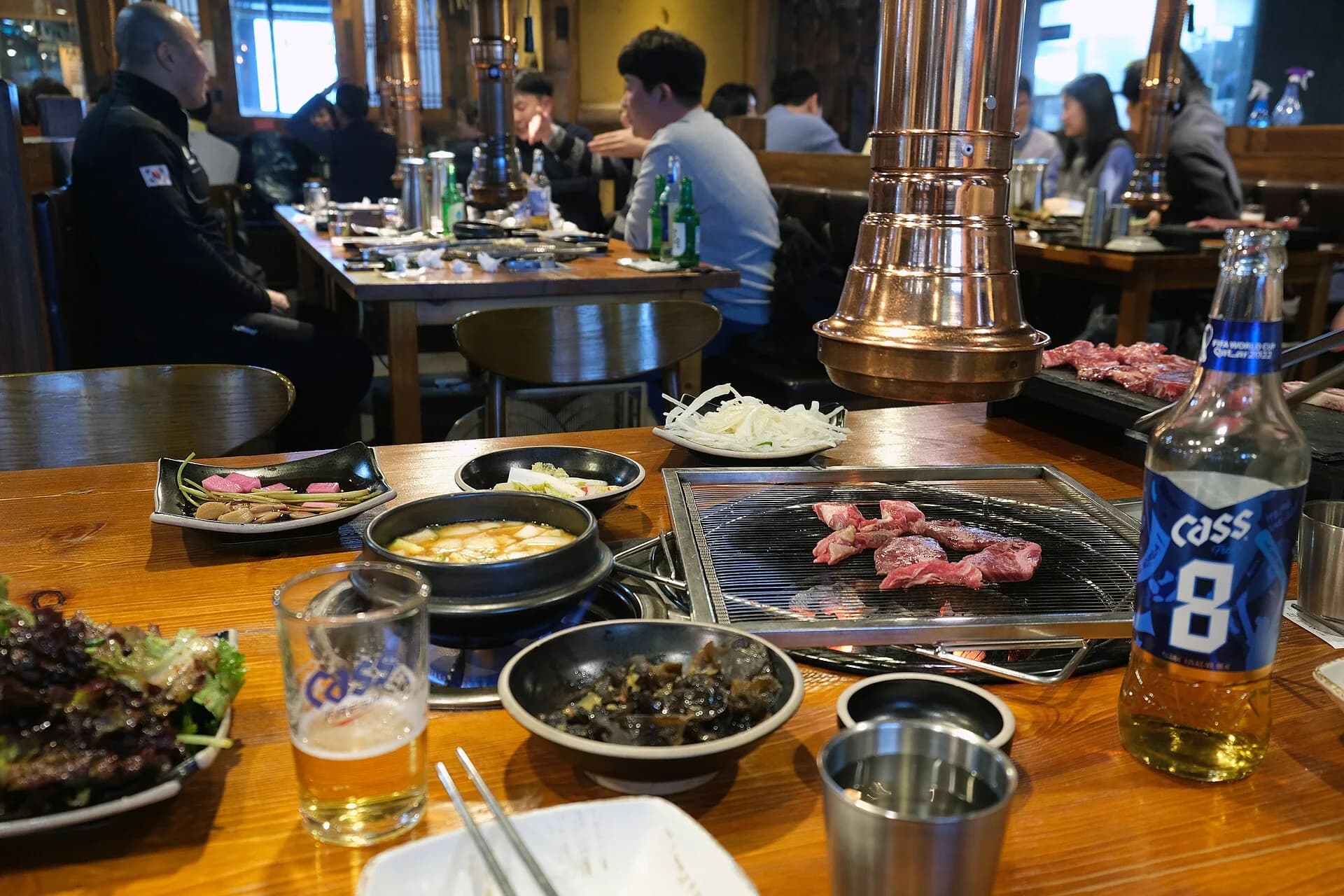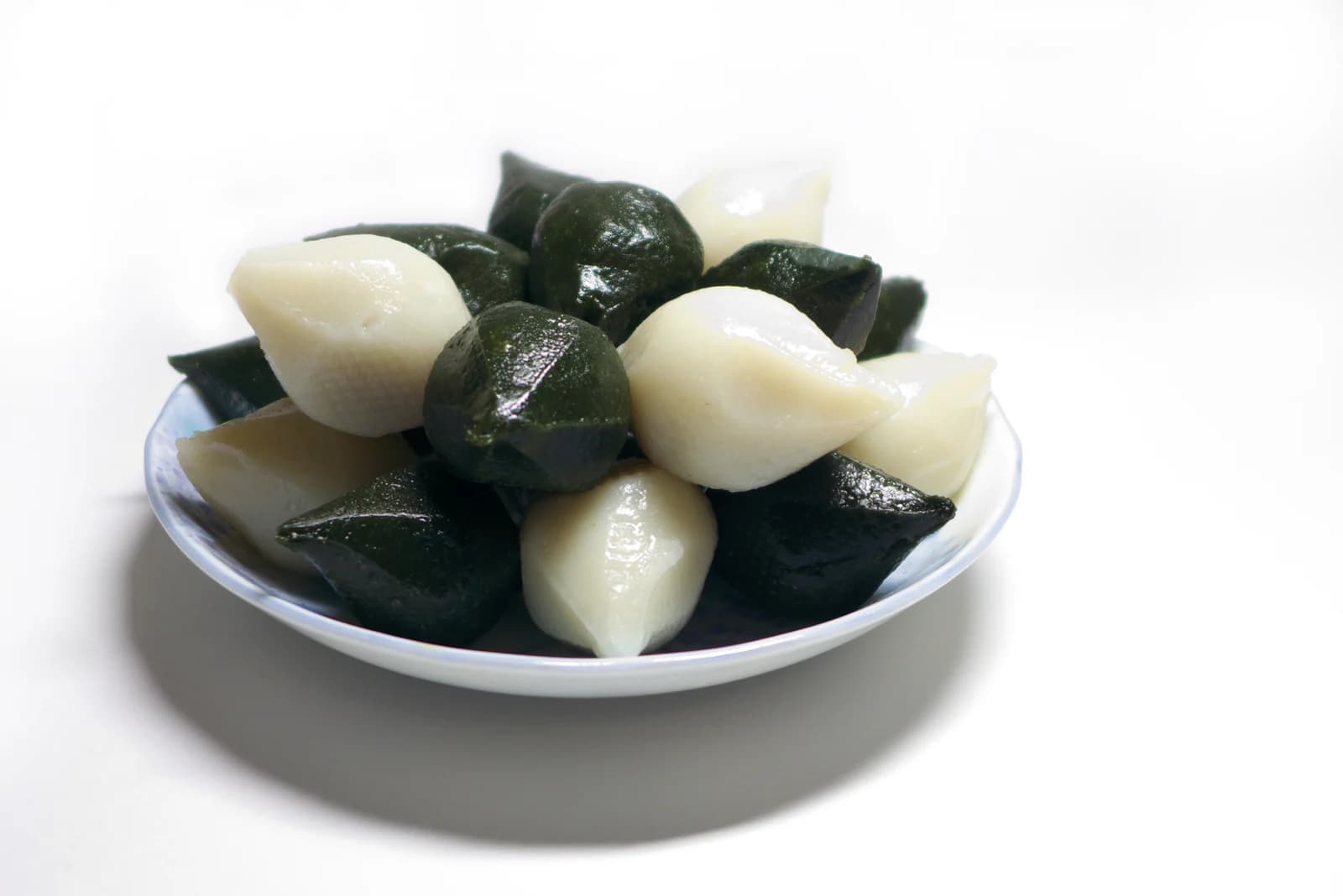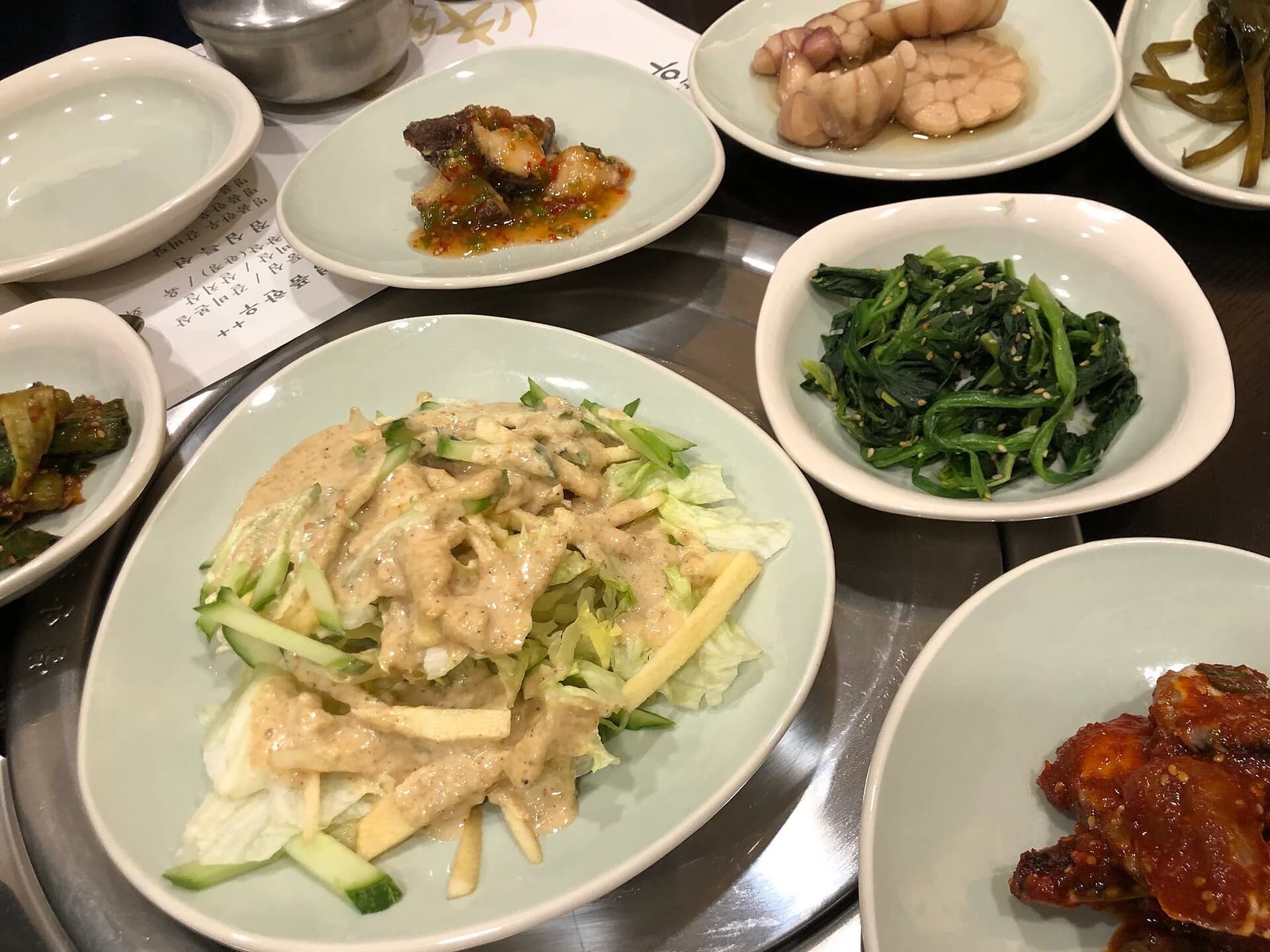
You order one stew. Four little plates arrive that you never requested.
Are they free? Can you ask for more? And is that glossy rolled omelet playing by the same rules as the kimchi?
Short answer: basic banchan are usually included, and many restaurants refill them without a separate charge. “Unlimited forever” is not a national law.
The Short Answer: Usually Included, Never Automatic Law
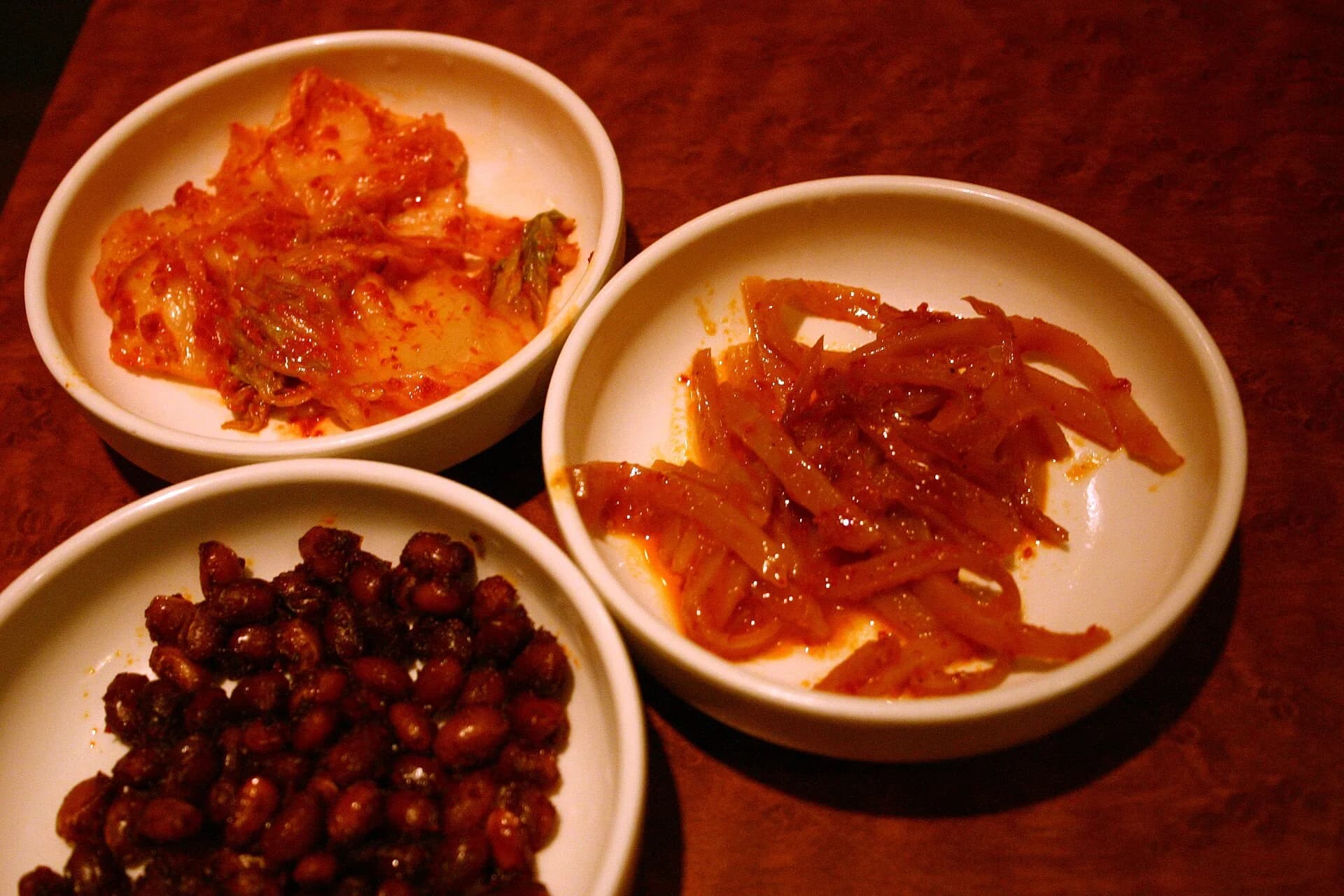
Banchan (반찬) are the small dishes eaten with rice: kimchi, seasoned vegetables, pickles, braised beans, fish cake and countless regional or restaurant-specific variations.
At many everyday Korean restaurants, the basic selection arrives as part of the meal price rather than as separate menu items. Asking for another small portion is normal.
But the restaurant decides what is refillable. A premium ingredient, a limited house specialty or a side ordered from the menu may cost extra. A sign can limit refills or move them to a self-service bar.
That distinction matters in 2026, when rising ingredient costs have pushed restaurant owners into a visible debate over whether unlimited free refills can continue.
Banchan Is Part of the Meal’s Architecture
Korean Tourism Organization describes a Korean table as rice and soup in front of each diner, with main dishes and multiple banchan arranged around them.
The little plates are not an appetizer course that must disappear before the stew arrives. They are eaten throughout the meal, combined differently with rice, meat, soup or wraps.
That is why a restaurant can treat the standard banchan as included service while still charging for a menu item that happens to arrive on a small plate. Size does not determine the rule; the restaurant’s menu and service system do.
Refill the Favorite, Not the Whole Table
When one dish runs out, point to it and say:
이거 조금 더 주세요.
Igeo jogeum deo juseyo.
“A little more of this, please.”
That is clearer than asking for every side again. It also reduces untouched leftovers.
Free does not mean costless to the restaurant. The vegetables, seasoning and labor are built into the meal, and uneaten refills become waste. Take a modest amount, then return if you genuinely want more.
“Self” Means You Serve Yourself
Look for 셀프 (self) or 셀프바 (self bar). If the restaurant directs diners there, staff may not bring refills to the table; otherwise, a table call button may be the normal way to ask.
Use the utensils assigned to each container. Do not carry your used personal plate into a shared food tray unless the restaurant’s setup clearly permits it. Take a small refill and close lids or doors after use.
The self bar is not necessarily unlimited. Posted quantity limits and paid items still apply.
Special Sides Can Break the Pattern
Kimchi and simple vegetable dishes are common refill candidates. Grilled fish, steamed egg, raw crab, japchae or another labor-intensive dish may be the main item, a one-time service plate or a paid add-on.
There is no reliable visual test. A generous first serving does not guarantee a second one, and a tiny serving does not mean it is free.
If it matters, ask 이거 리필돼요? (Igeo ripil dwaeyo?)—“Can this be refilled?” If you also need to confirm the price, add 무료예요? (Muryoyeyo?)—“Is it free?”
The One Rule That Clears It Up
Do not demand “service.” In Korean restaurant speech, 서비스 can mean a complimentary extra chosen by the business; it is not a magic word that turns a menu item into a gift.
Ask about the specific dish, follow the self-service signs and take what you can finish.
That is the actual rhythm of banchan culture: generosity is common, clarity is welcome, and the polite refill is smaller than the myth.