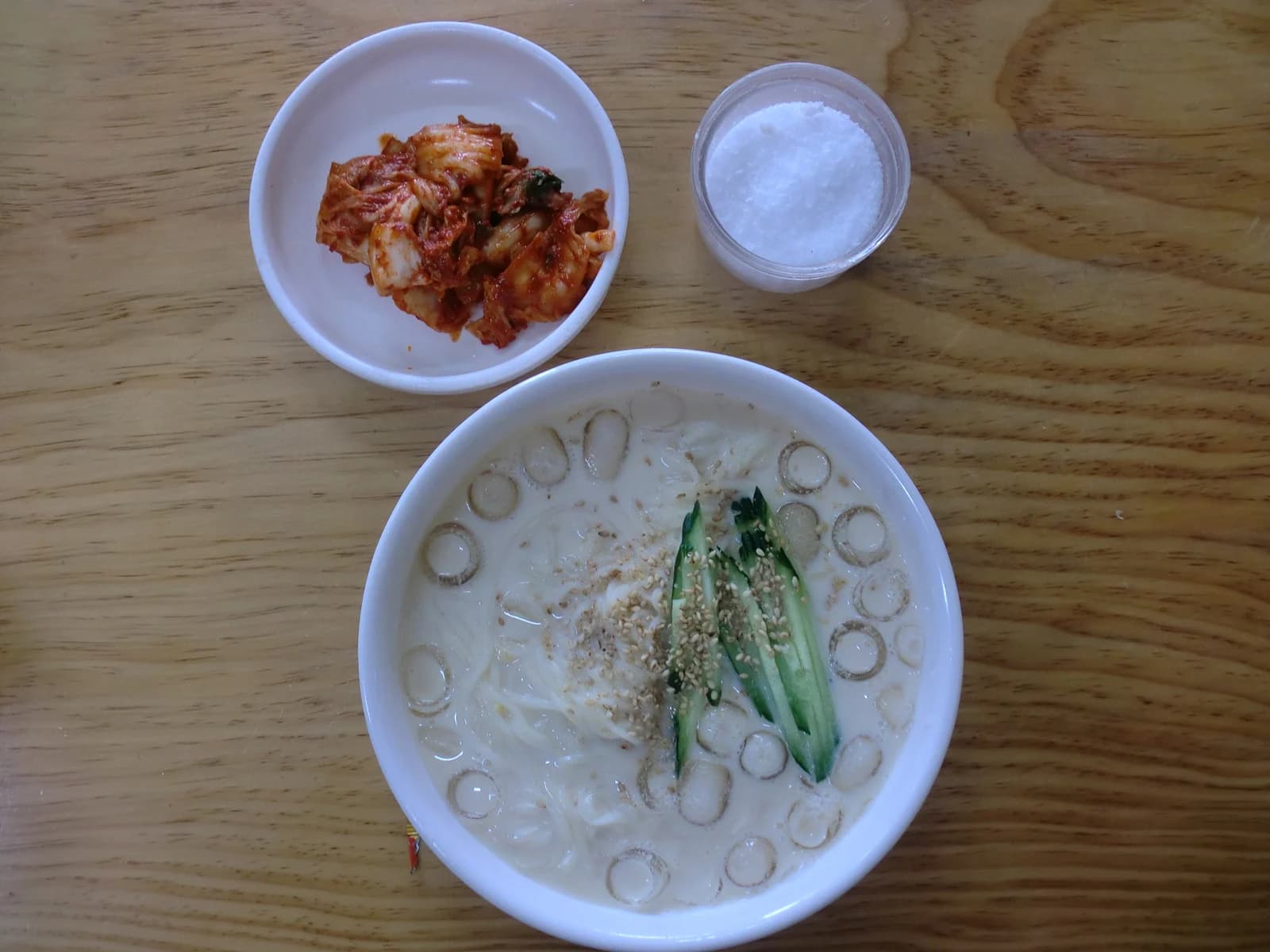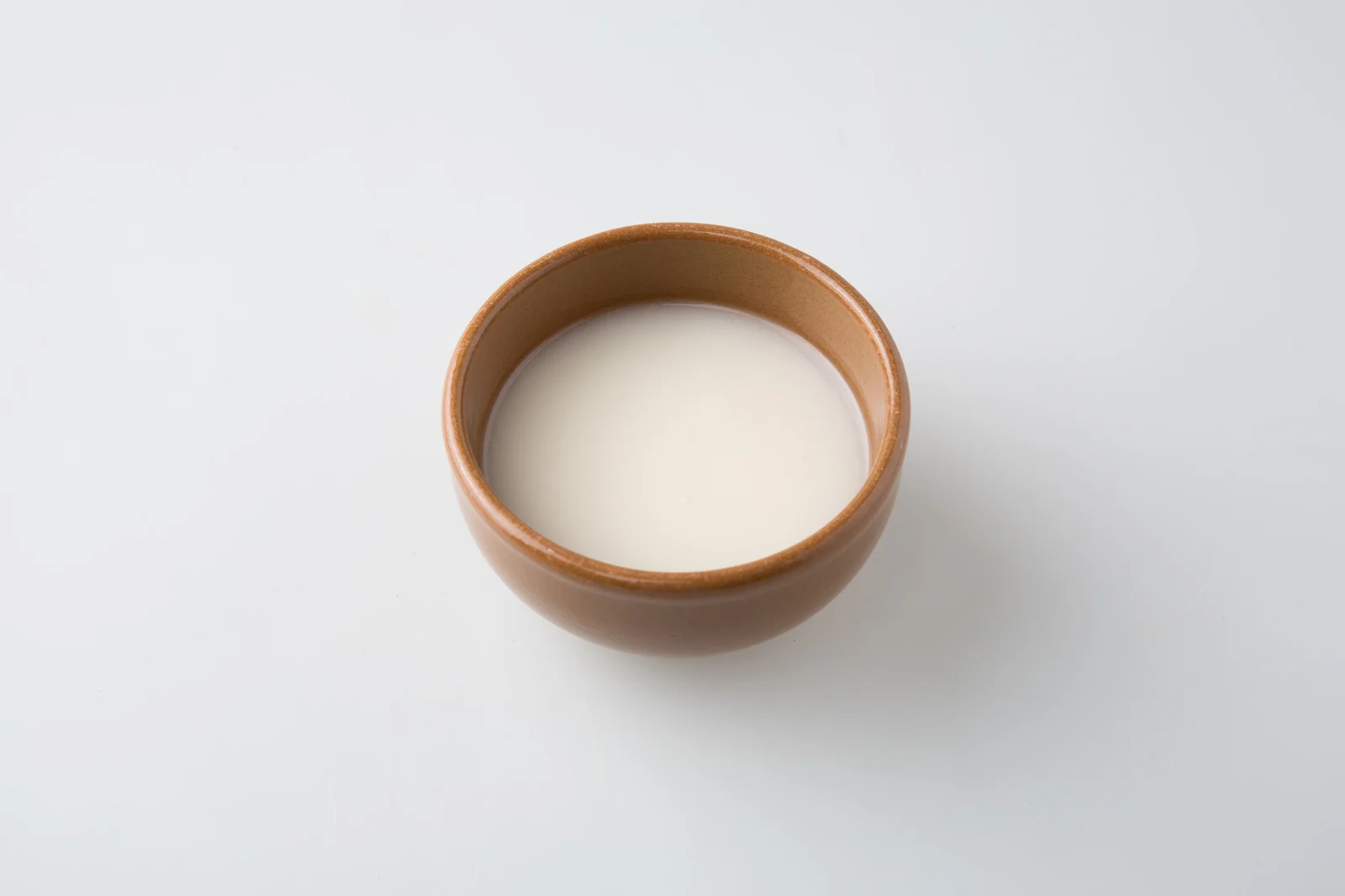
Makgeolli (막걸리) looks cloudy because of the way this grain-based alcoholic drink is brewed and strained. Korea.net’s guide to traditional liquors describes it as only lightly strained, leaving an opaque drink rather than the clear liquid associated with more thoroughly filtered styles.
The white appearance begins in the brewing process
The Cultural Heritage Administration describes a process involving cooked rice, water and nuruk, a fermentation starter, followed by fermentation and sieving. The pale appearance is therefore connected to the fermented grain mixture. The traditional process is not a method of turning milk into wine.
This explains the broad visual difference, but not every detail of a particular bottle. Ingredients and production choices vary. The product label is the right place to check what a specific makgeolli contains; a creamy-looking photograph cannot establish its full recipe.
Cloudy, clear and distilled are different categories
Korea.net’s liquor guide distinguishes cloudy drinks from clearer filtered liquors such as cheongju and yakju, and from distilled soju. These are useful production distinctions. “Korean alcohol” does not describe one shared liquid served in different containers.
The English term “rice wine” can help a newcomer place makgeolli on a menu, but it should not suggest a grape-wine recipe or predict a particular sweetness. Read the name and product information together rather than using color as a complete tasting guide.
A sieve can leave a distinctive texture
In Korea.net’s report from a Busan brewery, the fermented mixture is passed through a sieve. The reporter describes the resulting drink’s texture as part of its character. That first-hand account gives a practical picture of the step behind the general word “strained.”
Different brewers need not produce identical texture. The photograph illustrates makgeolli’s opaque appearance; it does not document a new release or certify the quality of a brand.
Making and sharing have their own cultural meaning
In 2021, the Cultural Heritage Administration designated the culture of making and sharing makgeolli as national intangible cultural heritage. The recognition concerns a practice and its transmission, not just a bottle’s appearance.
For readers interested in the social side, turning away when drinking with an elder is a separate etiquette question. Knowing a drink’s cultural context does not create an obligation to drink it.
Archive photograph, 2013-12-05 (EXIF): 국립국어원 (National Institute of Korean Language) / Wikimedia Commons. CC BY-SA 2.0 kr. Resized without cropping and converted to WebP; image reuse remains under the stated license.