The rice grains in sikhye, Korea's sweet rice punch, are there on purpose. Rice is one of the drink's ingredients, and grains are also served in the finished beverage. Finding them in your cup does not mean someone dropped part of a meal into it.
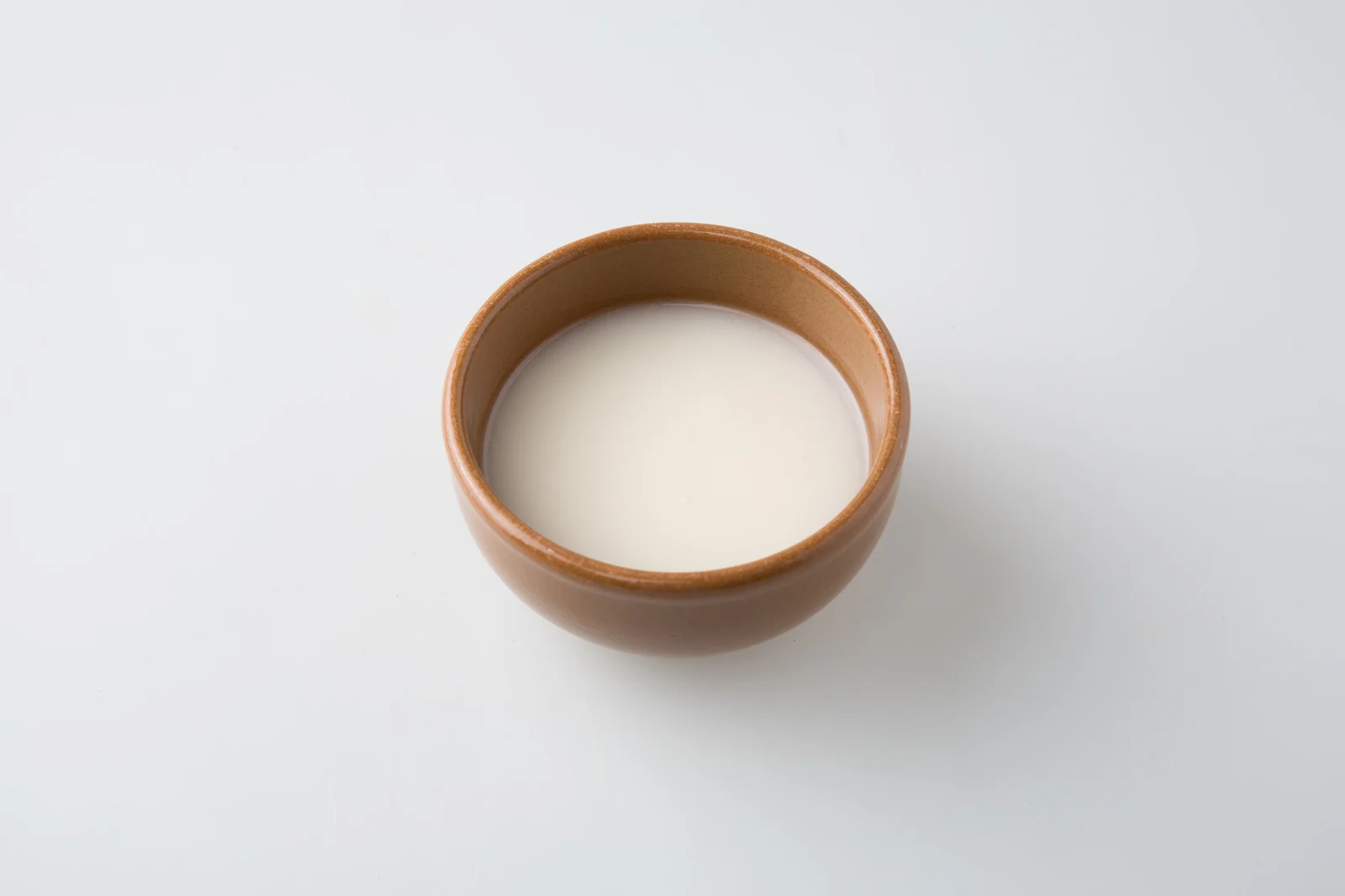
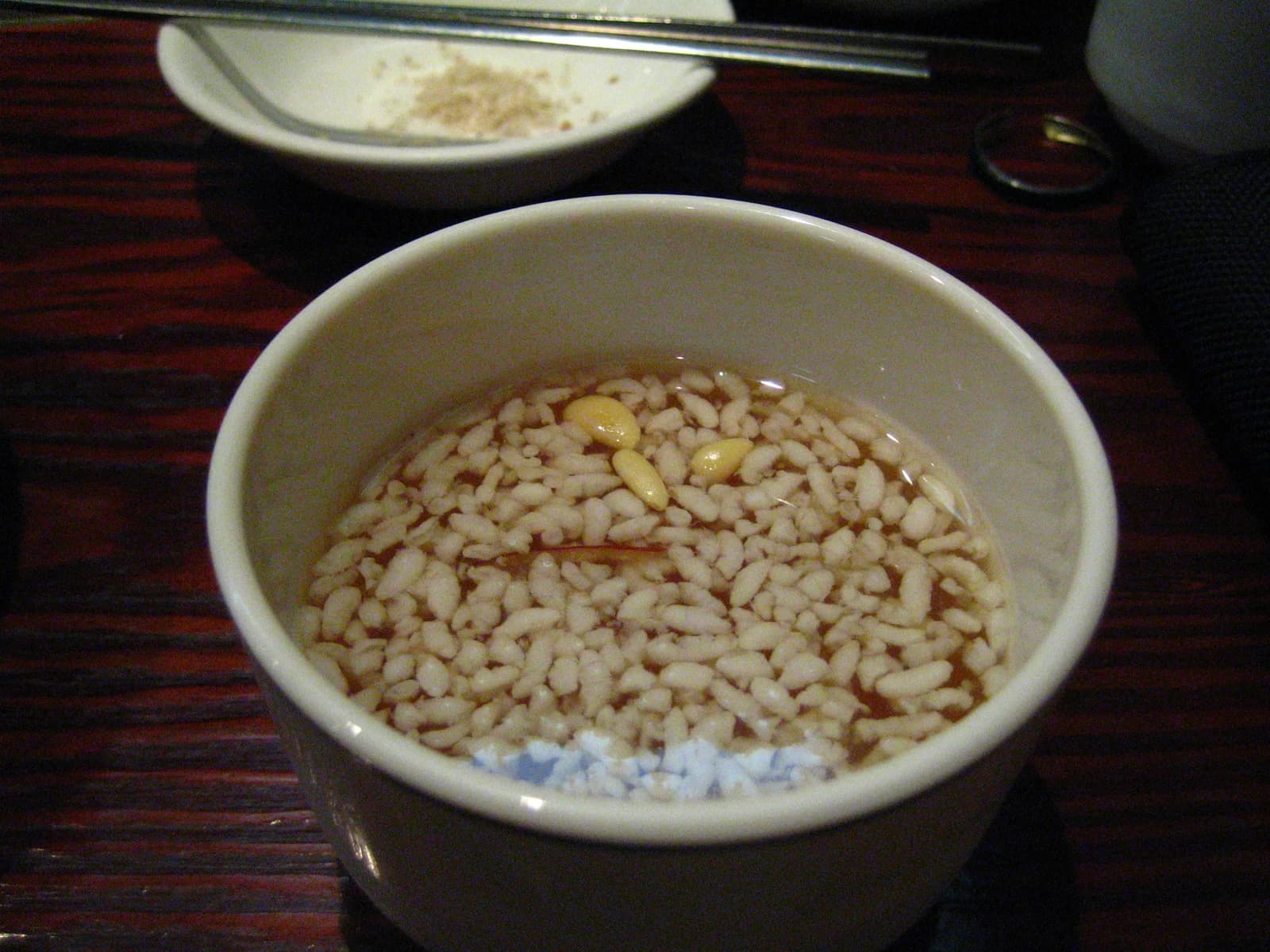
The Korea Tourism Organization identifies floating grains as a characteristic feature of sikhye. In the photograph, they cover much of the surface; other servings may contain far fewer.
Rice helps make the drink
Sikhye combines rice with barley malt. In the traditional process described by Korea.net and the Institute of Traditional Korean Food, cooked rice rests in warm malt liquid before the drink is finished. The recipe watches for grains rising to the surface during preparation.
So the rice has two roles: it participates in making the beverage and gives the finished serving a texture you can see and eat. It is not merely a decoration added to ordinary sweetened water.
The malt is the other important part. Its enzymes help turn rice starch into sugar. Recipes can add sugar as well; “made from rice” does not mean the finished drink is unsweetened.
Are you supposed to eat the grains?
Yes, the grains served with sikhye are part of the drink. A spoon is useful when it comes in a bowl. There is no need to strain them out before tasting it.
Cookbook author Maangchi describes the grains becoming pale and spongy as the drink develops. Her recipe also distinguishes homemade sikhye from canned versions, which need not have the same intensity of malt flavor. The texture and amount of rice can therefore vary between servings.
Do not confuse every floating garnish with rice. Pine nuts may be added, as in the official recipe and the photograph above.
A sweet finish, not a bowl of soup
Korea.net describes sikhye as a chilled drink associated with winter but enjoyed throughout the year. Maangchi also describes serving it as a restaurant dessert. That placement helps explain the surprise: rice appears again after the savory meal, in a different form.
This is different from sungnyung, the drink made with scorched rice. The name of the drink matters more than the mere presence of grains.
Rice also has a wider place in Korean food language, including the greeting “Have you eaten?”. In sikhye, though, the explanation is concrete: the rice is an intended ingredient, and you can enjoy it with the sweet liquid.