Naengmyeon (냉면) arrives cold because coldness is part of the dish, not a sign that the kitchen forgot to heat it. In mul-naengmyeon, the noodles sit in chilled broth. The clear liquid and cool temperature offer a very different meal from a steaming noodle soup.
A cold dish with a winter connection
Although it is now an obvious choice in hot weather, naengmyeon also has a winter history. The Korea Tourism Organization’s food guide describes eating cold noodles while sitting on an ondol-heated floor, and using the liquid from dongchimi, a watery radish kimchi kept in jars.
That combination helps explain why “cold” does not automatically mean “invented for summer.” A warm room and a cold bowl could coexist. It is a useful cultural connection, rather than proof of one definitive inventor or a single origin story shared by every regional style.
What you are tasting in mul-naengmyeon
VISITKOREA’s noodle guide describes Pyeongyang-style naengmyeon in a chilled broth associated with radish-kimchi liquid and a restrained flavor. A separate food entry describes a meat broth made with beef cuts. The bowl’s recipe therefore matters: clear broth is not necessarily plain water or a vegetarian stock.
Try the broth before deciding it lacks seasoning. A subtle version is not necessarily supposed to taste like a strongly seasoned hot soup. If ingredients matter to you, ask about the stock as well as the noodles; the appearance of the liquid cannot answer that question.
Mul and bibim are different orders
The KTO distinguishes broth-based mul-naengmyeon from bibim-naengmyeon dressed with a spicy sauce. Choosing the latter does not mean ordering the same bowl with a slightly hotter broth. The sauce-and-noodle balance is different.
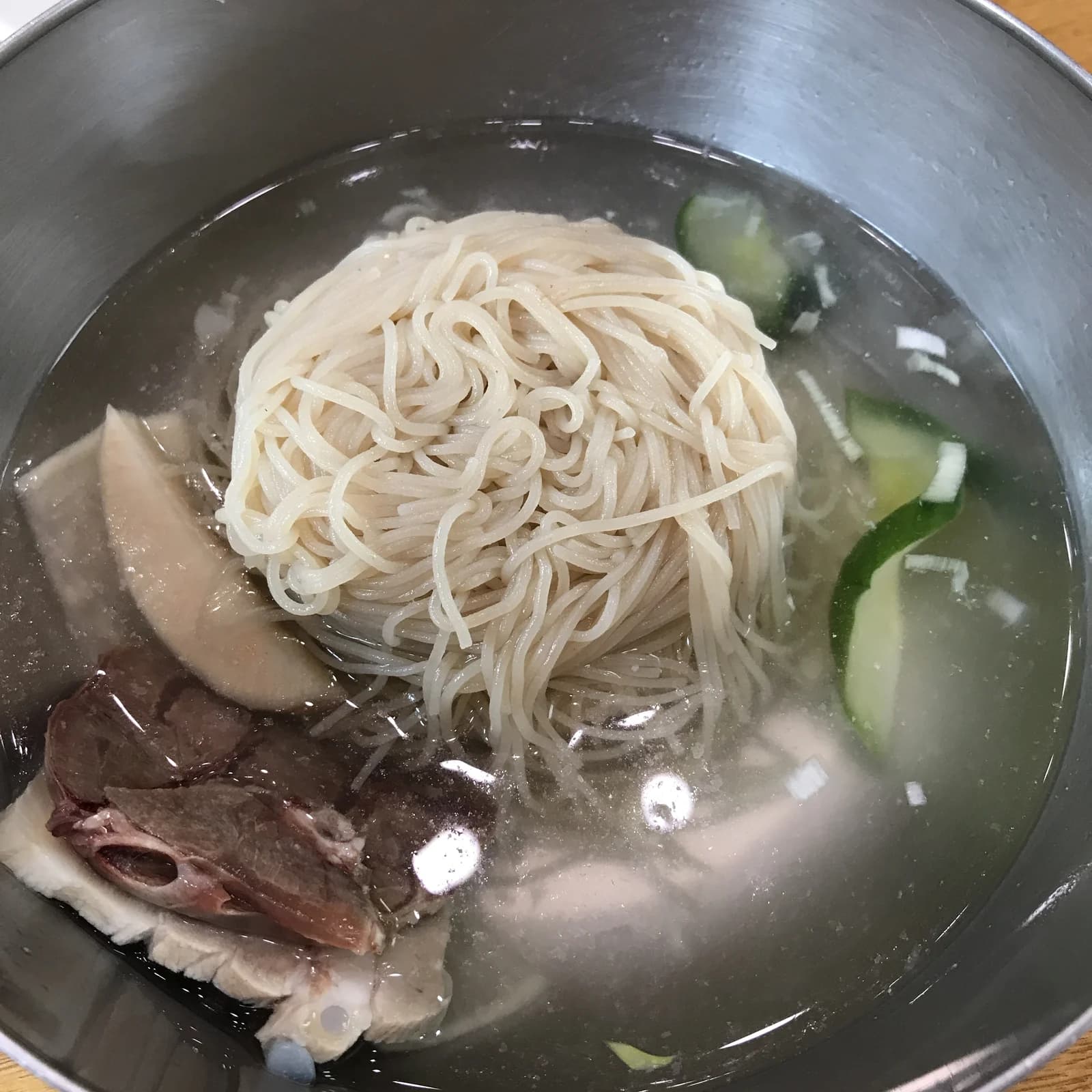
On a menu, look for 물냉면 for the broth version and 비빔냉면 for the mixed, spicy style. The archive photograph here shows mul-naengmyeon, not every dish sold under the broader cold-noodle name.
Long noodles may also prompt a separate question about the scissors offered at the table. Our guide to why Koreans use scissors for food explains that practical table tool. Cutting and temperature are different parts of the experience: neither needs to turn a first bowl into a test of authenticity.
Archive photograph, 2017-07-29: chomjong / Wikimedia Commons. CC BY 2.0. Resized without cropping and converted to WebP; image reuse remains under the stated license.