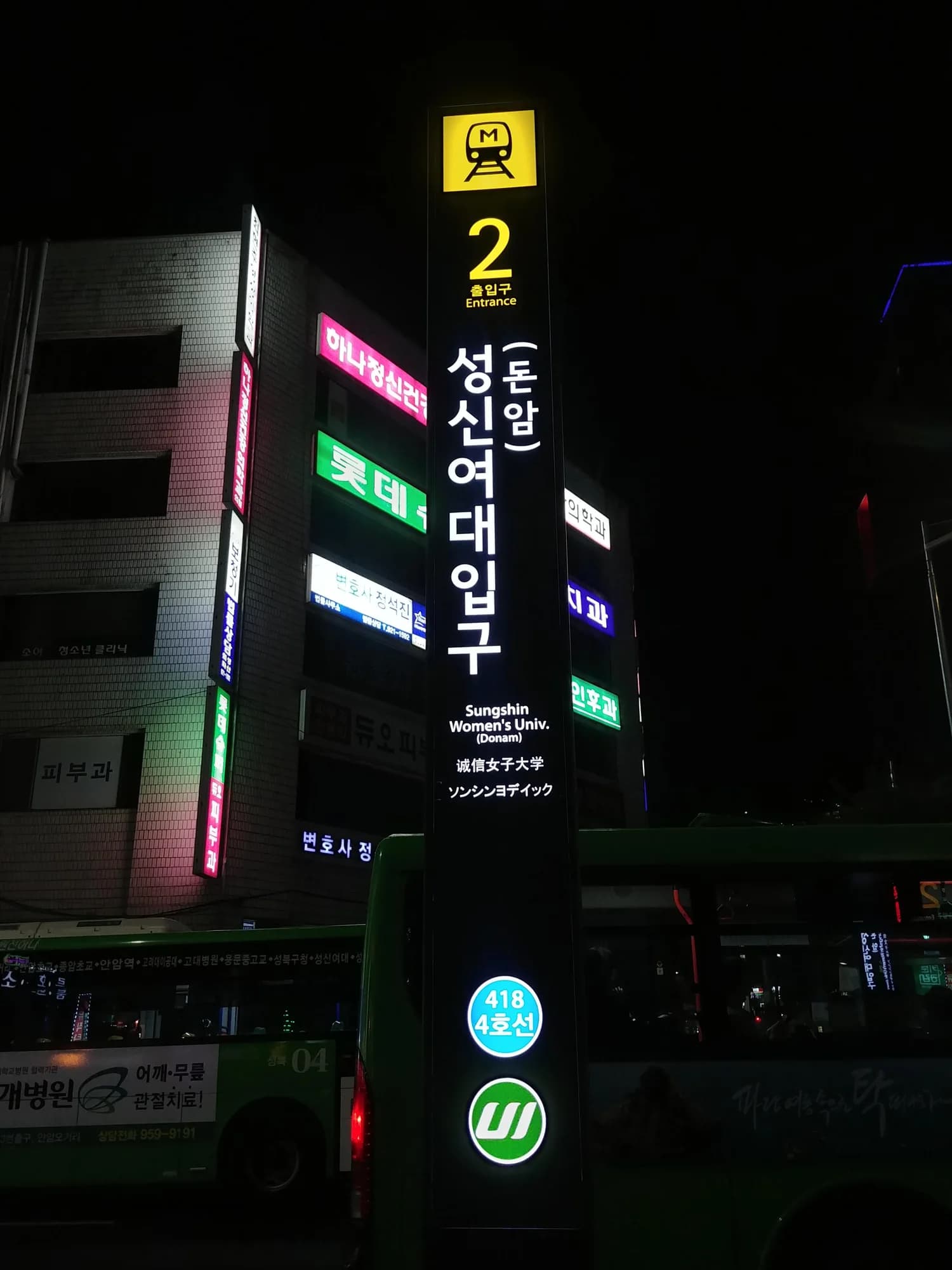
A blue bus and a green bus can stop at the same curb. A red one may sail past both. The colors are useful—but only after you stop reading them like subway lines.
In Seoul, a bus color describes the kind of route it runs. It does not guarantee one destination, one fare or one part of the city.
The Color Is a Route Job, Not a Neighborhood
Seoul’s official system groups buses by what they do:
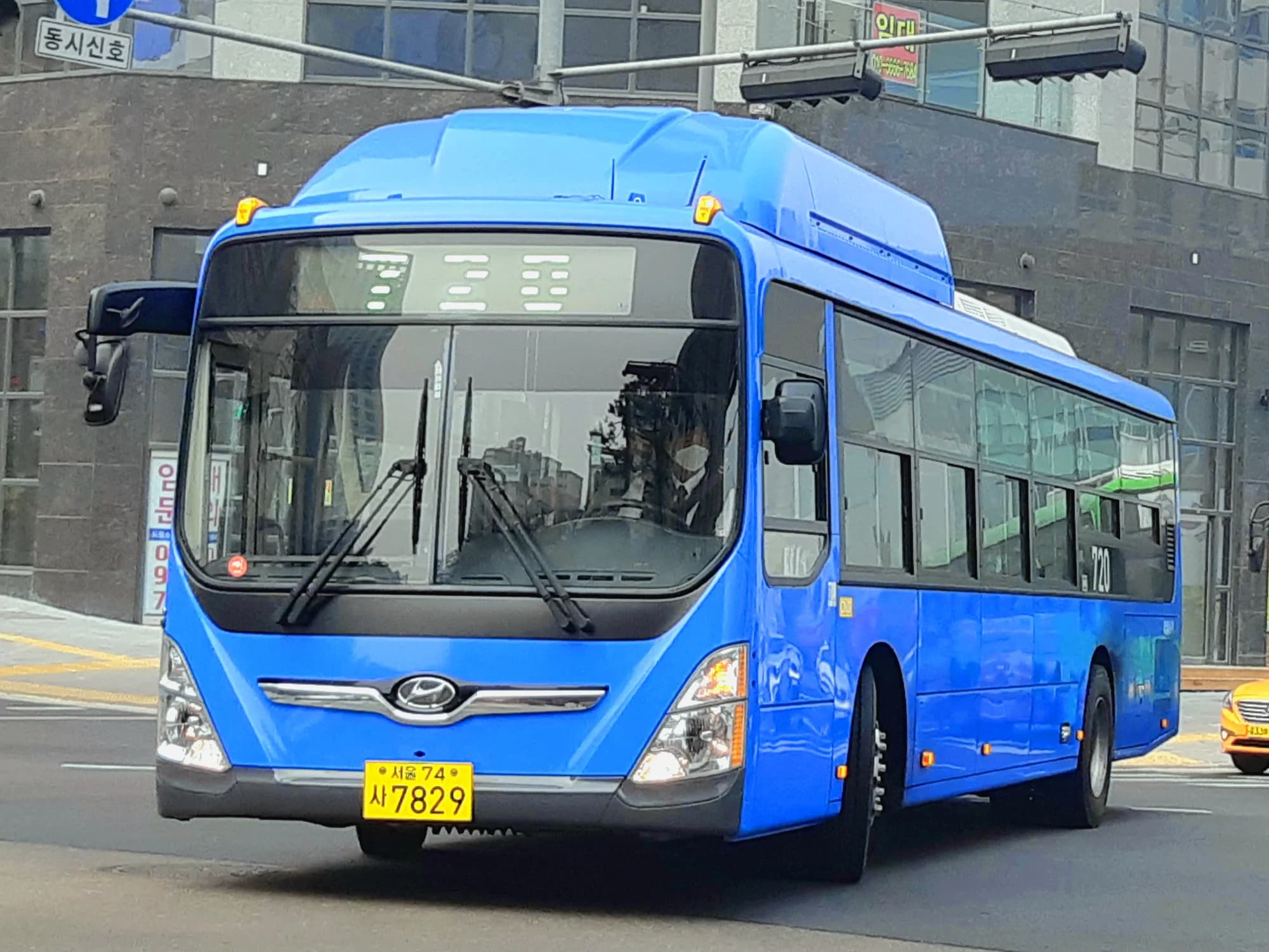
- Blue: trunk routes connecting major areas across the city
- Green: branch routes linking neighborhoods with trunk buses and subway stations
- Yellow: circulation routes serving central or sub-central districts
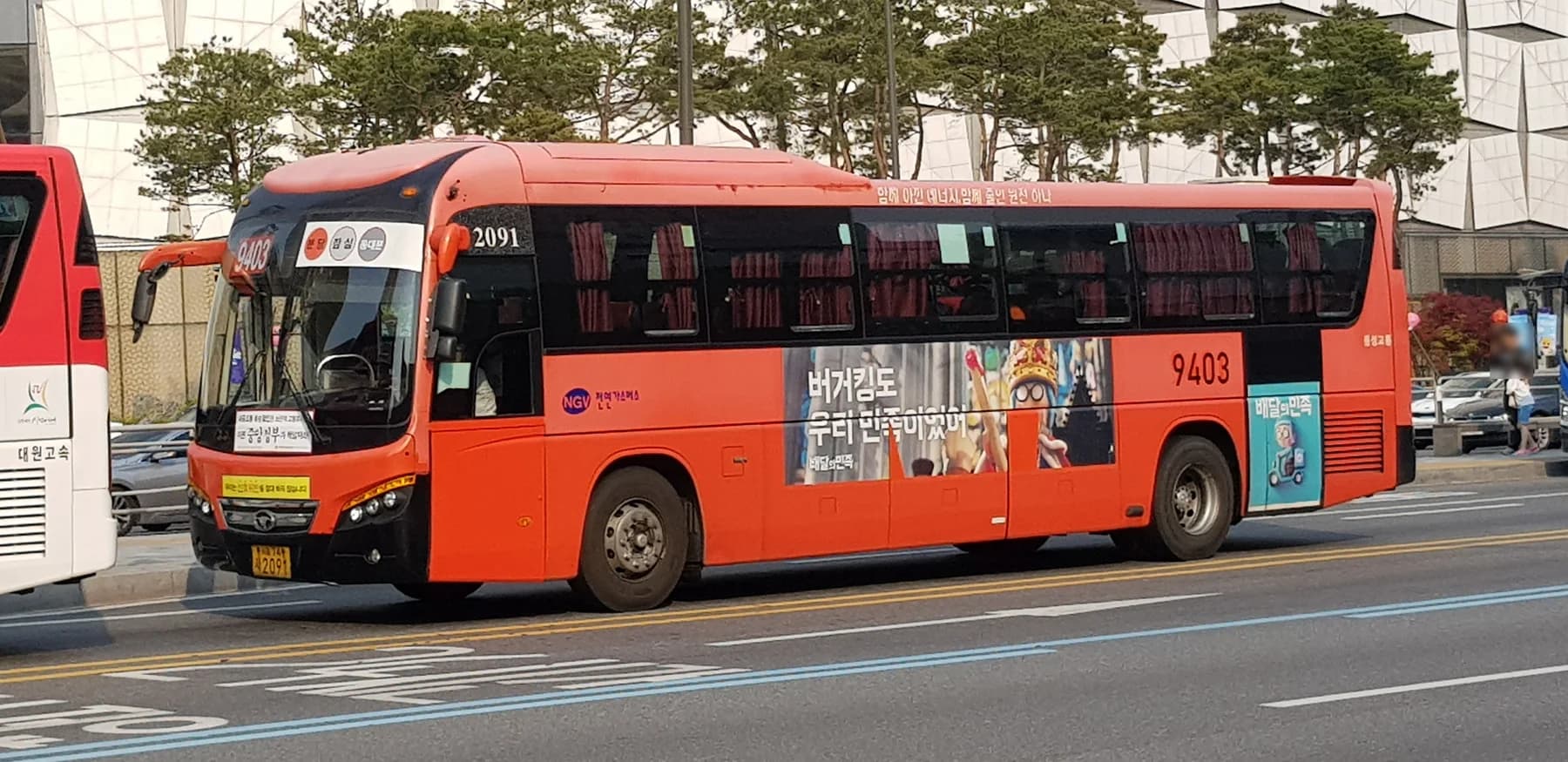
- Red: rapid or inter-regional routes between Seoul and the wider metropolitan area
There is also a shorter-range green category: village buses, or maeul bus (마을버스). These enter residential streets that larger city buses may not serve.
That makes color a fast first clue. Your route number and destination display remain the final answer.
Blue Carries Seoul’s Long Spine
Blue buses are the city’s trunk network. They tend to cover longer corridors and connect suburbs, downtown and other major centers inside Seoul.
If the subway map feels almost right but leaves a long walk at either end, a blue route may bridge the gap. The word “trunk” does not mean express, however. A blue bus can still make many stops.
The official Seoul guide says bus numbers are organized around departure and destination zones. That pattern helps locals read a route, but visitors do not need to memorize the numbering formula. Match the full route number in your map app, at the stop and on the arriving bus.
Green Feeds the Bigger Network
Green branch buses handle the finer grain of the city. They connect residential areas to subway stations, terminals and blue trunk routes.
A small green village bus may have a district name in its number, such as Mapo or Jongno in Korean. That signals a neighborhood-scale service, not a miniature version of every green route.
This is why “take the green bus” is incomplete advice. Several green buses may arrive at one stop while heading toward completely different subway lines.
Yellow Circulates; Red Crosses the Boundary
Yellow buses are designed for circulation within a central district or subcenter. They are the small loop-like specialist in the color family, not a citywide default.
Red buses do the opposite kind of job: they connect Seoul with surrounding metropolitan areas. A red bus may spend part of its journey on faster roads and cover a much longer distance than an ordinary city route.
Do not assume every reddish bus belongs to Seoul. Neighboring local governments operate their own buses, liveries and fare rules across the capital region. Check the operator and route in your map app before boarding.
The Number Still Makes the Final Call
Color tells you the network role. The route number tells you whether this is your bus.
Before boarding, match three things:
- the complete route number;
- the stop name or major destination shown on the display;
- the direction of travel in your map app.
Night buses add another useful signal: their route numbers begin with N. The letter matters more than the vehicle’s background color.
One Ride, Three Tiny Habits
Board through the front door, tap your T-money or transit card and press the stop bell before your stop. Exit through the rear door and tap the card again.
That final tap matters for distance calculation and transfer discounts. Seoul’s official guide also warns that pressing the bell only after the bus reaches the stop can confuse the driver.
So read the bus in layers: color for its job, number for its identity, destination for its direction. Once those three agree, the rainbow starts making sense.