Quick Answer
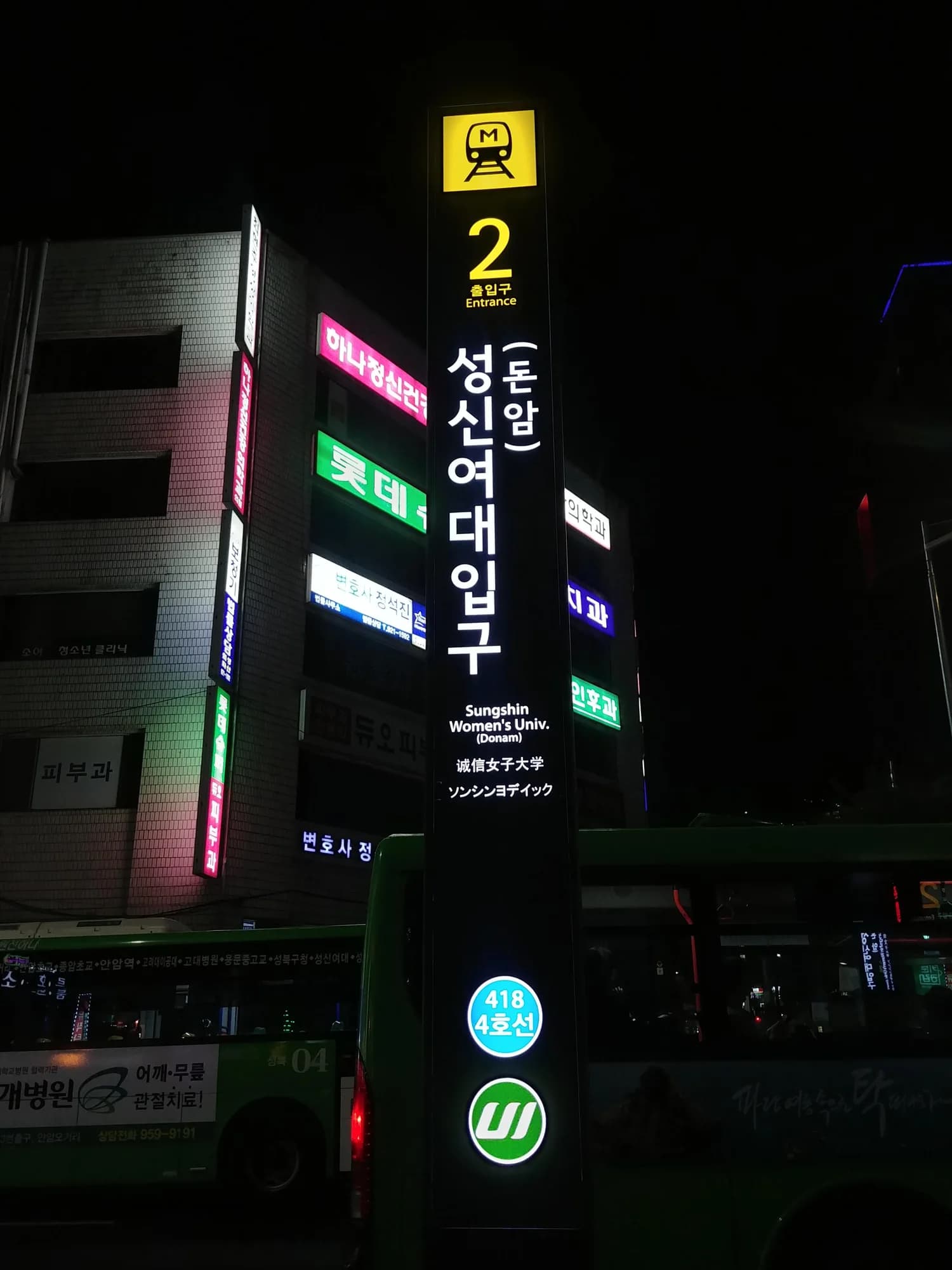
A Seoul subway exit number identifies where you will reach the street, often down to the side of the road or a particular corner. Save it with the station name so you emerge near the person, café or building you are trying to find. If you need an elevator, check its location separately: the recommended exit may be stairs-only.
What to do
- Save the station name, line number or color, and exit number together before arrival.
- Follow signs for the group containing your exit, then look for your individual number as corridors split.
- If your app and the sign disagree, confirm the destination’s Korean name or address at the station neighborhood map rather than guessing from compass direction underground.
“Let’s meet at Gangnam Station” sounds precise—until you remember that the station opens onto several blocks, major roads and an underground shopping area.
In Seoul, the missing half of that sentence is often “Exit 11.”
An Exit Number Is a Street-Corner Shortcut
Seoul subway stations are marked in Korean and English, and each exit has a number.
This matters because crossing above ground may be slow or inconvenient. A broad avenue, bus lanes, a department store or a maze of connected buildings can sit between two exits that look adjacent on a flat map.
So a Korean meeting message may read 홍대입구역 9번 출구—Hongik University Station, Exit 9—rather than naming a street corner.
Check It Before the Train Doors Open
Keeping those station details together is especially useful when you need to find a subway locker again.
Seoul’s official transportation information notes that route apps provide station interiors and exit locations. Check the exit while you still have a signal and time to choose the useful end of the platform.
Some apps also suggest a train-car position for a faster transfer or exit. Treat that as a convenience, not a promise; construction, closed passages and elevator access can change the best route.
Inside the Station, Follow the Number Family
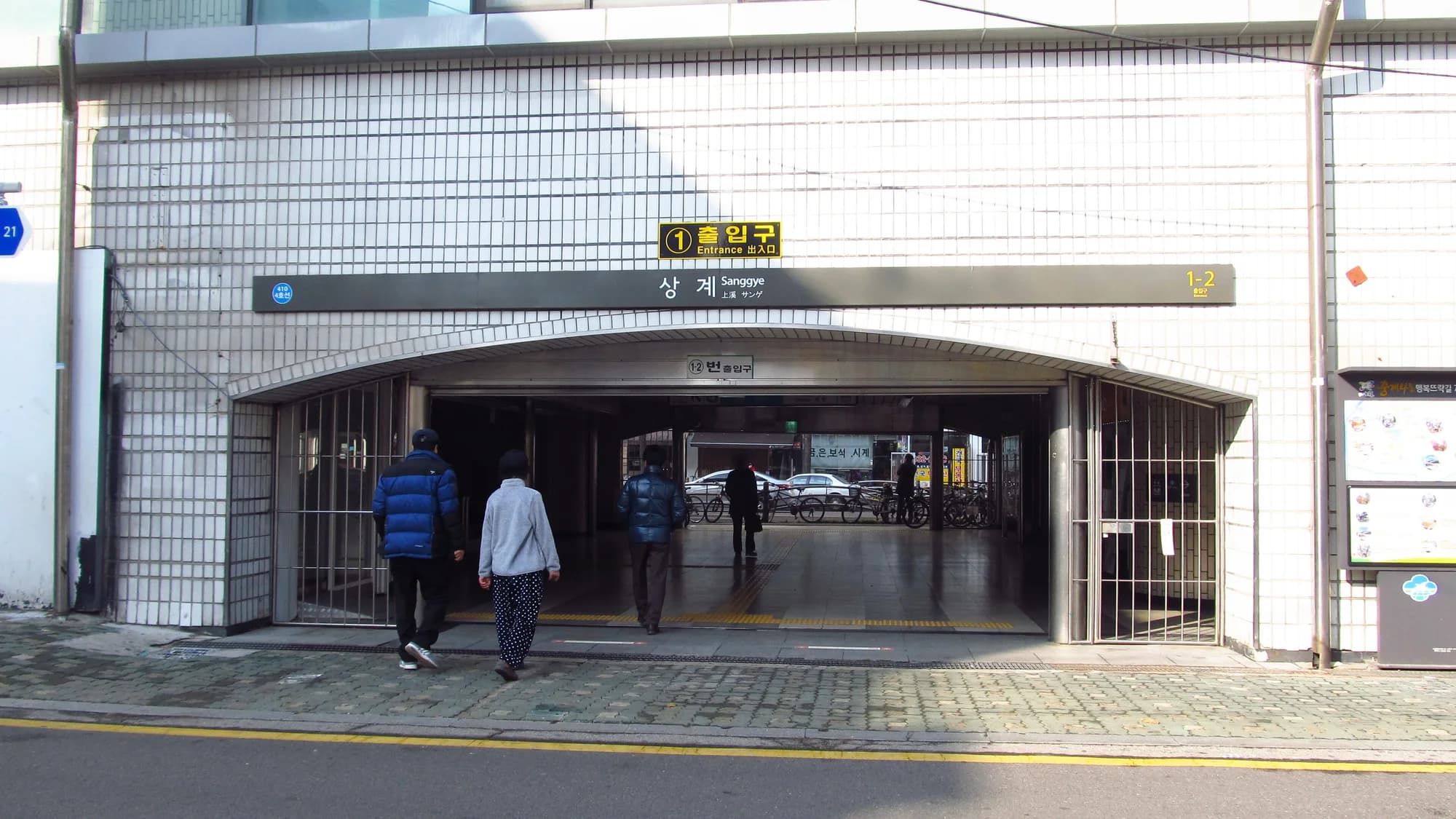
Large stations first group exits by direction. An overhead sign may send exits 1–4 one way and 5–8 another.
Do not assume “way out” means your way out. The nearest staircase may place you on the wrong side of a six-lane road.
Station neighborhood maps list nearby buildings beside each exit.
Elevators Do Not Always Match the Fastest Exit
Travelers with wheelchairs, strollers, large suitcases or limited mobility should look for elevator icons.
The accessible route may use a different numbered exit or a connected building. That is not a small detail in a deep interchange station. Ask at the information desk if signage points toward a lift but the final street-level route is unclear.
The Meeting Phrase Seoul Actually Uses
To confirm a plan, ask:
몇 번 출구예요?
Myeot beon chulgu-yeyo?
“Which exit number is it?”
Or send the full anchor: 성수역 3번 출구 앞—“in front of Seongsu Station Exit 3.”
That tiny number changes a huge city into a manageable instruction. The station gets you to the neighborhood. The exit gets you to the person, café or building you were actually trying to find.