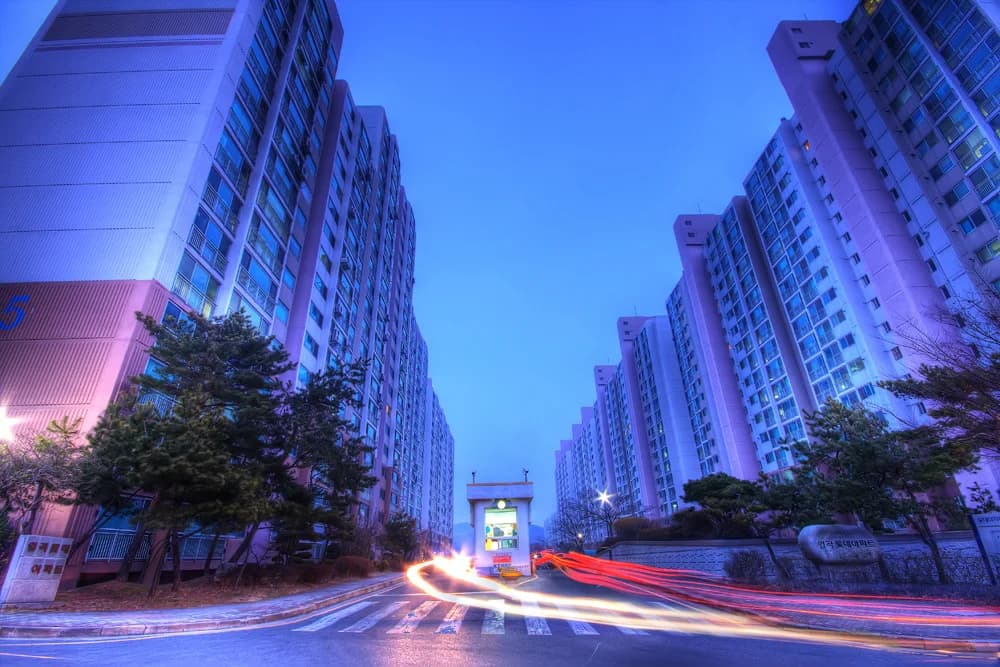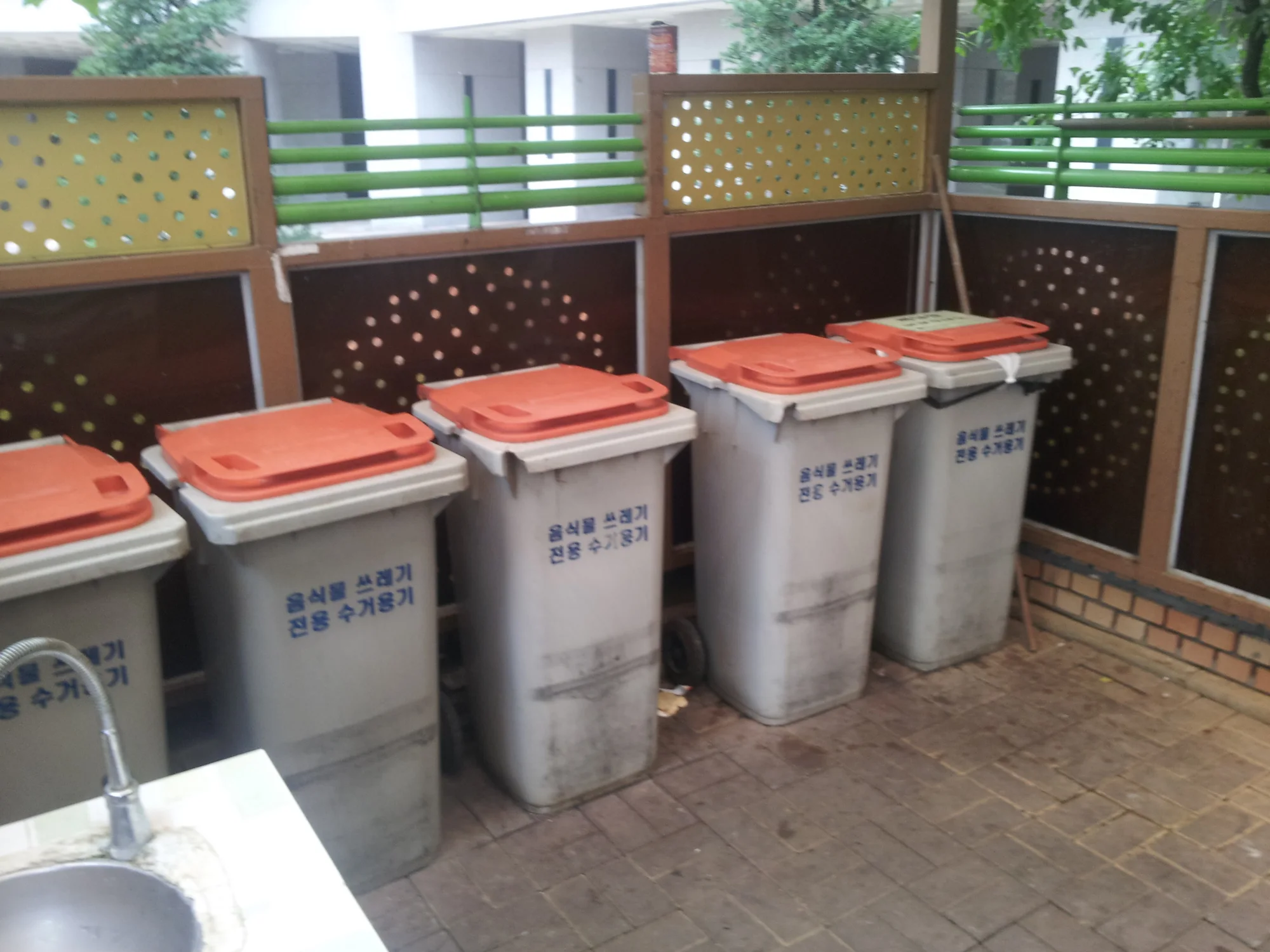
The recycling area below a Korean apartment can look like a test: nets, carts, bins and signs, each asking for a slightly different object.
The trick is not to memorize every container in Korea. Start with three waste streams—recyclables, general waste and food waste—then let the labels at that apartment complex settle the details.
First, Keep the Three Streams Separate
Recyclables are materials collected for recovery, such as paper, glass, cans and qualifying plastics. General waste goes into the official volume-based bag used by the local district. Food waste follows its own collection route, often through a designated container, paid bag or weighing machine.
Mixing those streams causes more trouble than placing one recyclable in the wrong sub-bin. A greasy container can contaminate clean material; a hard shell or bone can damage food-waste processing equipment; an ordinary shopping bag is not a substitute for a required general-waste bag.
South Korea’s Ministry of Environment now provides an item-by-item guide covering hundreds of household products because packaging is not always obvious. That official lookup is more reliable than deciding from the recycling symbol alone.
At the Station: Empty, Separate, Follow the Sign
Empty containers and remove food or liquid that would soil other material. Separate easily removable parts when local instructions ask for it: a paper sleeve, a metal lid or a different-plastic pump may have another destination.
Apartment stations commonly create categories for paper, cardboard, glass bottles, metal cans, PET bottles, other plastics, vinyl film and Styrofoam. The exact lineup changes by complex and municipality. Some collect on set days; others keep a managed station open longer. Clear or transparent PET bottles may have their own collection bag.
This is why “Korean recycling rules” cannot be reduced to one national photograph. National policy shapes the system, but the sign above the actual container is the operating instruction for that address.
Food Waste Is Not “Anything Once Edible”
Seoul’s foreign-resident guidance asks households to remove excess moisture and impurities before using designated food-waste containers or bags. It also warns that materials unsuitable for processing can damage equipment.
Large bones, hard shells and other items that cannot be processed like ordinary food scraps may belong in general waste under local rules. Check the municipality guide instead of relying on intuition.
Some apartment complexes charge by weight through RFID food-waste bins: identify the household, deposit the scraps, and let the machine record the weight. Others use stickers, chips, bags or shared containers. RFID is common enough to recognize, not universal.
General Waste Is the Paid Remainder
Non-recyclable household waste normally goes into an official 종량제 봉투 (jongnyangje bongtu), a volume-based bag sold for the relevant locality. Bag sizes and sale points vary. Ask the building office, host or nearby shop which bag the address uses before buying a large bundle.
This household system also explains why public trash cans can feel scarce in Seoul. Street disposal and residential collection are not interchangeable channels.
A Five-Minute Move-In Check
When you arrive at an apartment, locate the station and photograph its public instruction board—not access codes or private resident information. Confirm:
- collection days or open hours;
- the local general-waste bag;
- the food-waste method;
- whether clear PET, vinyl and Styrofoam are separated; and
- how large cardboard should be flattened and tied.
The recycling station may sit near a utility balcony’s household sorting area, a parking level or a managed outdoor enclosure. Do not leave parcels beside a locked station just because other objects are nearby.
What residents may see is less a puzzle than a shared housekeeping system. Once the three main streams are correct, the apartment’s signs handle the local grammar.