You pass building 15, then 19. Number 17 is not hiding in an alley; it may never have existed.
Korea’s road-name building numbers are location clues, not a promise of consecutive doors. Once you know that numbers rise with distance and split into odd and even sides, a blue address plaque becomes a miniature map.
A Number Measures Progress Along the Road
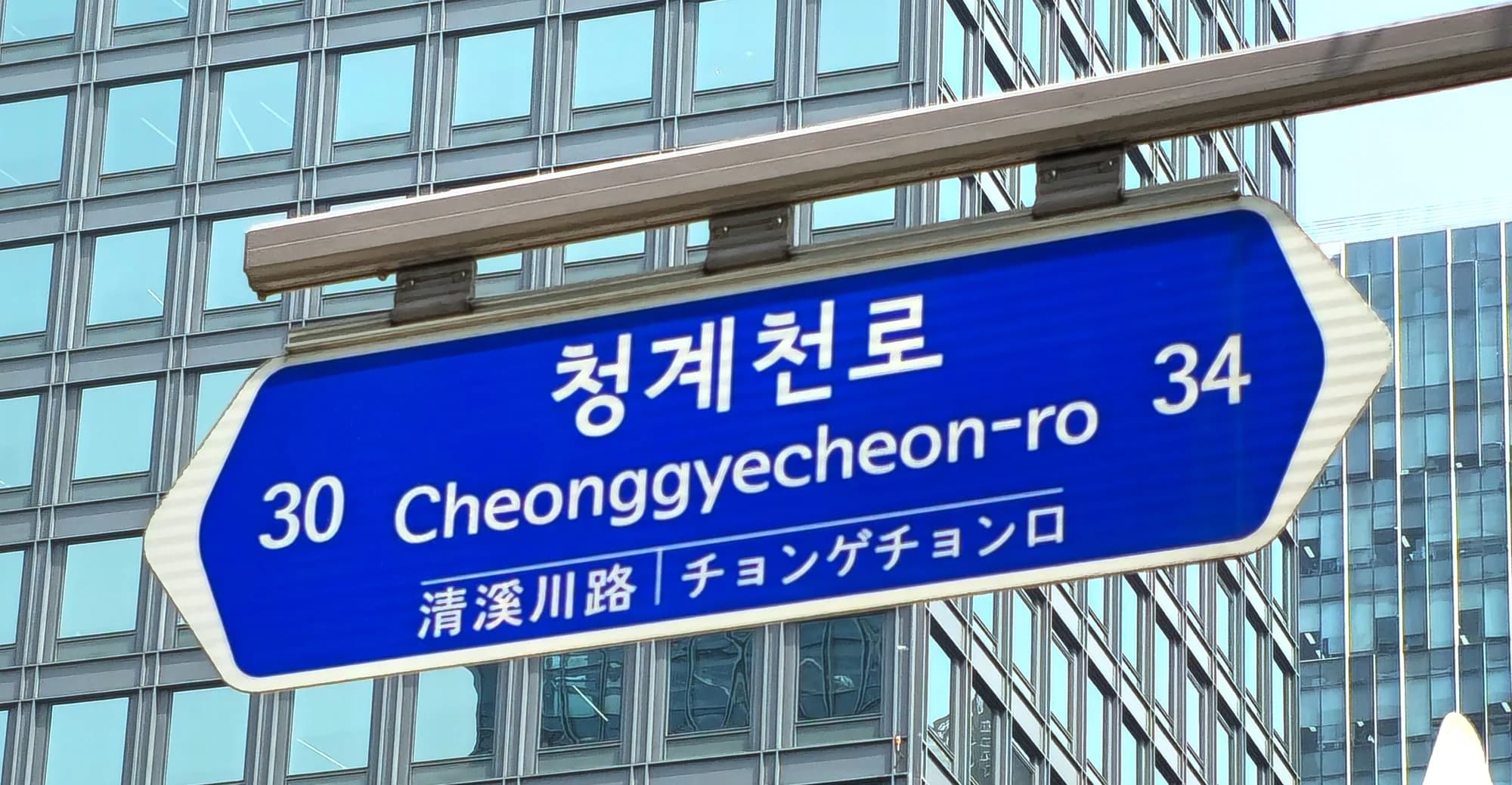
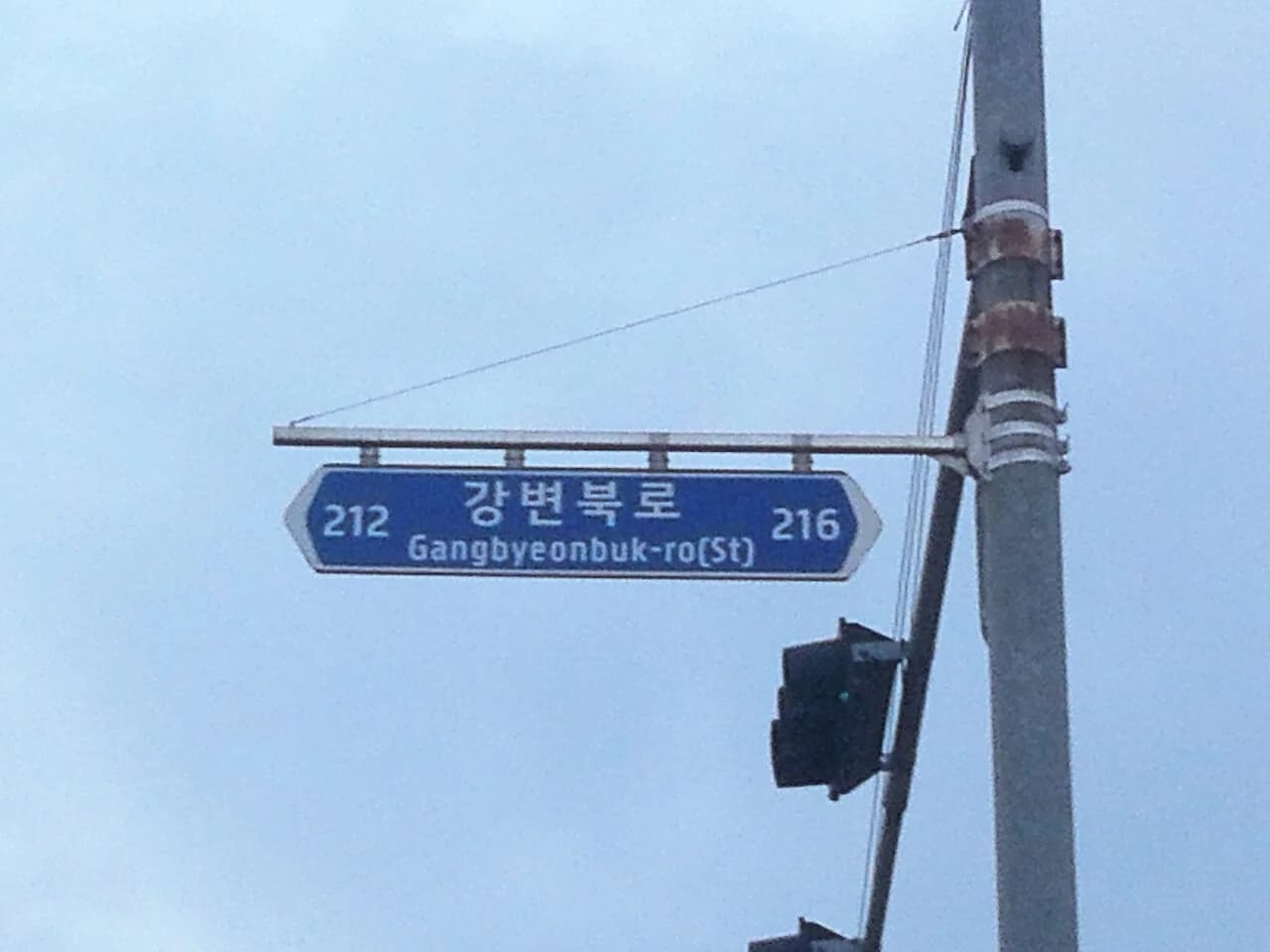
The official system assigns basic numbers at regular intervals from a road’s starting point. The Ministry of the Interior and Safety’s English guide describes 20-meter intervals, with odd numbers on the left and even numbers on the right as the road advances.
Because the count follows distance rather than occupied lots, numbers can skip. A long property frontage may consume several intervals before the next entrance. A new building can also receive a sub-number when the simple sequence needs more detail.
So 18 and 20 should be on the same side; 19 belongs across the road. Higher numbers generally point farther from the official starting end.
Daero, Ro and Gil Tell You the Road Scale
The ending is part of the road name:
- 대로 (daero) identifies a broad arterial road; the official guide describes more than eight lanes.
- 로 (ro) covers roads in the middle range, described as two to seven lanes.
- 길 (gil) is used for smaller roads and streets.
Names such as Gangnam-daero, Sejong-daero and Gwangnaru-ro 507-gil should stay together. The number inside a branching gil name is not necessarily the building number; the address will add that separately.
The Main Entrance Decides the Address
A building normally takes the name of the road nearest its designated main entrance. That can surprise someone approaching from a parking gate or a side alley.
For a corner building, do not choose the street that looks larger on your map. Use the registered address. Apartment complexes then add 동 (dong, building block) and 호 (ho, unit) as detailed address information.
This is why a navigation pin and a written address can seem to disagree by half a block: the pin may show the building center while the road address is designed around an entrance.
English Order Runs From Small to Large
Korean text commonly moves from the large region toward the specific building. The government’s recommended English format reverses that flow, putting the detailed address and building number first.
Its examples use forms such as:
109, Gangnam-daero 10-gil, Gangnam-gu, Seoul
For an apartment, the block and unit can come before the building number and road. Keep the official Romanization returned by the government address search rather than translating gil into a guessed “Street” or removing hyphens.
Copy the Registered Line for Deliveries
Map apps may accept a building name, old land-lot address or road-name address. Delivery forms are less forgiving. Use the registered road-name line, then add the apartment block, unit and entrance instructions and a reachable phone number in the fields provided.
Do not put a digital door-lock code in a public address line or an exposed delivery note. Share access information only through the service’s intended private field and follow the host or building’s security instructions.
If an address exists only in Korean, paste it rather than retyping unfamiliar syllables. One changed digit can move the driver hundreds of meters along the road.
The Blue Plaque Is a Pocket Navigation Tool
When phone navigation stalls, find a building-number plaque and compare parity. If your destination is 51 and you are at 32, cross to the odd side and move toward larger numbers. The spacing is approximate because entrances and sub-numbers complicate the neat 20-meter grid, but the direction still helps.
Korea’s skipping numbers are therefore not missing information. They are compressed geography: side of road, direction from the starting point and rough distance—all hiding in the number on the wall.