A courier reaches a Korean apartment tower, calls a unit from the lobby panel and disappears upstairs. On screen, it can look as though one button opened the whole home.
Usually it did not. Apartment access is better understood as layers: the complex, the communal entrance, the resident call, and the individual front door.
One Address Can Lead to Several Doors
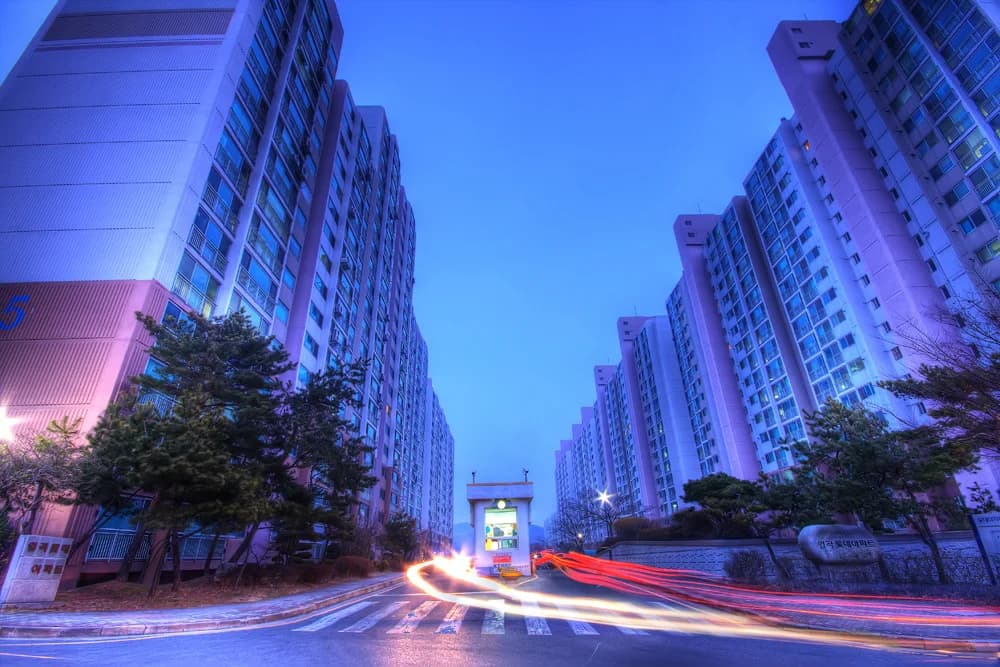
A large complex may have a vehicle or pedestrian gate before the entrance to a particular building. The building lobby can then have its own controlled door. Beyond that are the lift and corridor, followed by the unit’s private door.
The written destination therefore needs more than a street. Korea’s road-name address system identifies the building, while the apartment building number and unit information route the final delivery. Residents should use the format requested by the carrier without placing private access credentials in public notes.
Older villas, officetels and new apartment complexes do not share one layout. Some have an open ground-floor entrance; others use cards, resident apps, a security desk or a call panel.
What the Intercom or Wall Pad Does
At a communal door, a visitor may select or enter the unit and start a voice or video call. Inside, the resident can identify the visitor and, on supported systems, release that communal entrance.
Korea.net’s account of technology-equipped apartments describes wall pads that combine calls, visitor cameras, security and home controls. It also notes systems that record a visitor image or notify a resident. Those examples show what integrated systems can do, not a minimum feature list for every Korean home.
Opening the lobby does not unlock the unit’s digital front-door lock. They are separate security layers, even if both appear on one resident interface.
Delivery Access Depends on the Building
Food delivery, groceries and parcels may follow different instructions. A resident might answer the lobby call, meet a rider downstairs, authorize entry, receive an item at the unit door, use a staffed desk or choose a parcel locker.
Unattended lockers create another route. Seoul’s public locker guidance illustrates the basic pattern: a courier deposits the parcel, the recipient receives an arrival message and verification information, and the compartment is opened later. Apartment lockers can use different apps, codes, time limits and fees.
There is no safe universal shortcut for “delivery entry.” A code seen online, overheard in a lobby or used at another building is not permission. Couriers and guests should call the recipient or follow the building’s posted process.
What Residents May See: Coordination, Not Friction
To a first-time visitor, the lobby call can feel like an extra obstacle. Residents may read it as ordinary coordination in a dense shared building: confirm who is coming, release only the communal door that is needed, and keep the private door separate.
Security desks can add a human layer, especially for bulky parcels, missed calls or building-specific rules. They are not automatically personal concierges, and their parcel-handling duties vary.
A Safe Delivery Note Is Specific but Not Secret
A useful instruction identifies the correct building entrance, building number, unit and an approved handoff point. It can say to call the unit, leave the item in an authorized locker or contact the resident on arrival.
It should not publish a reusable lobby password, a household PIN or instructions for bypassing access control. If temporary access is needed, the resident should arrange it through the building’s supported method.
The system becomes simple once the doors are separated conceptually. The intercom is a request to cross a shared boundary. The unit door remains the household boundary. Delivery succeeds by matching the parcel to the right handoff point—not by treating every locked door as a puzzle to defeat.