At the counter, you receive a tiny towel, a loose cotton outfit and a numbered key. Then the signs divide, your travel companion disappears through another door and nobody delivers the orientation speech you hoped for.
The first visit to a 찜질방 (jjimjilbang) becomes much easier when you understand one design choice: there are usually two kinds of space with two different clothing rules.
Wet Bath: Separated, Washed and Unclothed
The bathing area is normally separated by gender. After storing your clothes in the changing-room locker, guests enter unclothed and wash thoroughly at the shower stations before using a shared tub.
Swimwear is generally not the substitute. If public nudity is uncomfortable or incompatible with your needs, check for a private bath, hotel spa or another activity instead of assuming the facility will make an exception.
Phones and cameras stay out. This is not merely about looking polite; people are undressed, so privacy is absolute. Keep valuables in the locker and wear the key or electronic wristband as directed.
Dry Sauna: Shared, Social and in Uniform
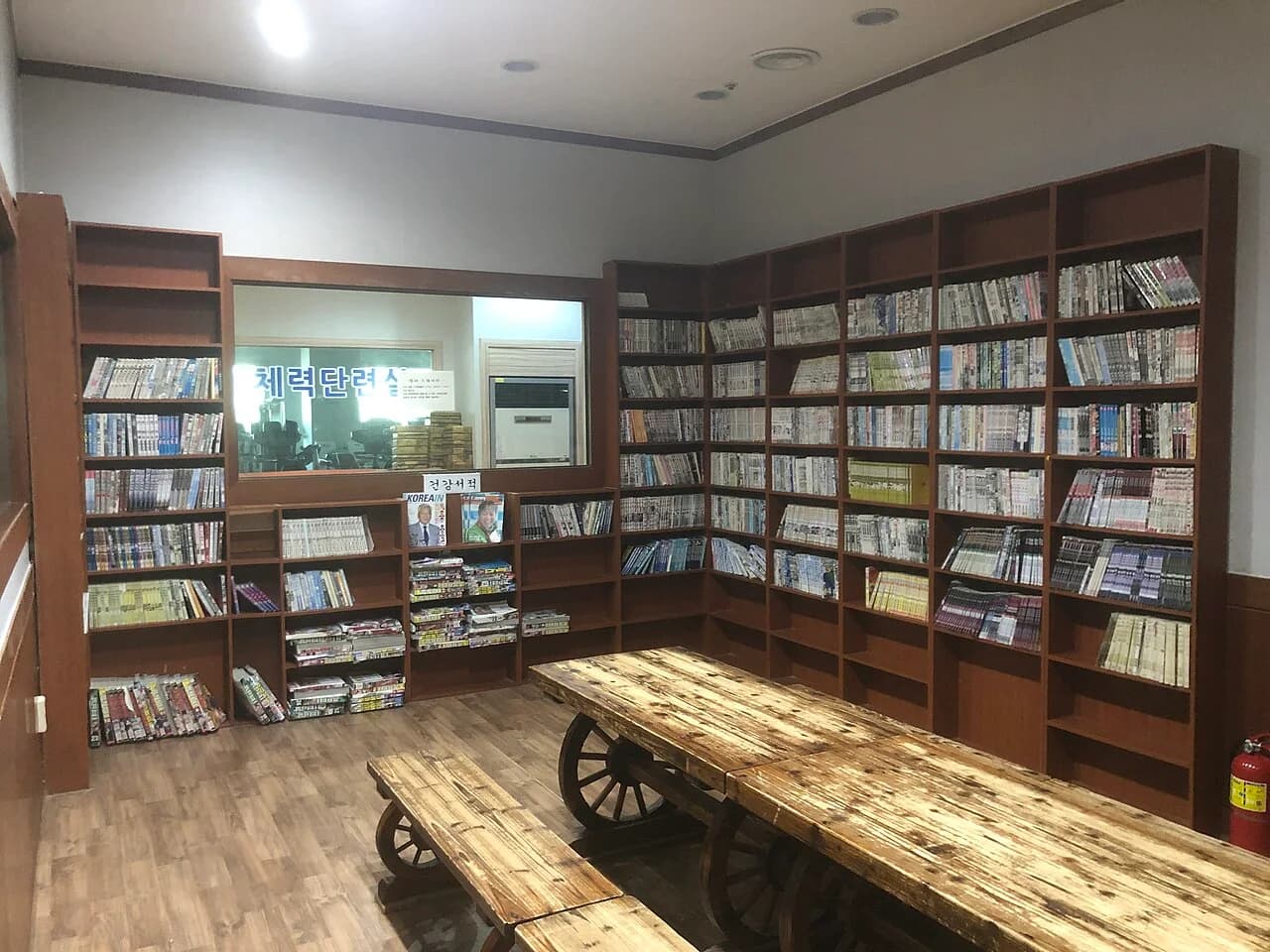
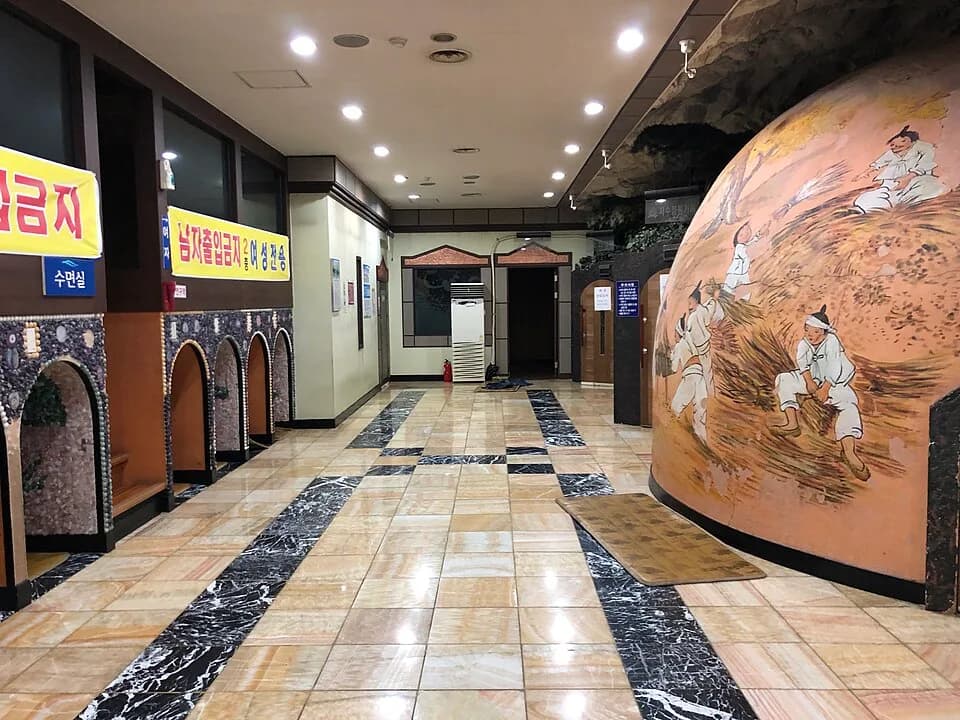
The communal jjimjil area is the part seen in dramas: heated rooms, cool rooms, floor mats, snacks and people resting in matching shirts and shorts. This zone may be mixed-gender and is where friends or couples meet again after using separate baths.
Put on the provided 찜질복 (jjimjilbok) before entering. The uniform is not for the wet tubs, and the bare bathing area is not where the group hangs out.
Some smaller bathhouses are mainly 목욕탕 (mogyoktang) and may not have a large co-ed lounge at all. Check the listing and recent business information rather than assuming every sauna sign promises a multi-floor entertainment complex.
Follow the Key, Not Someone Else’s Locker
Facilities use different entry systems, but the Korea Tourism Organization’s guide describes the familiar bundle: dry towel, T-shirt, shorts and a personal-locker key. Some venues start with a small shoe locker, then direct you to a larger clothes locker bearing the same or a linked number.
The wristband may also record purchases at a snack bar, massage chair or other paid area. Ask before tapping it casually; charges can be settled when you leave.
A safe sequence is:
- Put outdoor shoes in the designated locker.
- Pay and receive the key, towels and uniform.
- Find the correct changing room and clothes locker.
- Wash before entering any bath.
- Dry fully, dress in the uniform and enter the shared jjimjil area.
- Return used items where marked and settle any wristband charges.
The Small Towel Is Supposed to Be Small
First-timers sometimes wonder whether the hand-towel-sized cloth is an administrative error. It is normal. Bring toiletries if the venue does not clearly supply them; the official KTO guide notes that shampoo and conditioner may need to be purchased.
In the wet area, keep the towel out of the shared bath water. Use it for washing or place it to the side according to the local setup. Long hair should be secured so it does not trail in a tub.
The sheep-head fold—양머리 (yangmeori)—is playful, not mandatory. Nobody fails sauna etiquette by wearing a towel normally.
“24 Hours” Does Not Promise Every Service All Night
Older travel guides often treat a jjimjilbang as a guaranteed overnight bed. Businesses close, schedules change and a venue that is open around the clock may shut particular baths, restaurants or sleeping rooms for cleaning.
Check the facility’s current hours, overnight policy, age rules and luggage capacity on the day you go. A locker designed for clothes may not hold a suitcase. Do not plan a pre-flight night around an undated blog post.
The local rule outsiders most often miss is not a mysterious sauna ritual. It is the sequence. Shoes, locker, wash, bath, dry, uniform, shared rooms: once those spaces click into place, the key on your wrist stops feeling like a puzzle.