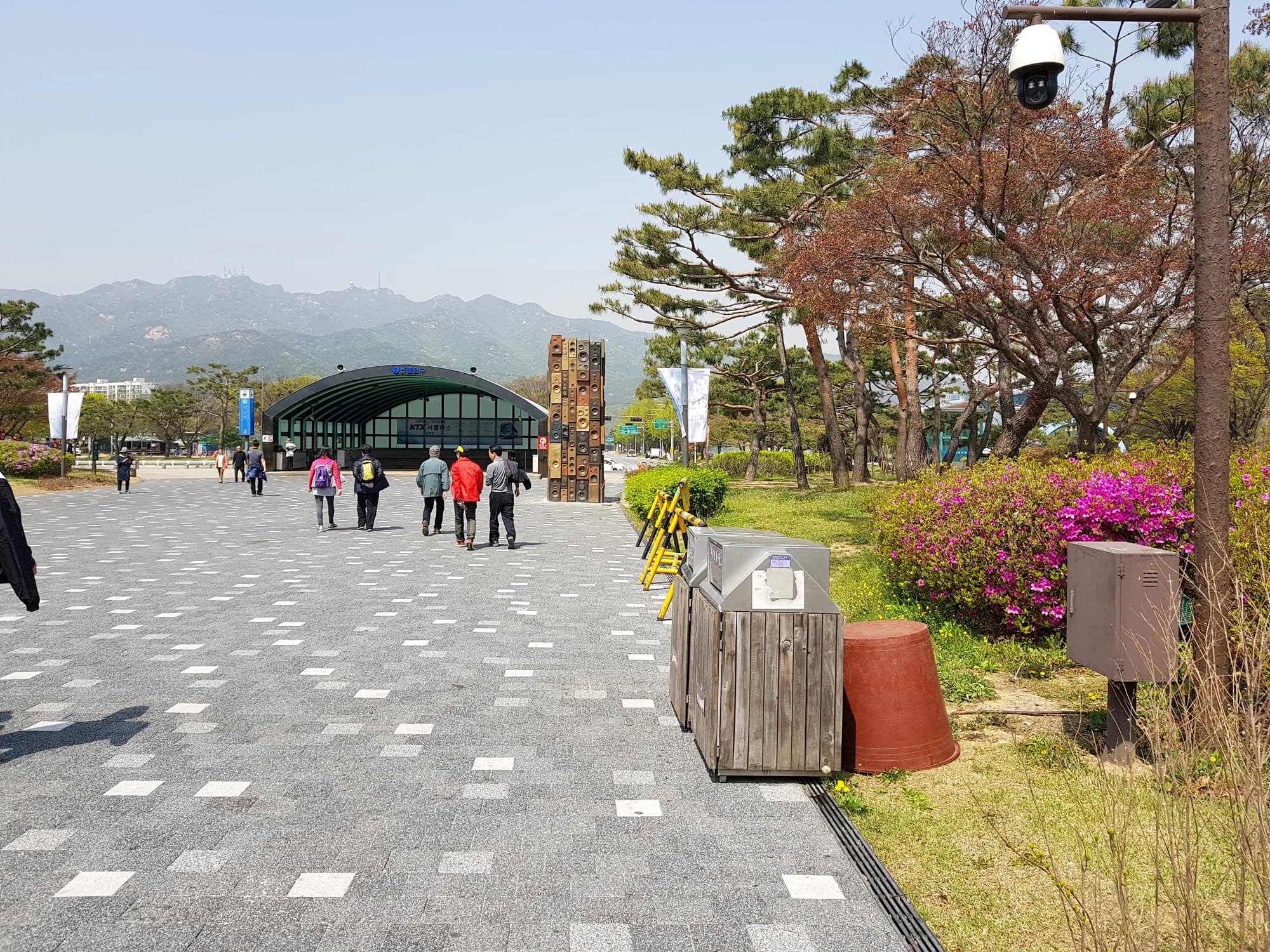
You finish an iced coffee in Seoul. Five blocks later, you are still carrying the empty cup.
The city did not forget to buy trash cans. It removed many of them on purpose—then began adding them back when the inconvenience became impossible to ignore.
The Missing Bins Began With a Pay-by-the-Bag System
South Korea introduced a nationwide volume-based waste fee in 1995. Households and businesses pay for general waste through official district bags, while recyclable materials are separated and some apartments weigh food scraps in RFID bins.
The principle is simple: producing more non-recyclable waste should cost more.
But public bins created a loophole. Some people placed household or commercial rubbish in street containers instead of using paid bags. Seoul says it had 7,607 street bins when the fee system began; removals reduced that number to 3,707 by 2007.
That history explains the scarcity better than the familiar tourist myth that Seoul has no bins because everyone is naturally perfect at carrying trash home.
Seoul Is Adding Bins Back—Selectively
The policy is no longer simply “fewer bins.” In 2023, Seoul announced 657 additional street containers for locations with heavy waste demand. The city later tested new designs in crowded visitor areas.
In March 2026, Seoul added street trash bins to a data model that recommends public-facility locations using foot traffic, accessibility, budgets and existing infrastructure at 50-meter intervals.
So the current direction is targeted placement: more bins where they are useful, without rebuilding an easy dumping route for private waste. Counts can differ depending on whether datasets include district-managed street bins, parks, stations or other facilities, so a single citywide number needs a definition and date.
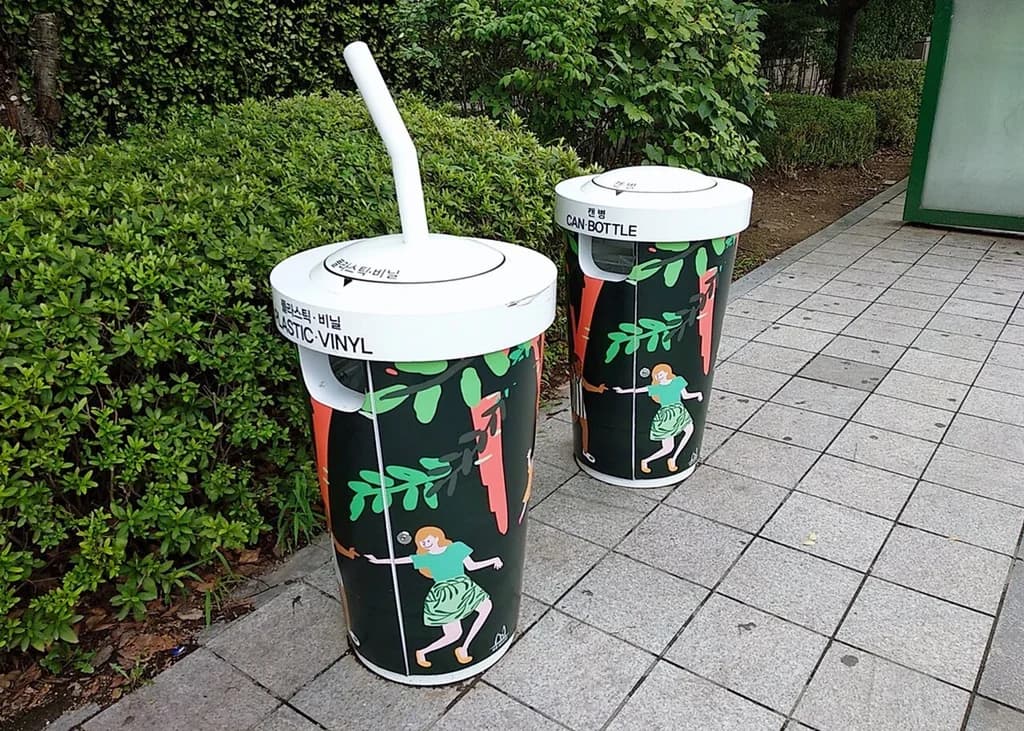
A Public Bin Is Not a Household-Waste Loophole
Street bins are for small items generated while moving through public space. They are not legal substitutes for a resident’s official waste bag or a shop’s disposal system.
Do not leave a tied bag beside a container because the opening is too small. Do not place a drink cup on a utility box and assume a cleaner will treat it as a bin. Piles attract more piles—and recreate the problem that led to removals.
At a café or food stall, use the seller’s disposal point when one is provided. In a subway station, follow local signs; some containers accept only a specific item such as disposable cups.
The Pocket-Bag Strategy Actually Works
Carry a small reusable pouch or spare bag for wrappers, tissues and an empty cup. Keep liquids sealed until you find an appropriate disposal point.
Likely places include major stations, parks, highway rest areas, malls and the business where you bought the item, but availability is not guaranteed. Ask 쓰레기통 어디 있어요? (sseuregitong eodi isseoyo?)—“Where is the trash can?”—instead of handing waste to unrelated staff.
If you are staying in a hotel, use the guest-room or lobby system for small travel waste. Long-term residents must follow their apartment and district’s sorting rules and official bags; hotel disposal is not a shortcut for household rubbish.
Sorting Labels Still Matter
A container with several openings is not one giant bin wearing decorative colors. Look for labels such as 일반쓰레기 (general waste), 캔 (cans), 병 (bottles) and 페트 (PET plastic).
Empty liquids when the facility instructs you to, and do not force a mixed package into a recycling slot because it looks mostly plastic.
Seoul’s bin story is a policy tradeoff you can hold in one hand: the empty cup is inconvenient, but the city is trying to provide public disposal without making paid private disposal meaningless.