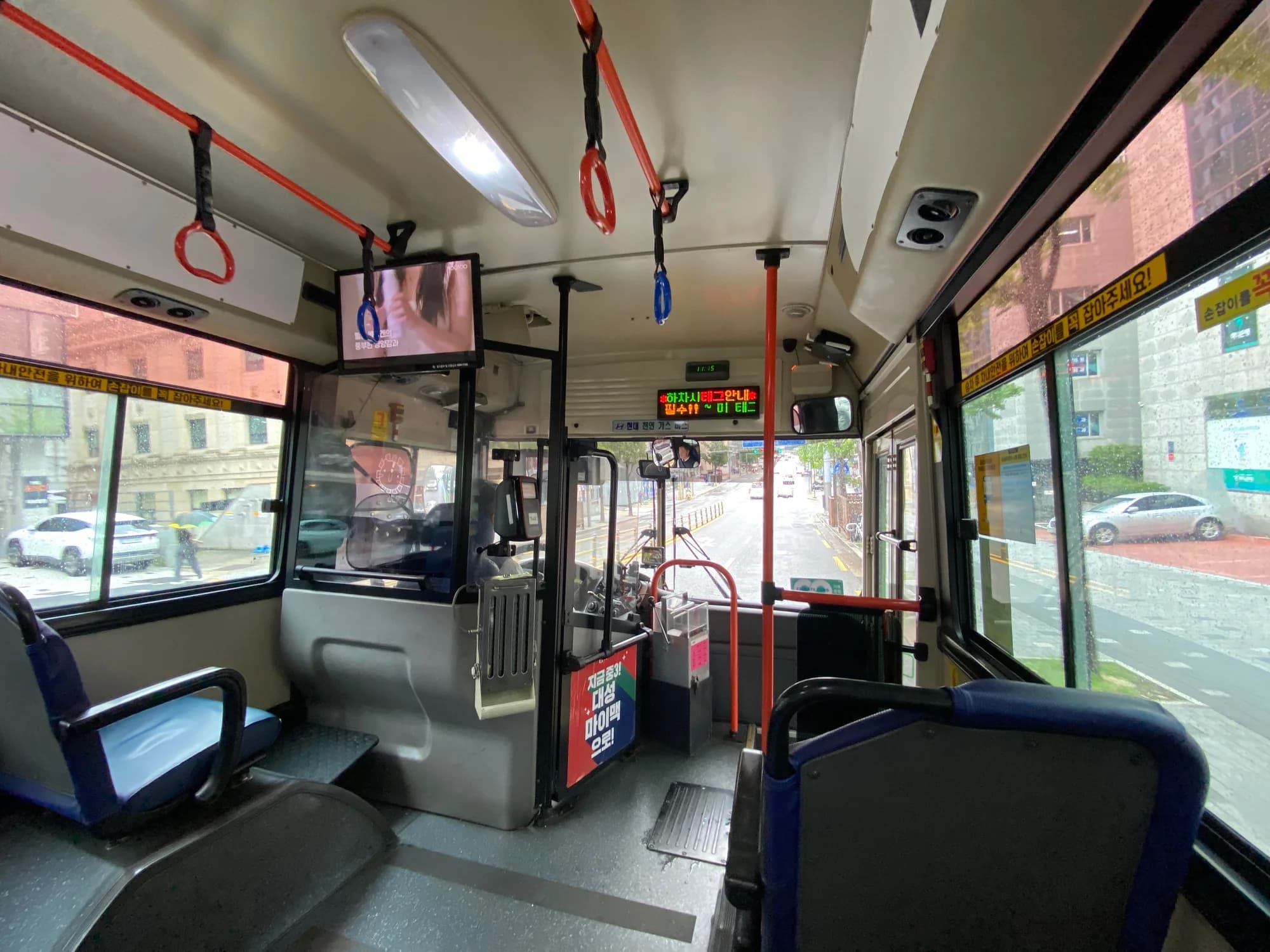
The bus reaches your stop. The back door opens. Everyone taps a card on the reader again before stepping onto the pavement.
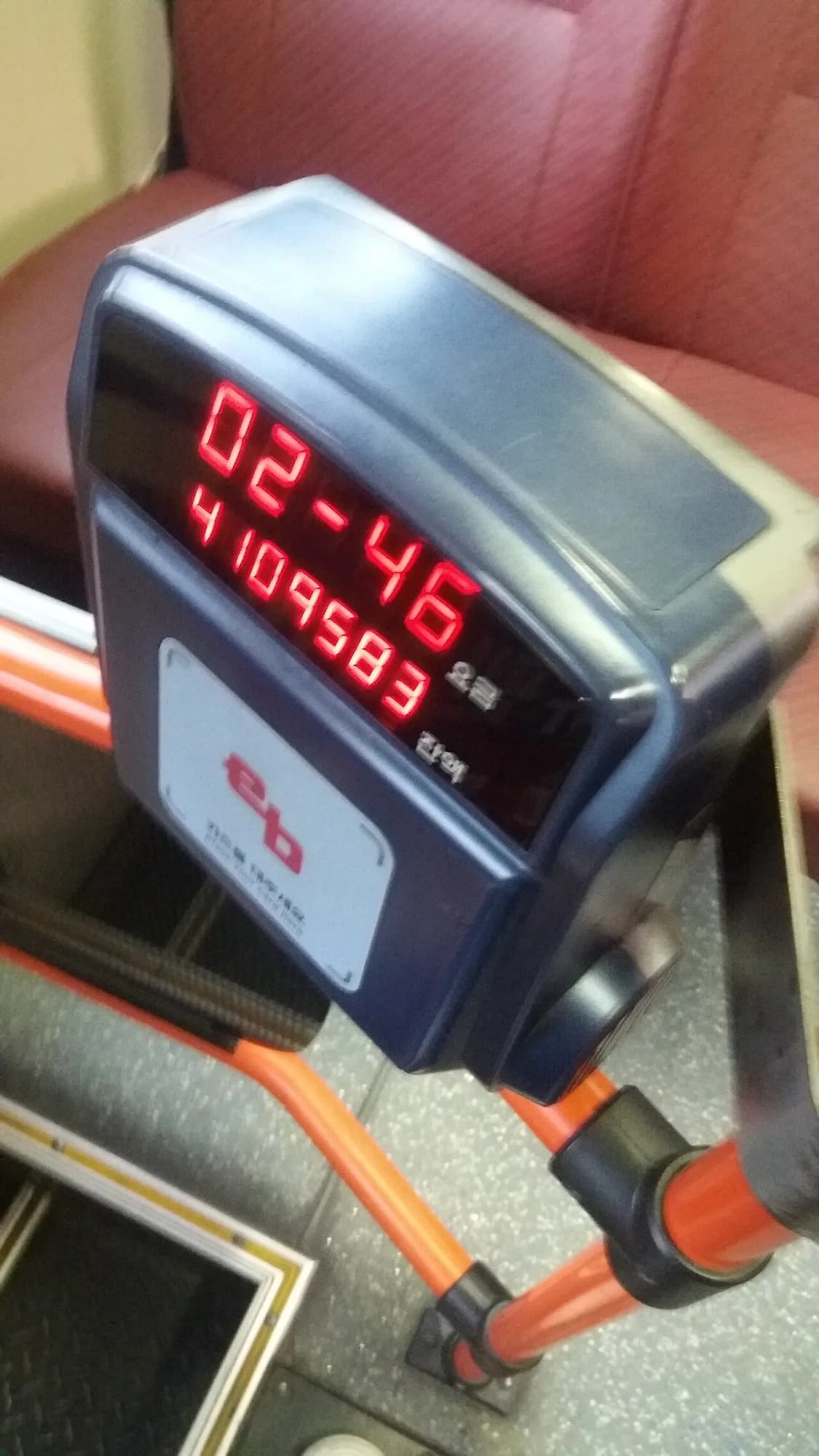
You already paid when you boarded, so what is the second beep doing? In Seoul and much of Korea, it tells the integrated transit system where that ride ended. That tiny action is what lets the system settle distance and recognize the next bus or subway as a transfer.
The Second Beep Closes the Journey
On a Korean city bus, tapping when you board records the start of the trip. Tapping at the exit records the end.
That endpoint matters because metropolitan transit fares can combine a base distance with additional distance charges. It also starts the clock for an eligible transfer. The card reader is not simply checking that you paid twice; it is completing one linked journey record.
The practical rule is wonderfully short: tap on, tap off.
A Transfer Begins Before the Next Vehicle
Travelers often think a transfer is created when they board the second bus or enter the subway. The system actually needs the exit tap from the first ride too.
Visit Seoul says riders must scan the same T-money or transit card when getting on and off to receive the transfer discount. Its published guidance describes a 30-minute transfer window, extended at night, and excludes returning to the same bus route from the normal transfer benefit. Exact fares and eligible products can change, so the current official fare page should win over an old screenshot or blog.
What does not change is the sequence:
- Tap one card when boarding.
- Press the stop bell before your stop.
- Tap that same card at the exit reader.
- Use the same card for the next eligible bus or subway.
The Last Ride Is Still Worth Tapping Off
“But I am not transferring” sounds like a reasonable exception. It can be one on a simple flat-fare route, yet visitors rarely gain anything by guessing.
The safer habit is to tap off every time. It prevents a missed exit record from interfering with distance calculation or the next trip, and it keeps your behavior consistent when you switch cities, routes or transit products. In Seoul, bus colors describe different route roles, but the exit-tap habit applies across them. Seoul’s own tourist guides tell riders to tag cards when getting on and off buses and trains to receive the available discounts.
You are not charged a second base fare merely because the exit reader beeps. Look at the screen if you want to see the remaining balance or transfer status; the exact message varies by reader.
One Card Means One Travel History
The transfer system follows the card, not the person holding a route map. If you tap in with one card and tap out with another, the records cannot form the same journey.
This also explains why group payment needs extra care. Seoul buses may allow a driver to set multiple passengers on one card, but the group size and transfer conditions must remain consistent, and subway transfers have additional restrictions. For most visitors, one transit card per traveler is the simplest option.
Do not stack several cards or a contactless bank card against the reader at once. Take out the card you mean to use so the machine does not read the wrong chip.
The Doorway Is Fast, So Prepare Early
Korean bus stops can be brief. When the next-stop announcement names your destination, press the bell and get your card ready before the doors open. The exit reader is normally near the rear door.
If the reader gives an error, tap once more rather than waving the card repeatedly. If you are unsure what happened, show the card to the driver and say 카드 오류예요? (kadeu oryuyeyo?, “Is there a card error?”).
The move looks like etiquette because everyone does it in one smooth rhythm. Underneath, it is fare logic: the first tap says where you entered; the second says where the system should stop counting.