Photo: egg (Hong, Yun Seon) — Korean stew-Sundubu jjigae-09. Archive photograph; resized without cropping and converted to WebP under CC BY 2.0.
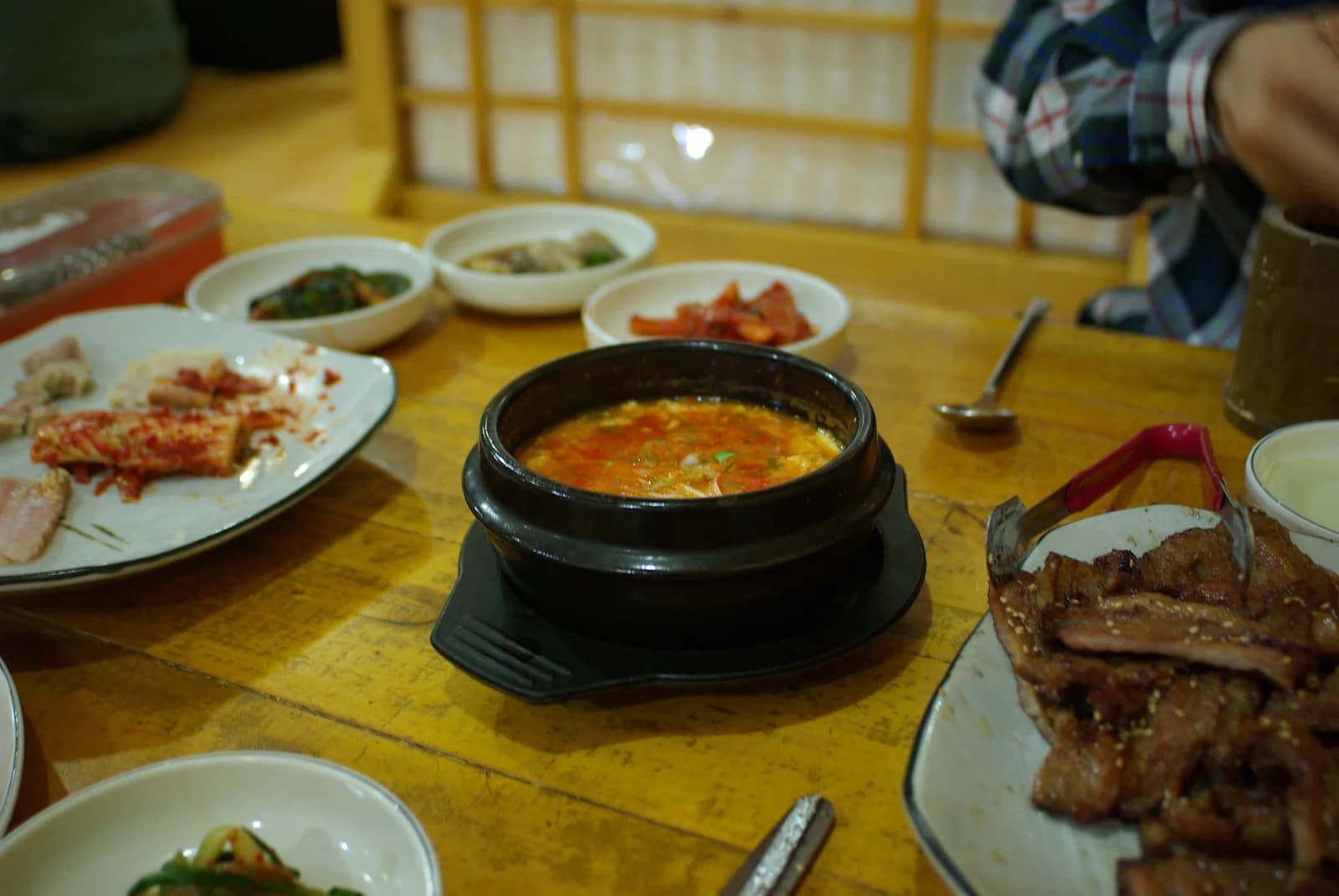
The stew has arrived. Before identifying what is inside, look at the vessel: a deep, dark pot with a broad opening, resting on a separate base. In Korean, that earthenware pot is a ttukbaegi (뚝배기).
The word names the container. It does not tell you whether lunch is spicy, what ingredients it contains or how the restaurant has seasoned it. That small distinction makes Korean menus—and the table in front of you—easier to understand.
Pot, serving bowl, or both?
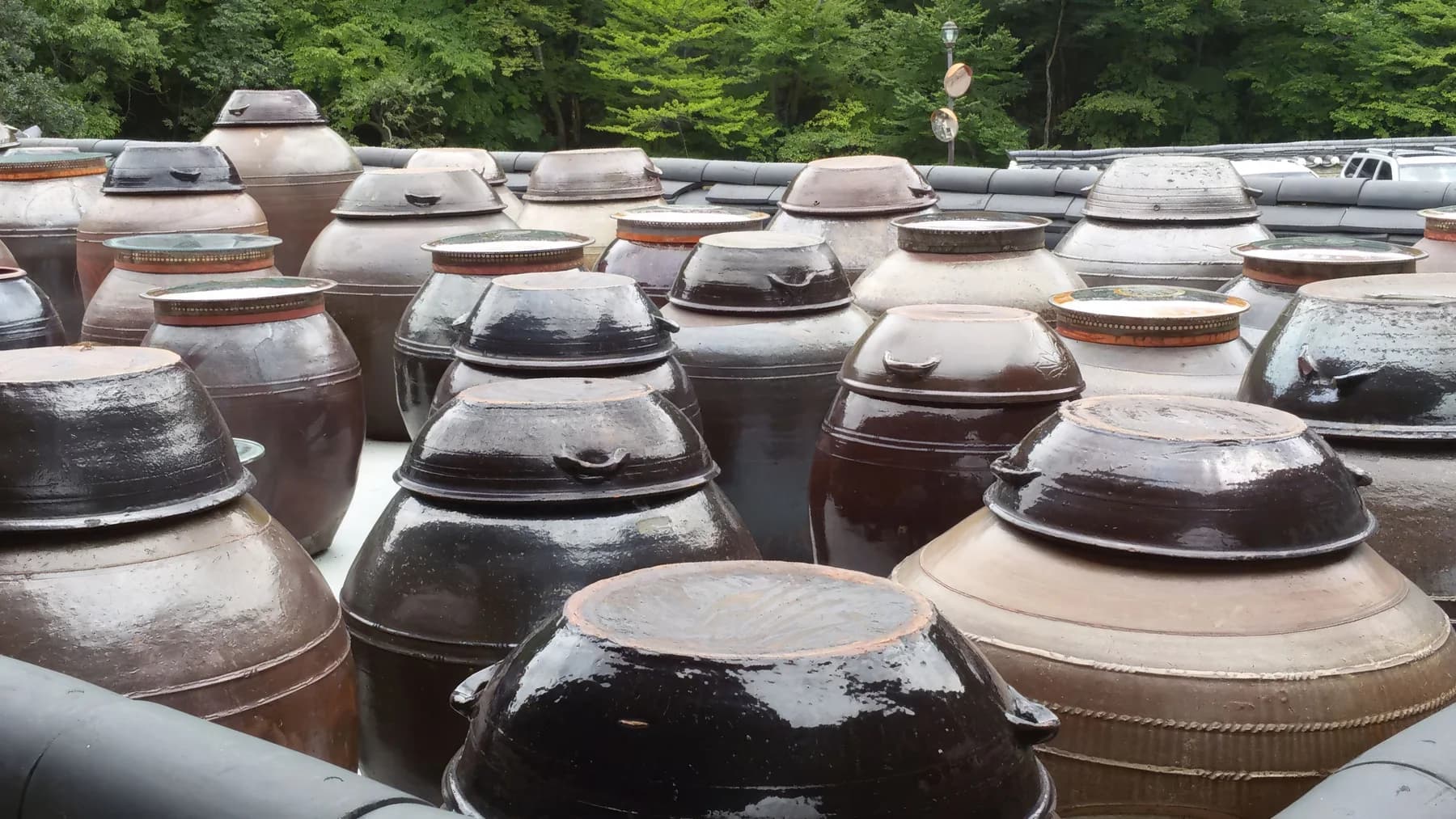
The National Institute of Korean Language describes a clay vessel used to cook dishes such as jjigae or to serve soups such as seolleongtang. Its heritage terminology entry also describes a wide opening, a deep body and a dark brown glaze. Official ttukbaegi entry
So the familiar bowl shape does not tell the whole story. A ttukbaegi belongs to the world of cookware as well as tableware. However, seeing one at a restaurant does not prove that every part of your meal was cooked inside that exact pot.
Why bring such a substantial pot to the table?
Heat retention is part of the appeal. In its introduction to winter dishes, the Korea Tourism Organization explains that an earthenware ttukbaegi helps keep ox-bone soup hot during a meal. The vessel contributes to how the dish is served, rather than merely holding a portion. KTO’s food guide
For a diner, the practical takeaway is modest: give a hot dish time and leave its pot on the supporting base. Its appearance is not a reliable guide to whether it is comfortable to touch. There is no need to lift the vessel to appreciate what it does.
Ttukbaegi and dolsot are different words
You may also encounter dolsot (돌솥). The Korean Basic Dictionary defines that as a pot made of stone. A ttukbaegi is an earthenware vessel, so translating every dark Korean cooking bowl as a “stone bowl” blurs a useful distinction. Official dolsot entry
When buying cookware, check the product’s material and instructions rather than relying on a menu translation. This article identifies the object; it is not a promise that every pot sold under the name works on every cooker.
Read the pot in this photograph
The 2008 archive photograph shows sundubu-jjigae in a dark ttukbaegi on a trivet. You can see the thick rim and the vessel’s rounded side, with other dishes around it. The photograph documents that meal, not a universal serving arrangement or a current restaurant recommendation.
Once you know the word, the pot stops disappearing beneath the soup. It becomes another clue to how the meal reaches the table.