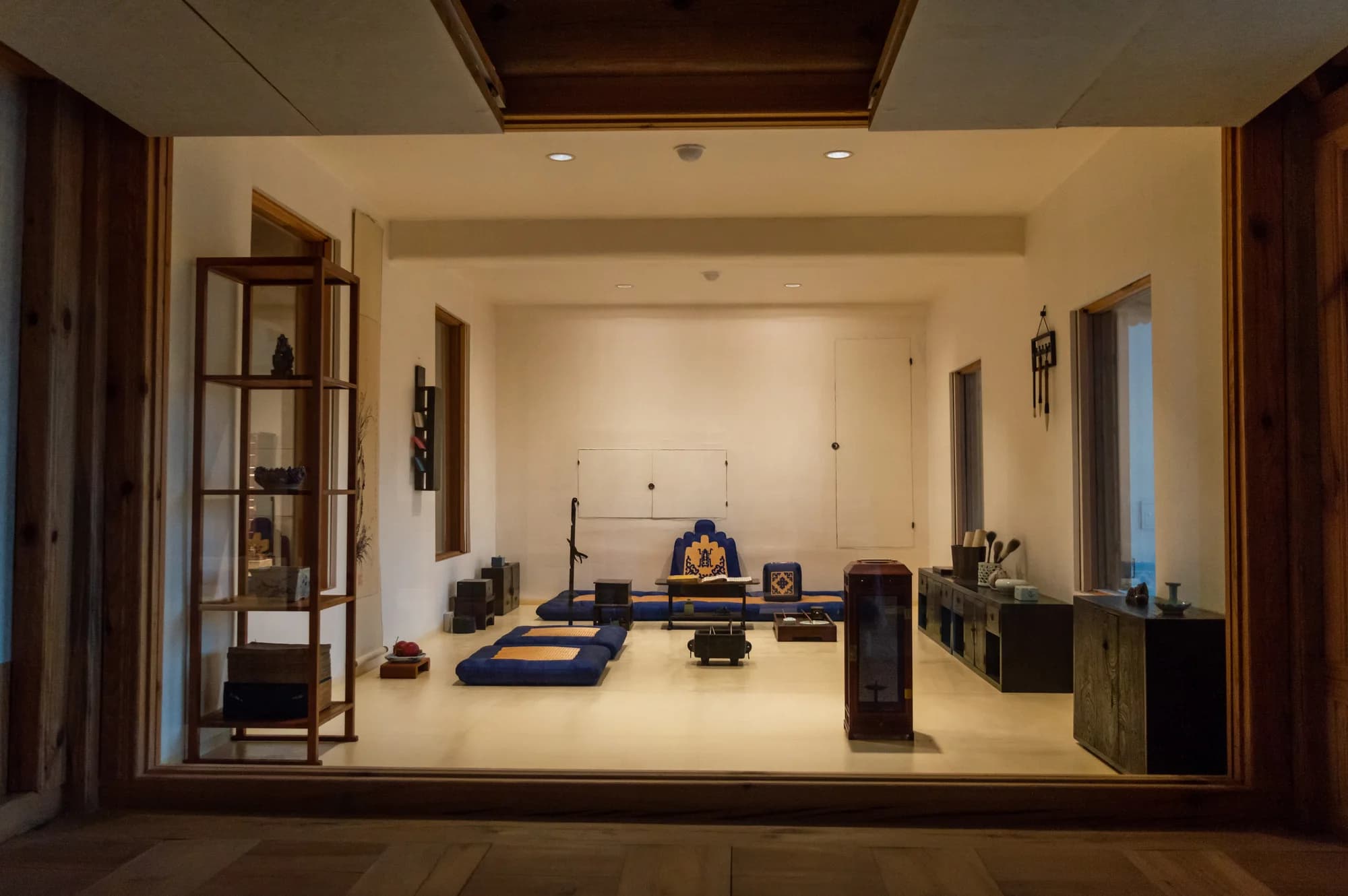
The phrase “sleeping on the floor” can suggest a bare, hard surface. In a Korean home it has usually meant something more comfortable: bedding spread over a clean, heated floor and folded away after waking.
This arrangement developed alongside 온돌 (ondol), Korea's underfloor-heating tradition. It remains familiar, but it is no longer the only normal way to sleep.
What You See: Bedding Without a Bed Frame
Traditional floor bedding typically includes a padded mat called a 요 (yo), a blanket or 이불 (ibul) and a pillow. The pieces can be stacked in a closet during the day and laid out at night.
Thickness varies from thin quilted mats to modern folding foam mattresses. The sleeper is not expected to lie directly on wood, vinyl or stone. The bedding provides cushioning; the floor provides a broad, stable surface and, in winter, warmth.
What Koreans May See: A Room That Changes Jobs
A room without a permanent bed can serve several purposes. During the day it can be used for sitting, children's play or a low table. At night the table moves and bedding comes out. In a small home or a guest room, that flexibility can matter as much as tradition.
The National Folk Museum presents ondol together with floor-sitting culture because the heating system shaped more than temperature. When the surface beneath people was warm, using it directly became practical.
Why Ondol Made Floor Sleeping Practical
Traditional ondol carried heat and smoke beneath masonry floors. Modern Korean apartments normally circulate hot water through pipes, but the floor remains the heat-emitting surface.
Korea.net's public history of ondol notes that warm floors encouraged sitting and eating at floor level, as well as sleeping near them. Its account of a hanok stay describes thick bedding laid above ondol warmth. That connection is architectural, not evidence that every Korean family follows one sleeping rule.
Warmth also explains an important seasonal detail. Floor sleeping can feel especially comfortable in winter, while summer sleepers may choose lighter bedding, a cooling mat, air conditioning or a bed depending on the room.
Why Some People Still Choose It
Some people enjoy the firm support. Families may keep foldable bedding for overnight guests because it stores more easily than an extra bed. Parents may sleep beside young children without the drop from a high frame, and a household may use the warmest ondol room during a cold spell.
These are choices, not medical claims. A hard or low sleeping surface can be difficult for people with joint pain, limited mobility or trouble getting up. Comfort depends on the sleeper and the bedding.
Beds and Floor Bedding Now Coexist
Beds are ordinary in contemporary Korea. New apartments have bedrooms planned for them, and mattresses, frames and hotel-style bedding are widely used. Even a household with beds may keep a folded yo for guests, holidays or a temporary change of room.
Generational patterns are not absolute either. An older person may prefer a bed for easier access, while a younger resident may use a folding mattress to save space. Furniture, health, housing size and habit all matter.
What Visitors Should Expect
In a hanok stay, guesthouse or family home, you may be given floor bedding. Spread the padded layer flat, place the pillow at the head and use the blanket above you. Ask the host about the thermostat rather than assuming a very hot floor is required.
Receiving a yo is not a sign that the host has run out of “real” beds. In the right room, it is a complete sleeping setup. It is also reasonable to mention mobility or back concerns when arranging accommodation.
The cultural point is not that Koreans must sleep low. It is that a heated floor and movable bedding made floor sleeping a sensible, space-efficient option—and kept it recognizable even as beds became common.