Open the front door of many Korean apartments and one of the first built-in features is a tall cabinet. It may look like ordinary storage, but its location explains its job: this is where outdoor shoes stop.
The cabinet stands in the 현관 (hyeongwan), the tiled entry zone between the front door and the raised interior floor. It keeps footwear close to the boundary instead of carrying it through the home.
What You See: Storage at the Threshold
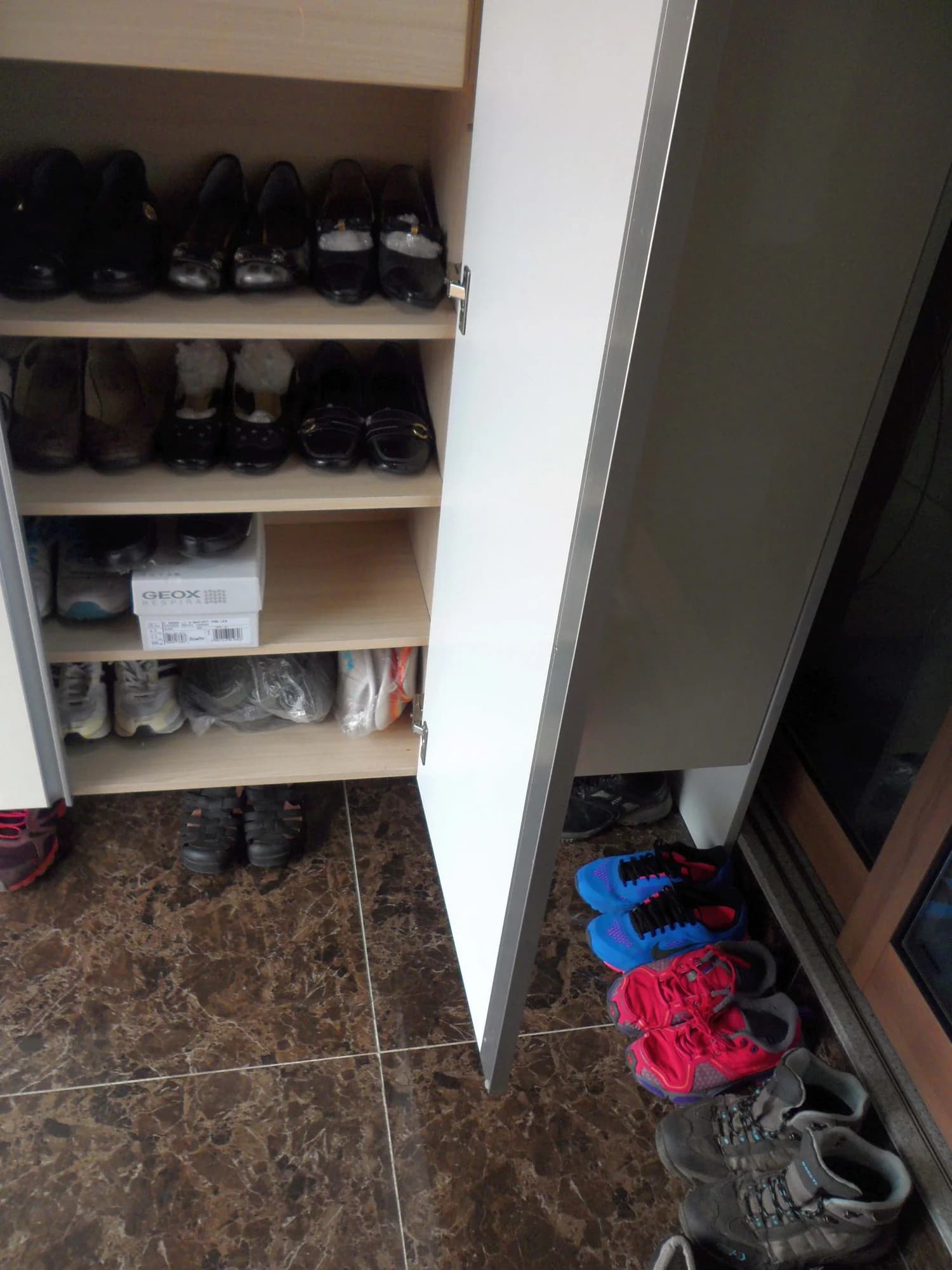
A typical cabinet may hold everyday sneakers at easy reach, less-used shoes on upper shelves and umbrellas or shoe-care items in a narrow compartment. Designs vary. Some cabinets float above the tile so frequently worn pairs can slide underneath; others include a bench, mirror or ventilated panel.
The placement is more important than the exact design. Seoul's public housing inspection materials list the entrance door, shoe cabinet and lighting together as standard items to check in a home's hyeongwan. The cabinet is treated as part of the entrance system, not as movable bedroom furniture.
What Koreans May See: Where Outside Shoes Belong
In homes where street shoes come off at the door, footwear needs a clear destination. A cabinet answers three small problems at once: it prevents a pile from blocking a compact entrance, separates clean indoor movement from outdoor soles and uses vertical space in an apartment where every square meter matters.
Residents may leave one or two active pairs on the tile while storing the rest. That is a household habit, not a national rule. The consistent idea is that shoes remain on the entrance side of the boundary.
Why the Floor Changes the Logic
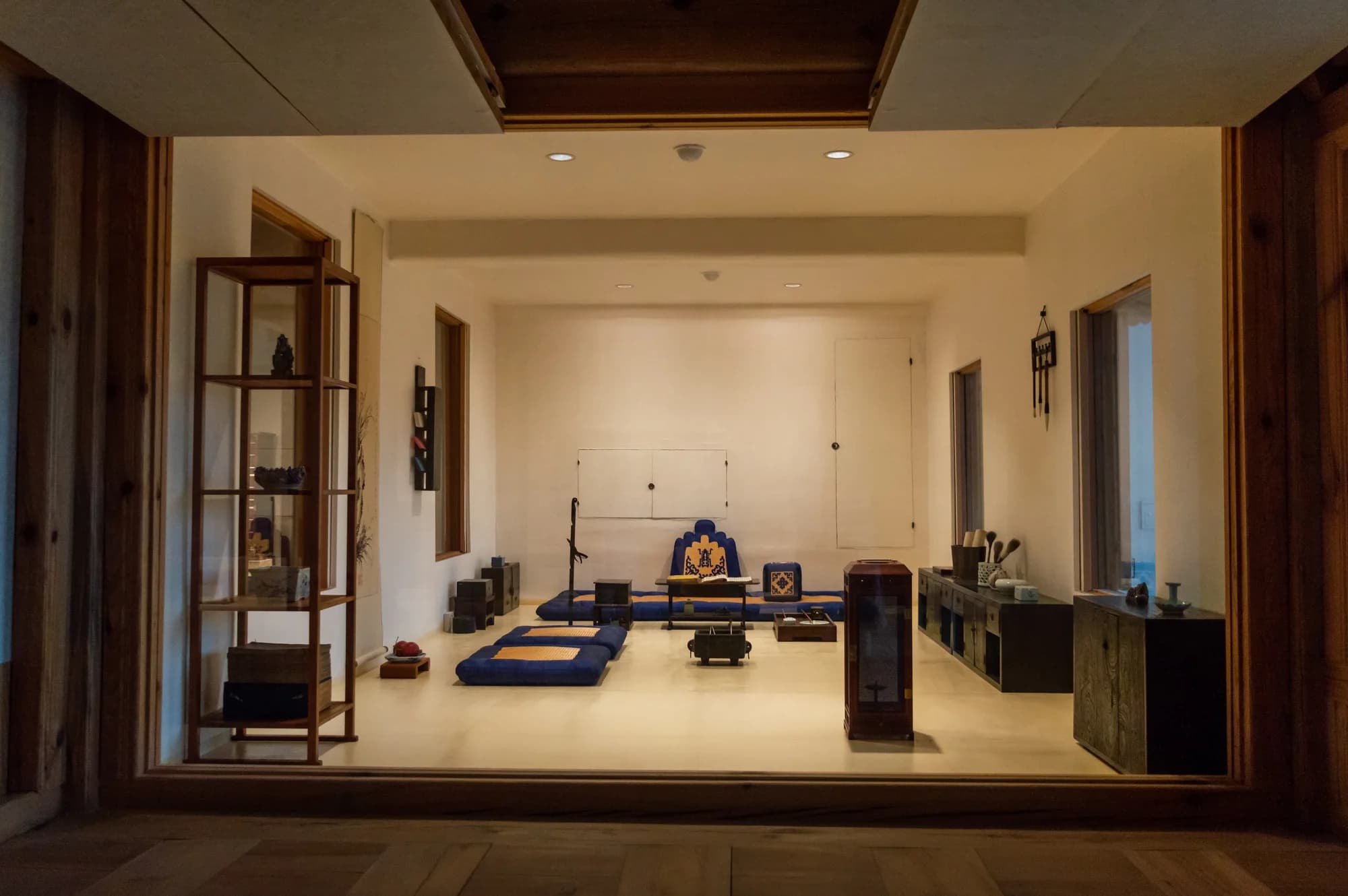
Korean domestic life has long treated the floor as usable living space. Korea.net's account of 온돌 (ondol) connects the warm floor with sitting, eating and sleeping close to it, which helps explain why outdoor shoes are generally unwelcome inside a home.
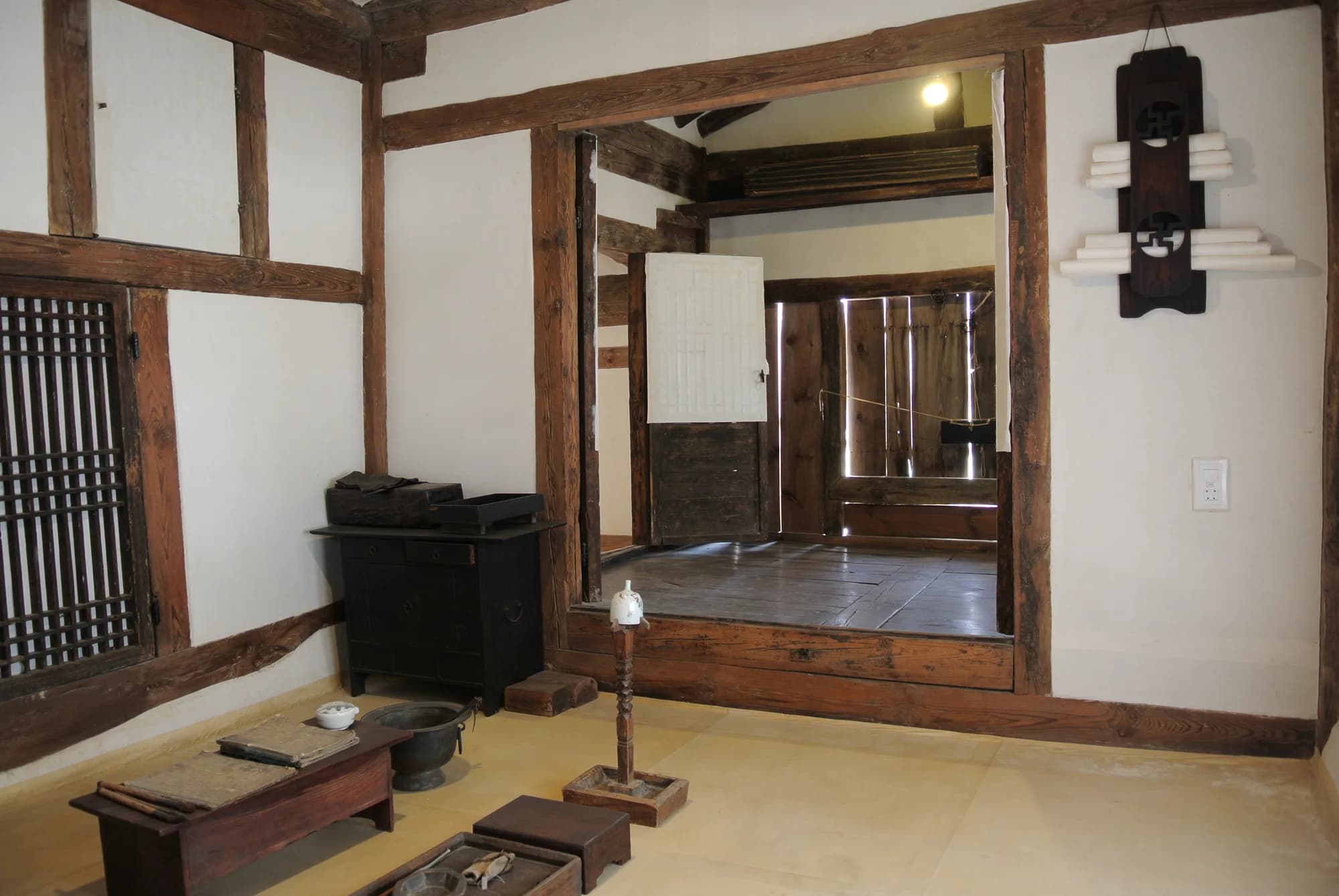
The Academy of Korean Studies describes older houses in which people left shoes below a raised room or wooden 마루 (maru) floor. A modern built-in cabinet is not an ancient fixture copied unchanged. It is a contemporary storage solution that fits the same durable spatial idea: footwear belongs before the living floor.
Why the Cabinet Is Usually by the Door
Moving the cabinet deeper into the apartment would defeat much of its purpose. People would need to carry shoes across the clean zone, and wet soles could drip along the way. At the entrance, shoes can be removed, aired briefly and stored without crossing the threshold.
The cabinet also makes departures easier. Keys, umbrellas and the right pair of shoes are gathered at the transition between home and outside. In some apartments, a lower cabinet surface becomes a temporary landing spot for parcels; in others, full-height doors keep the entry visually quiet.
What Visitors Should Do
Pause on the tile and follow the host's lead. Remove outdoor shoes before stepping onto the raised interior floor, then place them neatly where the host indicates. You do not need to open a private cabinet unless invited; guests often leave their shoes together on the tile for a short visit.
If the entrance is crowded, turn the toes toward the door only when there is room to do so without making a performance of it. The practical goal is simply to keep the walkway clear.
Does Every Apartment Have the Same Setup?
No. Older villas, studio apartments, accessible homes and remodeled units may have a freestanding rack, a shallow cupboard or no dedicated cabinet. Large households may use extra storage elsewhere. Some entrances are almost level, while others have a pronounced step.
The useful reading is modest: when a cabinet is built beside a Korean apartment door, it is there because shoe storage and the outdoor–indoor boundary meet at the same place.