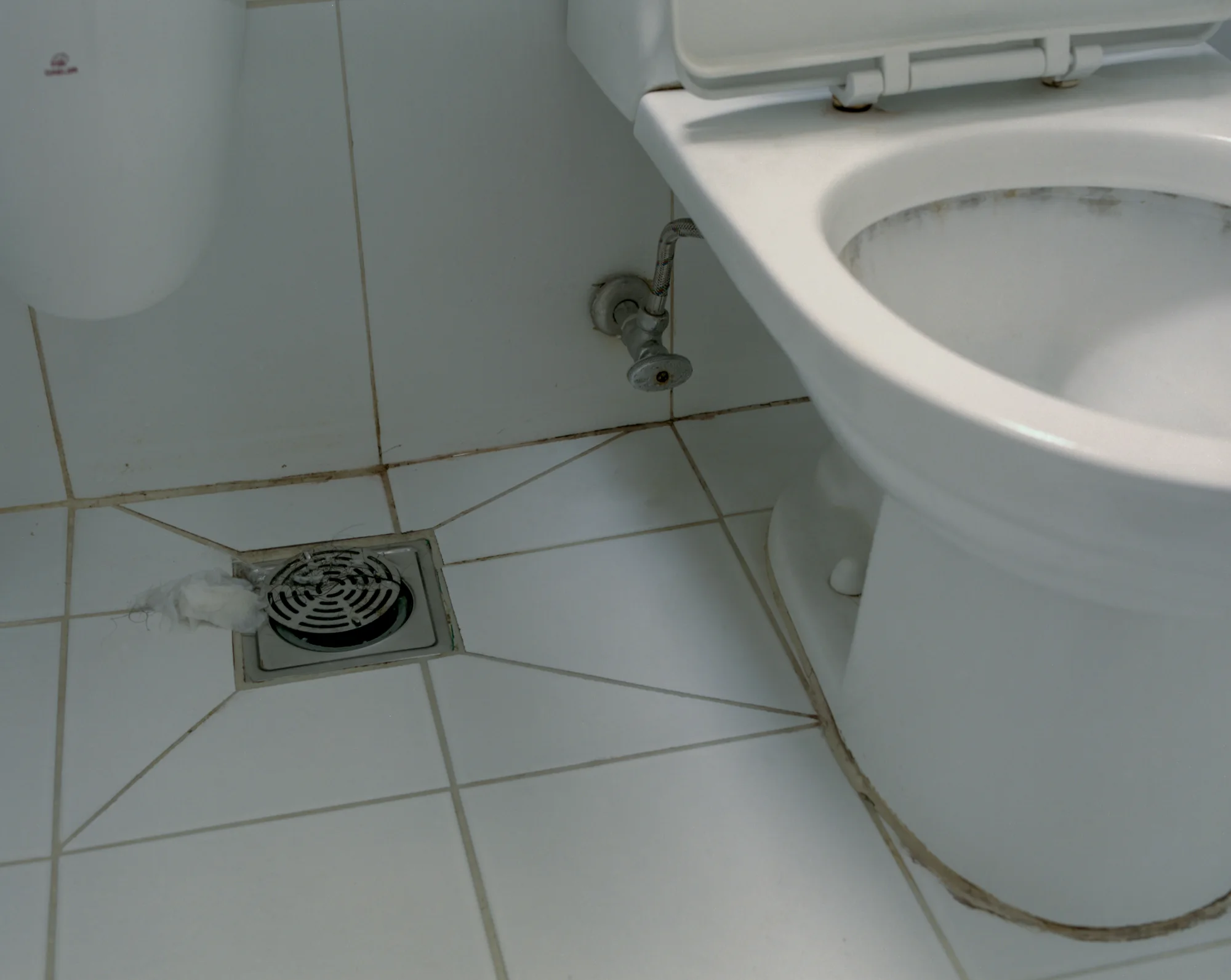
In many Korean homes, the shower head is mounted over the open bathroom floor rather than sealed inside a separate cubicle. Water may splash around the sink and toilet before flowing toward a drain.
That is the basic logic of a wet bathroom: the room is designed so more than one small enclosure can get wet.
What You See: A Drain in the Tiled Floor
The floor is normally tiled, waterproofed beneath the finish and given a slight slope toward one or more drains. There may be a bathtub or a glass partition, but neither necessarily creates a completely dry zone.
Korea's Housing Construction Standards explicitly require drainage facilities on floors in bathrooms, toilets, utility rooms and balconies where water is used. Separate equipment rules require suitable slopes, water-resistant materials and traps or ventilation measures that protect sanitation.
Those rules explain the infrastructure. The exact shower layout is still a design choice, so not every Korean bathroom is fully open.
What Koreans May See: A Room Made to Handle Water
Someone used to a dry bathroom may read water near the toilet as a leak or design failure. A resident may simply see a room doing what it was built to do. The drain allows shower spray, rinsing water and small spills to leave the floor instead of being trapped at the edge of a shower tray.
The same design makes it possible to rinse parts of the tiled floor during cleaning. That does not mean every surface should be soaked or that ventilation is optional. Standing water, damp textiles and poor airflow can still create odor or mold.
Why the Shower Is Not Always Enclosed
An open shower can fit into a compact apartment bathroom without the footprint and door clearance of a full cubicle. A hand shower also reaches different parts of the room easily. In older or smaller layouts, this economy of space is immediately visible.
Newer bathrooms may use a glass screen, shower booth or tub edge to limit splash. They can still retain a floor drain outside the main shower zone for overflow and cleaning. “Wet” and “dry” are therefore a spectrum, not two rigid national categories.
Why Bathroom Slippers Stay Inside
Dedicated bathroom slippers keep socks and bare feet off a damp floor. They usually remain at the bathroom threshold because their soles belong to the wet zone, just as outdoor shoes remain at the home's entrance.
If a host provides them, step into them at the door and leave them there when you exit. The point is practical separation, not ceremony.
They are also different from general indoor slippers. Bathroom pairs are commonly water-resistant and assigned to this one wet zone; house slippers, when a household uses them, belong on the dry interior floor. Wearing the bathroom pair into the living room carries moisture across the boundary it was meant to manage.
Not every home supplies them, and an enclosed shower or carefully maintained dry zone may reduce the need. Read the floor and follow the host's setup rather than treating slippers as a rule for every Korean bathroom.
What Visitors Should Expect
Before showering, move toilet paper, clothing and electronics away from splash. Check whether the floor already has a dry section and aim the hand shower carefully. Afterward, leave the drain uncovered and use a squeegee or ventilation fan if the accommodation provides one.
Do not assume that every drain makes unlimited water safe. Waterproofing can age, thresholds can be low and cabinetry may not be designed for direct spray. Follow the room's layout and any instructions from the host.
Does Every Korean Bathroom Get Completely Wet?
No. Hotels often use enclosed tubs or glass showers. Remodeled apartments may separate the sink and toilet from the shower, and accessible bathrooms use layouts suited to their residents. Some households also work hard to maintain a dry zone even when a drain is present.
The reliable conclusion is narrower: a floor drain is common because Korean housing standards and many everyday bathroom layouts expect water to reach the floor. How much of the room gets wet depends on the building and the people using it.