You sit down, look for water, and notice one English word taped above a counter: SELF. Does it mean water? Side dishes? Cutlery? Clearing the table?
Possibly any of them—but only the nearby setup tells you which. VISITKOREA notes that more Korean restaurants use self-service systems for water, side dishes or unmanned ordering. It does not mean every restaurant assigns every task to the customer.
Read the Objects Around the Sign
A water dispenser with stacked cups usually makes the instruction obvious. A chilled counter holding small dishes points to banchan. Trays, waste openings and dish racks near the exit are more likely a return station.
Useful Korean labels include 물은 셀프 (“water is self-service”), 반찬 셀프 (“side dishes are self-service”) and 퇴식구 (tray or dish return). A sign can apply to one item while staff still serve everything else.
If the counter is closed, empty or unclear, ask rather than entering a staff-only area. 이거 셀프예요? (igeo selpeuyeyo?) means “Is this self-service?”
Water, Utensils and Banchan Have Different Limits
Water is often freely available at a dispenser, in a refrigerator or in a bottle at the table. Spoons, metal chopsticks and napkins may sit in a drawer under the tabletop or at the same station.
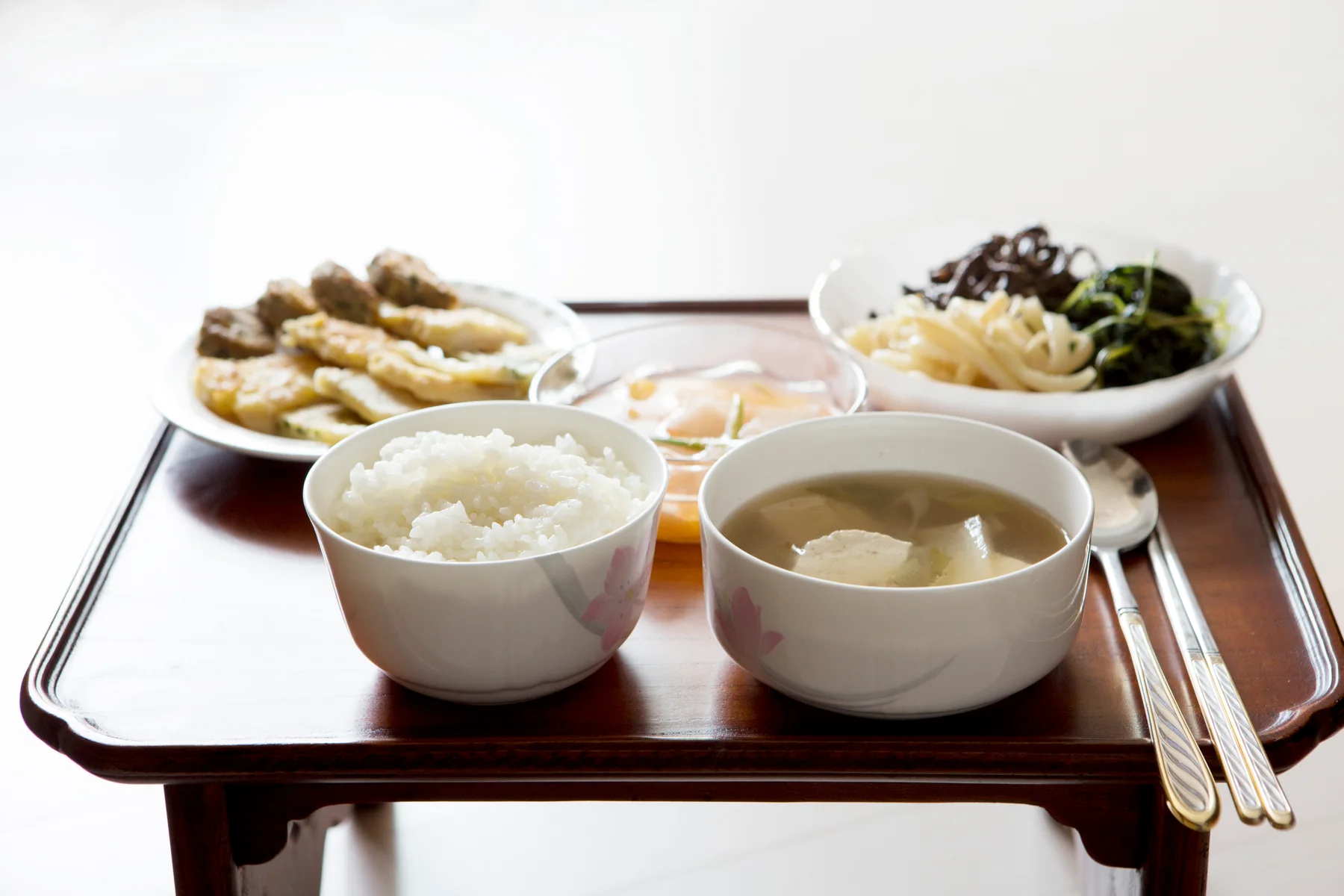
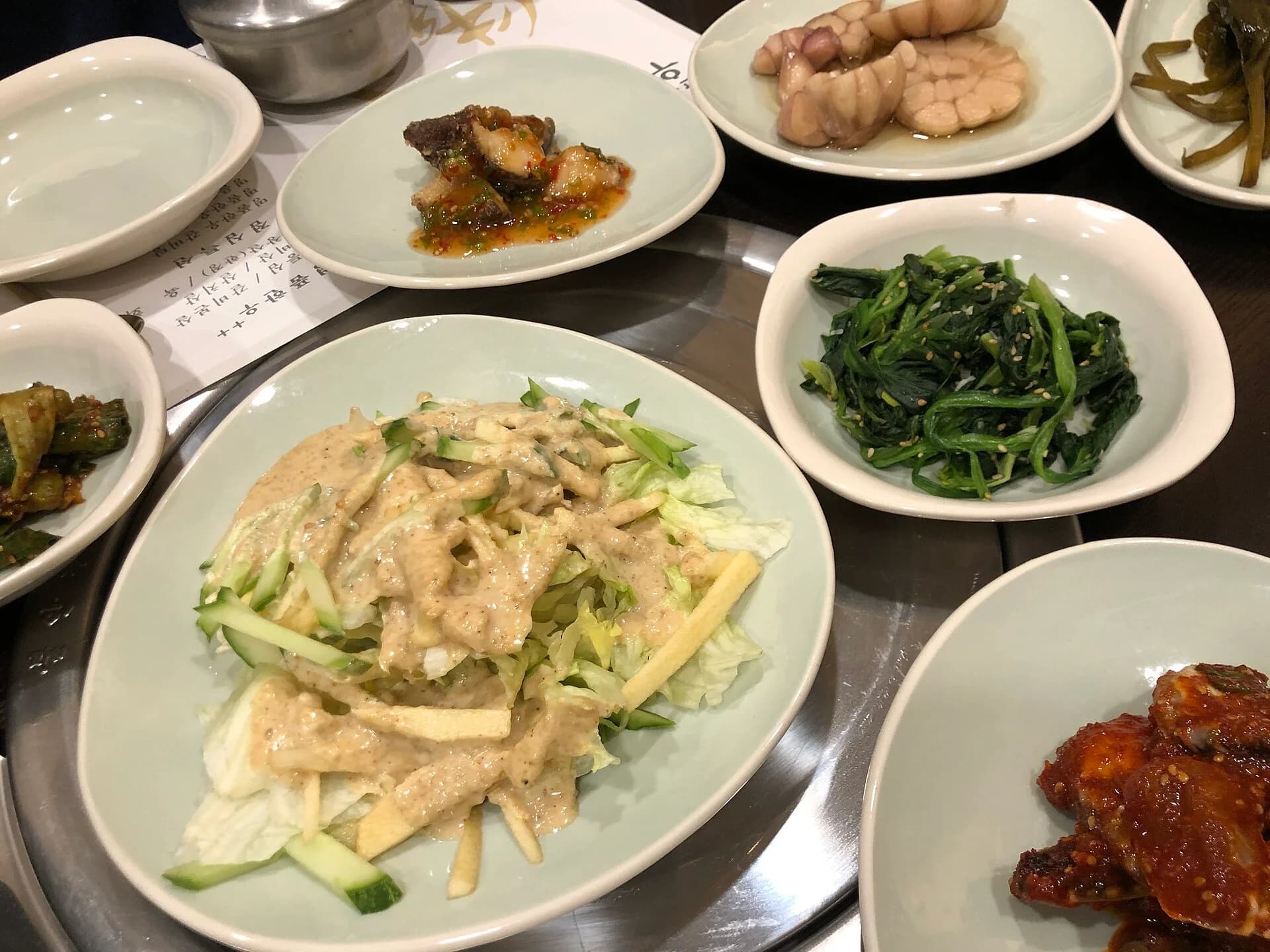
Basic banchan refills are often available, but a self-service bar does not promise unlimited quantities of every dish. Premium items, a menu side or a limited house specialty can have a separate price or refill rule. Take a small amount you can finish.
Use the utensils provided for each container. Moving a spoon between dishes creates hygiene and allergen problems. Close lids and doors after serving yourself when the station is designed that way.
The Call Button Still Has a Job
If the table has a bell, use the restaurant call button for a request that the self-service area does not cover. Press once and wait. Repeated ringing does not make the request clearer.
Some places use counter ordering or a kiosk instead of table service. Others bring the main dish but ask customers to collect water and return trays. A barbecue restaurant, café, cafeteria and small noodle shop can all divide the work differently.
The neighboring convenience store may even provide a fully self-service ramyeon cooker, but that is a different system from a restaurant’s water or banchan station. Match your behavior to the venue in front of you.
Check the End of the Meal Too
Do not automatically carry hot cookware or heavy plates across the room. If customers are expected to clear trays, the return point is normally visible and organized for it. In a full-service restaurant, leaving dishes at the table can be correct.
Payment may happen at a kiosk, at the counter or at the table. SELF beside the water dispenser says nothing about checkout. Watch the flow, read the payment notice and ask staff when uncertain.
The best rule is narrower than “Korean restaurants are self-service.” Treat each SELF sign as a local instruction: identify the object, do that task neatly, and let the rest of the restaurant’s system tell you what comes next.