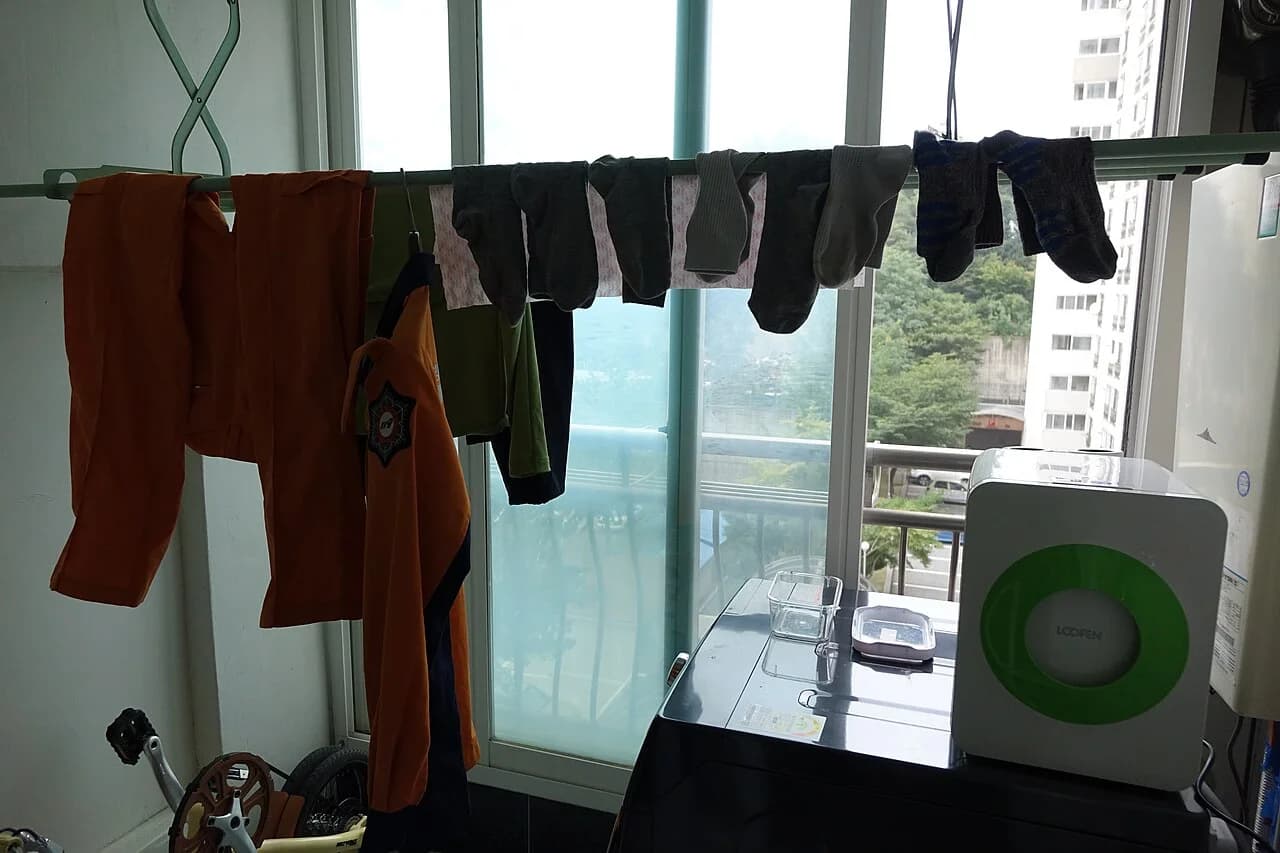
In a Korean apartment listing, a narrow tiled space beside the kitchen may be called a balcony, laundry room or 다용도실 (dayongdosil, utility room). It may hold a washing machine, drying rack, recycling and a boiler rather than a café table.
This is a working edge of the home: a place where water, equipment and storage can be kept apart from the main living rooms.
What You See: A Balcony Built for Chores
The floor is often tiled and may include a drain and water tap. A washing machine sits near the plumbing. Overhead racks or ceiling rails use the vertical space for drying, while shelves hold detergent, cleaning tools or household supplies.
Some layouts place the boiler, pipes or outdoor air-conditioning equipment nearby. Others keep those systems in a separate enclosure. The word “utility balcony” is therefore descriptive, not one universal legal room type.
What Koreans May See: A Buffer for Household Work
Laundry brings water, vibration, humidity and bulky equipment. Drying clothes occupies space. Recycling and cleaning supplies are useful but visually untidy. Moving those functions to a service area protects kitchen circulation and keeps bedrooms and living rooms calmer.
The Korean Building Act's enforcement decree defines a balcony as a buffer space connecting a building's inside and outside. In apartments, enclosed service balconies often behave as just such a buffer even when residents use them as highly practical indoor-adjacent rooms.
Why Water and Drainage Matter
Korea's Housing Construction Standards require floor drainage in utility rooms and in balconies where water is used. Seoul's public rental-housing facility standards specify that a laundry tap should be installed on a balcony or in a dedicated utility room.
That combination—water supply, drain and durable floor—is what makes the space suitable for a washing machine and wet cleaning. It also explains why the utility area may sit slightly lower than the kitchen or have a threshold.
Why Equipment Ends Up There
Boilers and exposed pipes need inspection, ventilation and protection from the household's main activity. A service area can provide access without turning a living-room wall into an equipment zone. Public housing documents accordingly ask residents to inspect boilers, pipes and drainage in utility or boiler rooms.
Placement is regulated by the building's design and appliance instructions. Residents should not block vents, enclose combustion equipment casually or assume every balcony can accept a washer. The presence of empty space is not the same as a safe connection.
Drying Clothes Without a Yard
High-rise living rarely includes a private yard. A utility balcony offers sunlight or airflow near the exterior wall while keeping laundry inside the apartment envelope. Households may use racks, a dryer or both, depending on weather, fine dust, humidity and available space.
The area can also become secondary food or household storage, but large temperature swings matter. An unheated balcony is not automatically suitable for anything that must remain at stable room temperature.
Does Every Korean Home Have One?
No. Balcony expansion has absorbed some former balconies into living rooms, and newer plans may create an enclosed laundry closet instead. Compact studios may put a washer under the kitchen counter. Detached houses and older villas solve the same chores differently.
Names vary as well. Real-estate listings may use “service area,” “laundry balcony” or dayongdosil for overlapping layouts. The useful cultural reading is functional: this is the part of the apartment designed to carry wet, bulky or mechanical work so the rest of the home does not have to.