The first bite is not the hard part. Picking it up with two slim, flat pieces of stainless steel is.
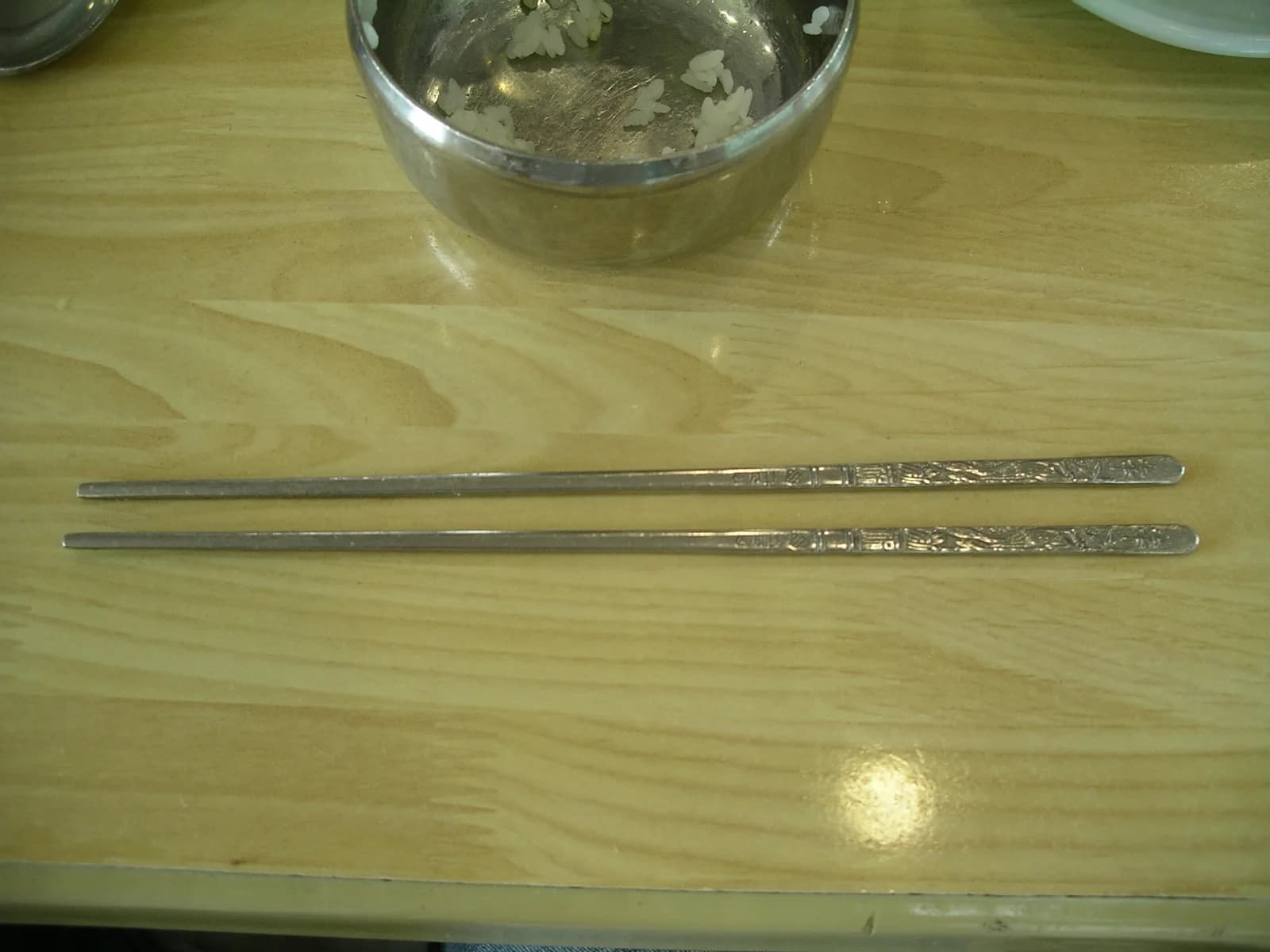
Korean chopsticks can feel unusually slippery to visitors used to wood or bamboo. Their shape is real, their history is long—and the viral explanation about royal poison detectors is far too tidy.
Meet 수저, the Two-Tool Set
Korean table settings commonly pair a long-handled spoon with chopsticks. Together they are called 수저 (sujeo), a compound built from the words for spoon and chopsticks; some meals also place kitchen scissors at the table for cutting food.
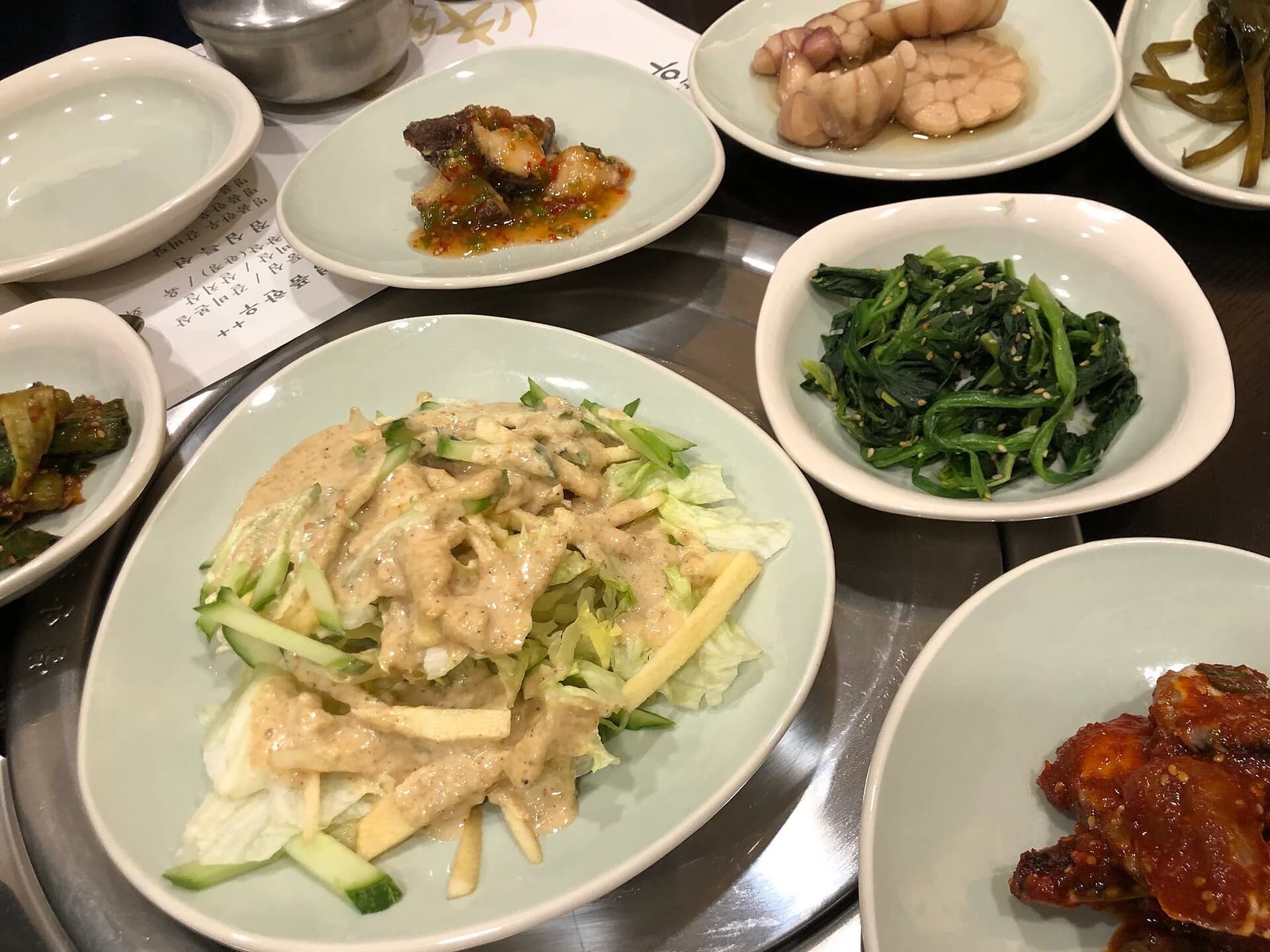
The tools divide the meal. The spoon handles rice, soup and stew; chopsticks handle banchan, grilled pieces and other solid bites. That pairing matters because Korean chopsticks did not evolve as a lone all-purpose utensil.
Modern household and restaurant sets are often stainless steel. Traditional and ceremonial sets may use brass, bronze, silver or other materials, while disposable wooden chopsticks remain common for takeout and some casual meals.
Metal Is Older Than the Stainless-Steel Restaurant
This is not a trend invented by modern dishwashers. Museums hold Korean metal utensils from centuries before stainless steel existed.
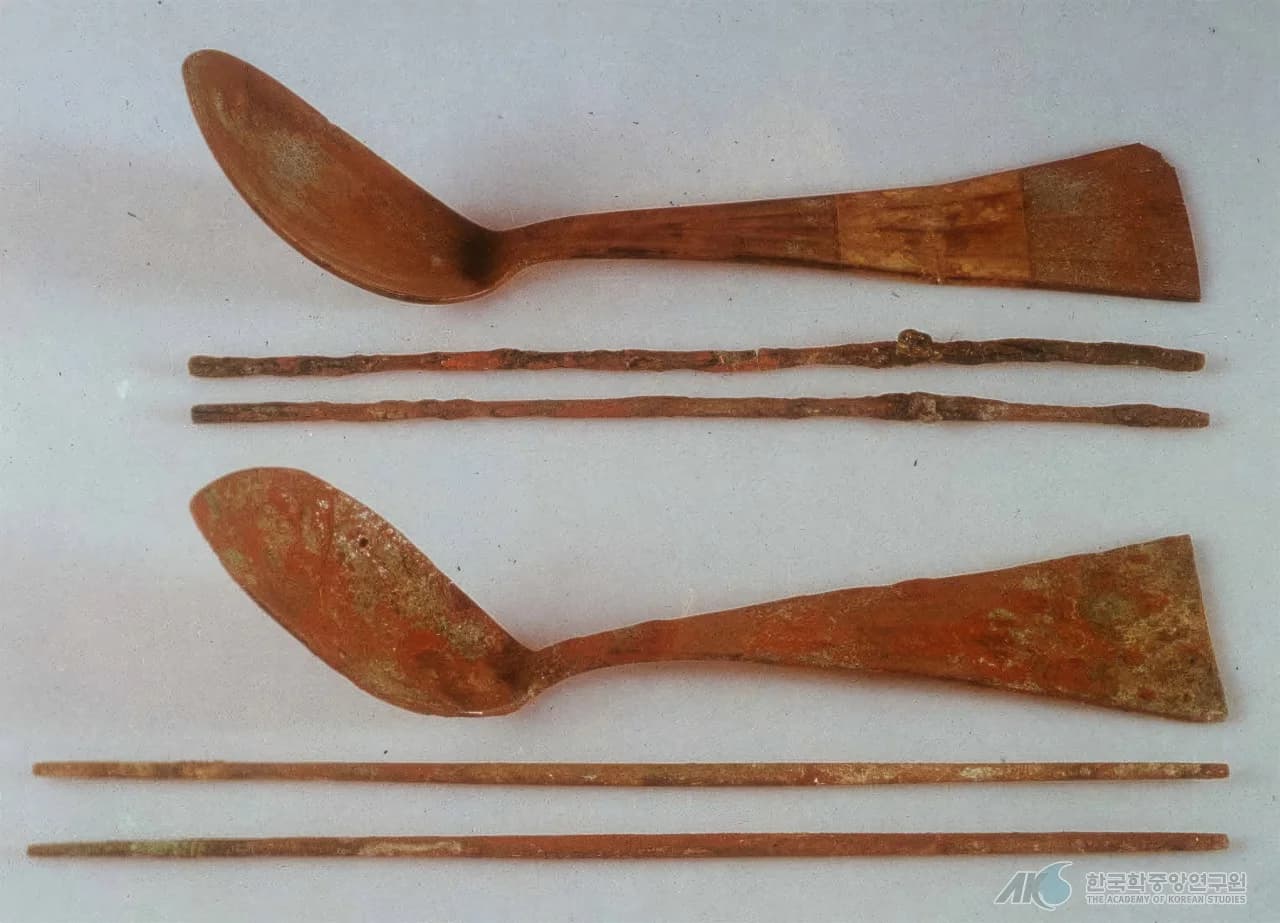
The Smithsonian’s National Museum of Asian Art catalogs bronze Korean chopsticks from the Goryeo period. The Cleveland Museum of Art notes that metal chopsticks made from brass, silver and gold have been excavated from Korean tombs and sites dating as early as the sixth century.
King Muryeong’s sixth-century Baekje tomb yielded a bronze spoon-and-chopstick set. Archaeology therefore establishes a long metal tradition. It does not tell us that every household in every era ate with the same utensils.
The Poison Story Needs a Reality Check
A popular explanation says Korean royalty used silver chopsticks because silver would reveal poison, and that the entire country copied the court.
Historical elites did use precious-metal utensils, and metal could signal status. But the archaeological record includes different metals, periods and social settings. The evidence does not support reducing today’s nationwide stainless-steel habit to one poison-detection trick.
Treat that story as a memorable legend attached to a much broader material history—not the settled origin of every Korean chopstick.
Flat Sides Change the Grip
Many Korean chopsticks have an oval or flattened rectangular cross-section. They are often slimmer and heavier than disposable wooden pairs, with less surface friction.
The upside is durability: stainless steel does not absorb sauce, stain easily or need to be thrown away after one meal. It also works naturally in a table culture where restaurants repeatedly wash and reset the same metal sujeo.
The tradeoff is beginner difficulty. Squeezing harder usually makes the tips cross. Hold the upper chopstick like a pencil, keep the lower one stable and practice first with a larger piece of food.
The Spoon Is Not a Backup Plan
Using the spoon for rice and soup is not “giving up” on chopsticks. It follows the logic of the set.
The National Museum of Korea explains that spoons appear widely in Korean food history and were used alongside chopsticks. Soup-rich meals made that second utensil particularly useful.
At a shared table, use serving utensils when provided rather than reaching into communal food with chopsticks that have been in your mouth. Other table manners, including turning away when drinking with an elder, depend on the people and situation, so follow the setup in front of you.
You Do Not Need to Win a Grip Contest
Ask for a fork if you need one. A meal is not a dexterity exam, and Korean diners also use wooden chopsticks, forks, tongs and disposable utensils depending on the food and setting.
Still, the metal pair reveals something easy to miss: Korean tableware is a system. The flat chopsticks make more sense when the spoon beside them is allowed to do half the work.