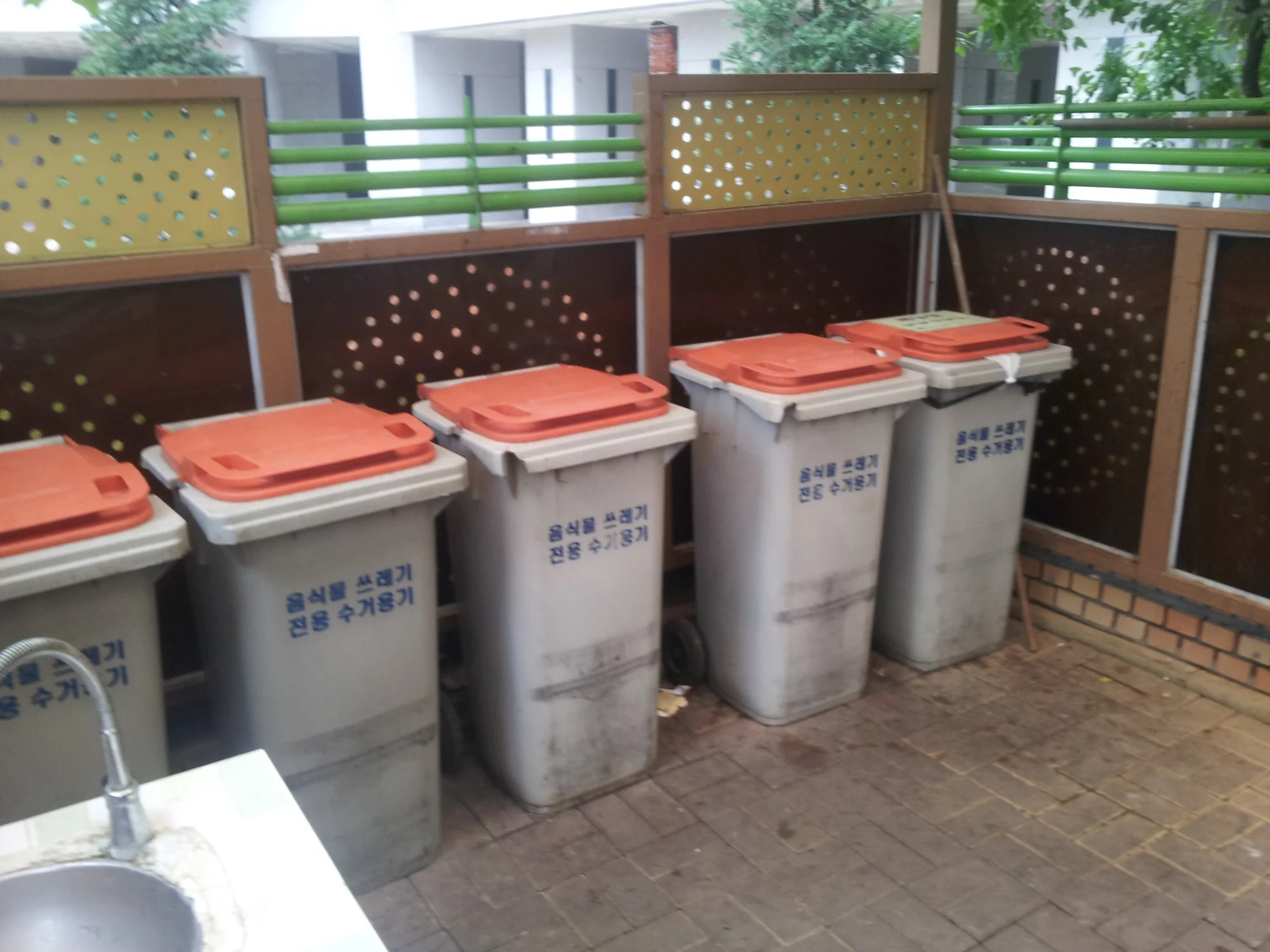
You bring kitchen scraps downstairs, tap a card, and a metal lid unlocks. When it closes, a display tells you exactly how much waste your household just added.
That is an RFID food-waste bin, common at many Korean apartment complexes. It turns disposal into a measured utility: identify the household, weigh the food waste, then charge for the amount instead of hiding the cost inside one flat fee.
The Card Identifies the Household, Not the Leftovers
RFID stands for radio-frequency identification. A resident card or tag tells the shared machine which apartment is using it. The bin records the weight added during that opening and assigns it to the household account.
Depending on the building and district, the charge may appear through apartment management or another local billing arrangement. The physical sequence is usually simple:
- Drain liquid from the food waste upstairs.
- Bring the scraps to the designated bin.
- Tap the registered household card.
- Wait for the lid to unlock.
- Empty the container, close the lid and check that the session ended.
Visitors should not assume a transit card will work. The machine is normally tied to residents or a building system.
The Scale Makes Waste Visible
Seoul’s policy developed from pay as you throw, a volume-based fee principle also used for ordinary household waste—and one reason public trash cans cannot substitute for household disposal. RFID changes the unit from a standard bag or token to measured weight.
That matters because households can see a direct connection between watery scraps and cost. Seoul’s 2026 food-waste reduction point program is limited to residents using weight-capable RFID units: participating households can earn Eco Mileage points when their measured amount falls against the comparison period.
The program is also evidence that the bins are not a futuristic pilot. They are operating infrastructure with household-level records.
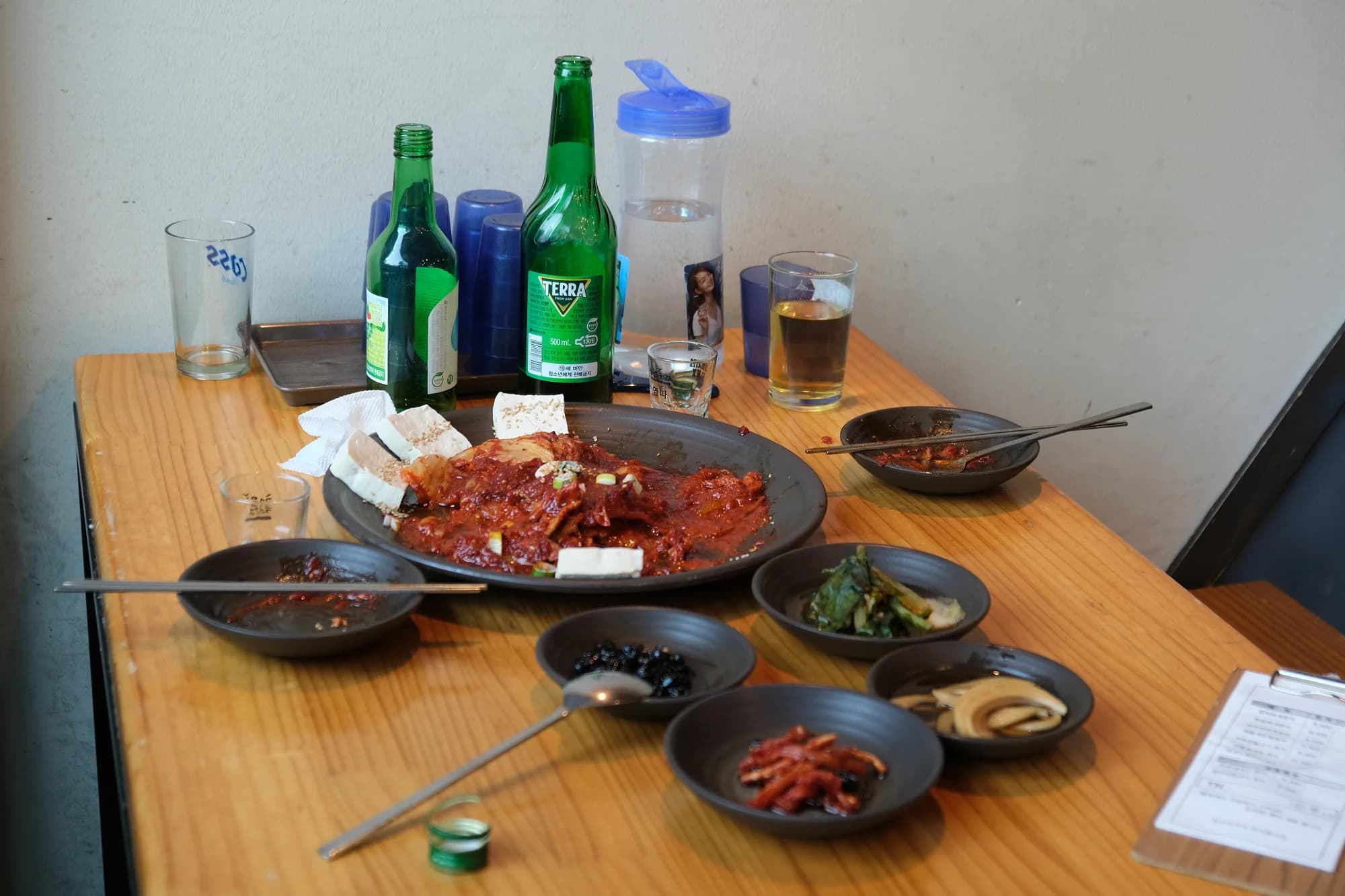
“Food” and “Food Waste” Are Not Identical
The category is based on the local processing stream, not on whether an item once sat on a plate. Hard shells, large pits, bones, eggshells and tea bags are common examples that may belong with general waste rather than the food-waste bin.
Apartment recycling rules and collection methods vary by municipality and housing type. Seoul’s living guides distinguish among RFID bins, designated containers, chips or food-waste bags depending on the residence. Follow the label at your building and the current district guide instead of copying a sorting chart from another city.
Never put plastic bags, foil, cutlery or packaging into the scraps. An RFID lid does not sort the contents for you.
Drain First; Do Not Wash the Scraps
Removing obvious liquid reduces odor and avoids paying for water weight. It does not mean scrubbing food clean or pouring greasy soup down a drain.
Use the strainer or container your household already keeps for scraps. Let excess liquid drain, separate non-food items, and take the waste out before it sits long enough to become a smell problem. In summer, that routine matters more than heroic deodorizing later.
If the lid refuses to open, do not force it. Check the card orientation, read any building notice and ask management; a full or offline machine may have a designated alternative.
Recycling Begins After the Beep
Seoul says collected food waste is processed into animal feed, compost or biogas through resource-recovery facilities. The RFID machine is only the accounting door into that larger system.
That is the part outsiders often miss. The bin is not “paying you for scraps,” and the card is not judging what you ate. It is making one household’s share measurable—one tap, one weight and one small financial reason to waste less food next time.