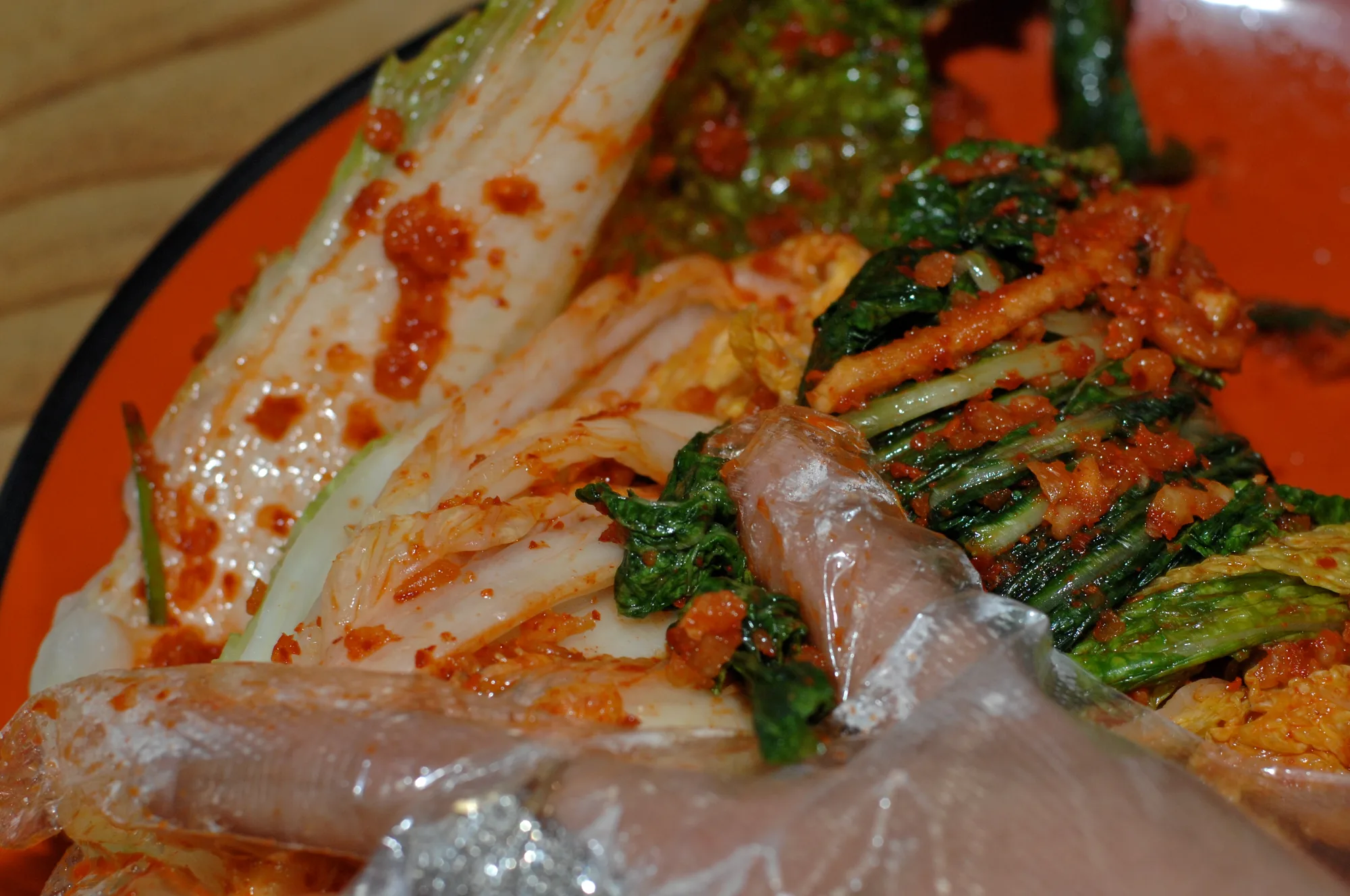
Kimchi is what reaches the table. Kimjang (김장) is the much larger process gathered around it: planning, preparing ingredients, seasoning vegetables, storing the result and sharing both work and food.
That distinction matters. Kimjang is not the name of one universal recipe, and it is not proof that every Korean household still fills dozens of jars each winter.
Late Autumn Turns Preparation Into a Season
UNESCO describes late autumn as the traditional kimjang season. Historically, households prepared enough preserved vegetables to carry them through winter, after a yearly cycle of gathering salt, seafood, chilli and other ingredients.
Temperature and season helped organize the work, but geography changed the food. Coastal ingredients, local produce, household taste and inherited technique produced regional and family differences. “Authentic kimjang” therefore cannot be reduced to one seasoning ratio.
Modern refrigeration, purchased kimchi and smaller households have changed the scale and timing. Some families still organize a large annual day; others make small batches, buy kimchi or participate through a community, workplace or cultural event.
The Shared Work Is Part of the Heritage
Preparing many cabbages is repetitive and physically demanding. Dividing tasks—trimming, salting, mixing, filling containers and cleaning—turns a large job into coordinated group work.
UNESCO emphasizes that skills and ideas accumulate and move between households through the exchange of kimchi. The practice can strengthen family and neighborhood cooperation, but participation is not always romantic or effortless. Time, labor, distance and changing family structures shape who joins and how much they make.
Sharing is not an optional decoration added after the food is finished. Giving portions to relatives, neighbors or people who could not join is one way the social relationship continues beyond the worktable.
Storage Changed, but Fermentation Did Not Disappear
Large batches were traditionally stored in onggi fermentation jars, sometimes using outdoor conditions to manage temperature. Today, plastic or stainless containers and the specialized kimchi refrigerator are common alternatives.
The equipment changed because homes changed. Apartment kitchens have different space, temperature and hygiene needs from a courtyard lined with jars. Fermentation still continues after packing, so temperature and storage choices affect how quickly flavor, acidity and texture develop.
Kimjang also includes practical knowledge that is hard to capture in a short recipe: how salty a cabbage feels, how much moisture an ingredient releases, when a batch is ready to pack and which container suits the household’s preferred stage of fermentation.
UNESCO Recognizes a Practice, Not Ownership of a Dish
UNESCO inscribed “Kimjang, making and sharing kimchi in the Republic of Korea” on the Representative List of the Intangible Cultural Heritage of Humanity in 2013. The listing recognizes the knowledge, cooperation and transmission surrounding the practice.
It should not be read as a claim that every fermented vegetable belongs to one country, or that Korean kimchi has only one form. Intangible heritage recognition concerns a living cultural practice carried by communities.
That is why kimjang can survive while changing. The number of cabbages may shrink, the containers may move indoors, and friends may replace a multigenerational household around the table. The enduring core is the work and knowledge people choose to organize—and the kimchi they make and share together.