You buy a packet of ramyeon. The clerk hands you a shiny disposable bowl. Then you meet a machine with several buttons and absolutely no interest in your cooking confidence.
Good news: the machine is designed to do the difficult part. You still need to know which noodles belong in it.
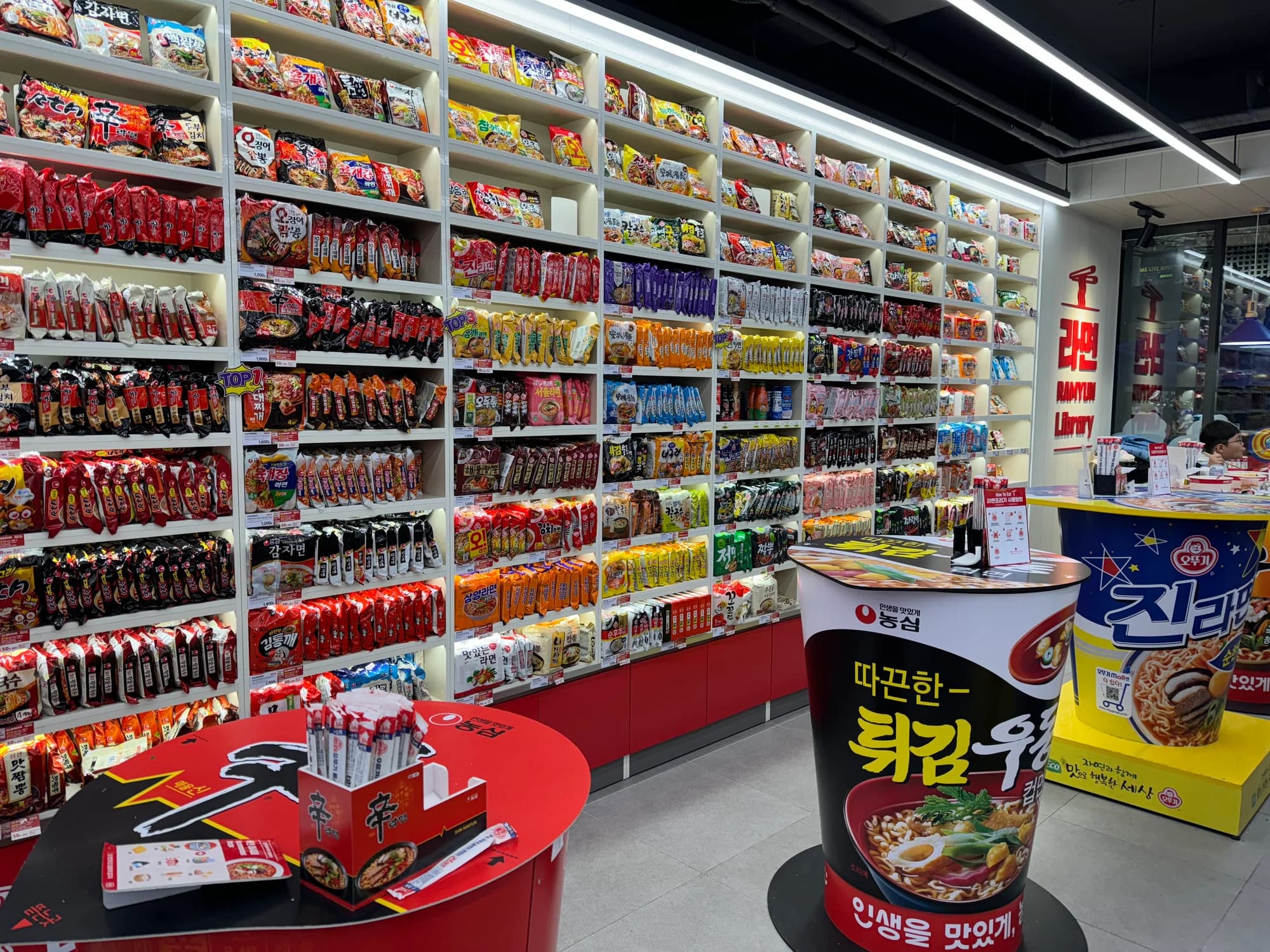
Cup Noodles and Bagged Ramyeon Are Two Different Missions
Cup ramyeon already comes in a rigid cup. Open the lid partway, remove every seasoning packet, add the seasoning you want, fill to the marked line with hot water and wait for the time printed on the package.
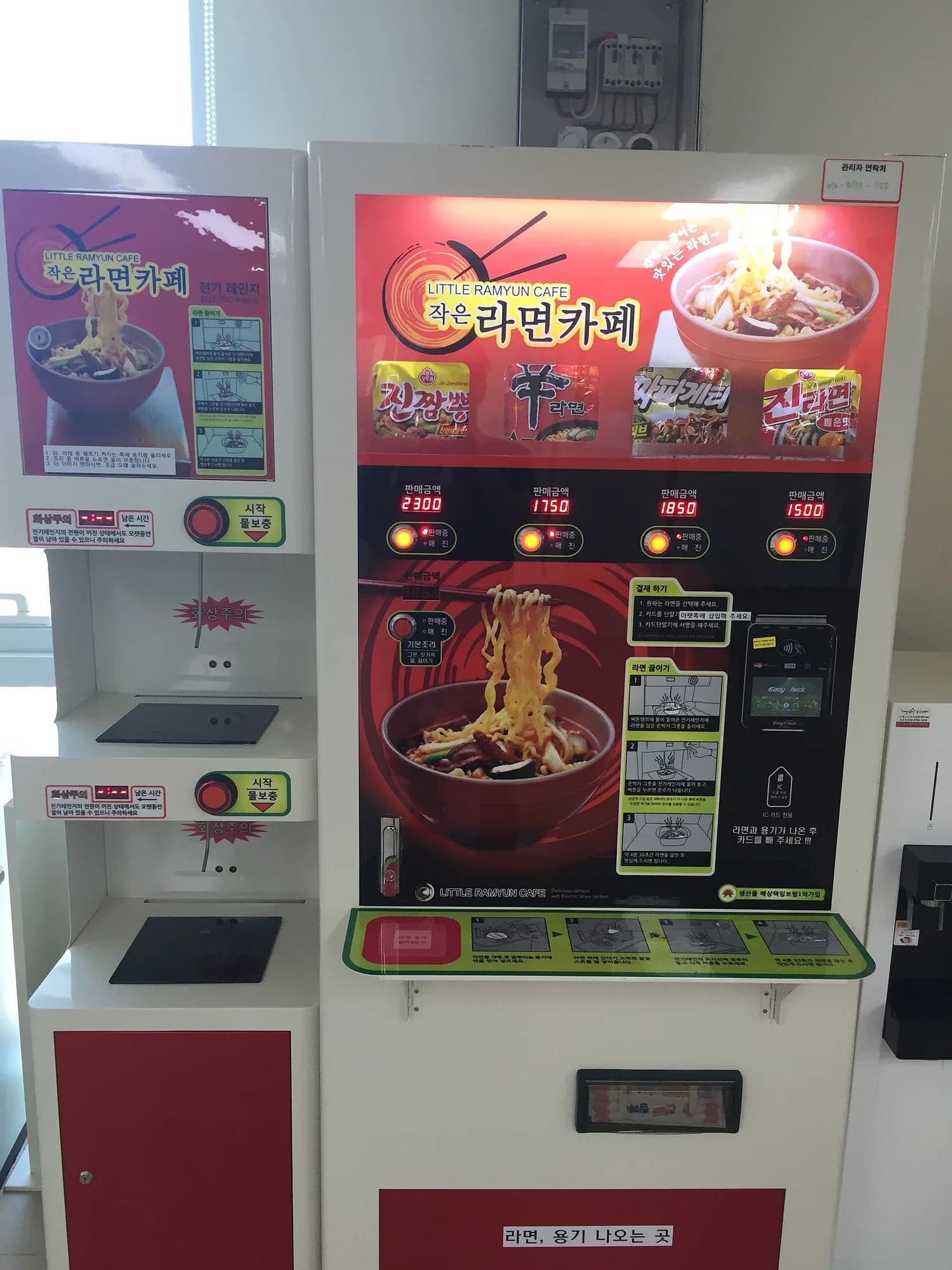
Bagged ramyeon needs a cooking container. At stores with a self-cooker, you usually buy a compatible paper or foil bowl with the noodles, then cook them on the machine’s heating surface.
Do not put a foam or plastic cup on the cooker. Do not place a sealed noodle packet on it. If the store does not provide a bowl or clearly marked station, ask before improvising; cooker availability and setup vary by branch.
The Machine Is Doing More Than Boiling Water
A ramyeon cooker dispenses a measured amount of water and heats the container from below. Some stations have product-specific buttons; others use a simple start control and timer.
The basic sequence is:
- Put the noodles and soup powder in the approved bowl.
- Place the bowl squarely on the heating plate.
- Select the matching setting or press start.
- Let the machine add water and bring it to a boil.
- Stir carefully, then wait until the cycle finishes.
Korea Tourism Organization guides describe machines that tailor the water and cooking cycle to the noodle type. Still, the label on the station wins. Follow the instructions in that store rather than a video filmed at a different model.
Build the Meal Before You Press Start
An egg, sliced cheese or green onion can turn the noodles into a fuller meal, but timing matters. Buy additions first and use only ingredients the store sells or permits at the station.
Add an egg early enough to cook through. Cheese usually goes in near the end. Triangle gimbap is better kept beside the bowl than dropped into a machine that is already boiling over.
Check allergen and spice information on the package. “Mild” describes a product’s relative heat; it does not guarantee that a traveler who avoids chili, meat, seafood or a specific allergen can eat it.
The Tiny Etiquette Rules That Keep the Station Working
Hot water for cup noodles is commonly provided without a separate fee, according to VISITKOREA. That does not make the whole seating area a free public kitchen.
Buy the noodles at that store, use the correct waste bins, wipe up spills and return utensils where directed. When people are waiting, do not occupy the cooker while filming several takes.
Some convenience stores have tables; others are takeout-only or restrict eating at busy times. A table visible through the window is not a promise that outside food, alcohol or a long laptop session is welcome.
What the Han River Version Changes
“Hangang ramyeon” is not a separate noodle recipe. It is bagged instant ramyeon cooked at a riverside convenience-store station and eaten with the park view.
That setting made the machine part of Seoul’s leisure culture: a cheap hot meal, prepared by the customer, at the end of a walk or picnic. Most Hangang River Park convenience stores sell the setup, but hours and availability differ.
The machine is the fun part. The real Korean convenience is the system around it—no pot, no kitchen and almost no language needed, as long as you read the station before pressing the glowing button.