It is below freezing. Everyone is wearing padded coats. Someone walks past holding a clear cup packed with ice.
That is not necessarily a dare. In Korea, the iced Americano has become such a durable year-round choice that it comes with its own shorthand and a joke about surviving winter—a different chapter of coffee culture from the old-style dabang.
Start With 아아: Two Syllables, One Order
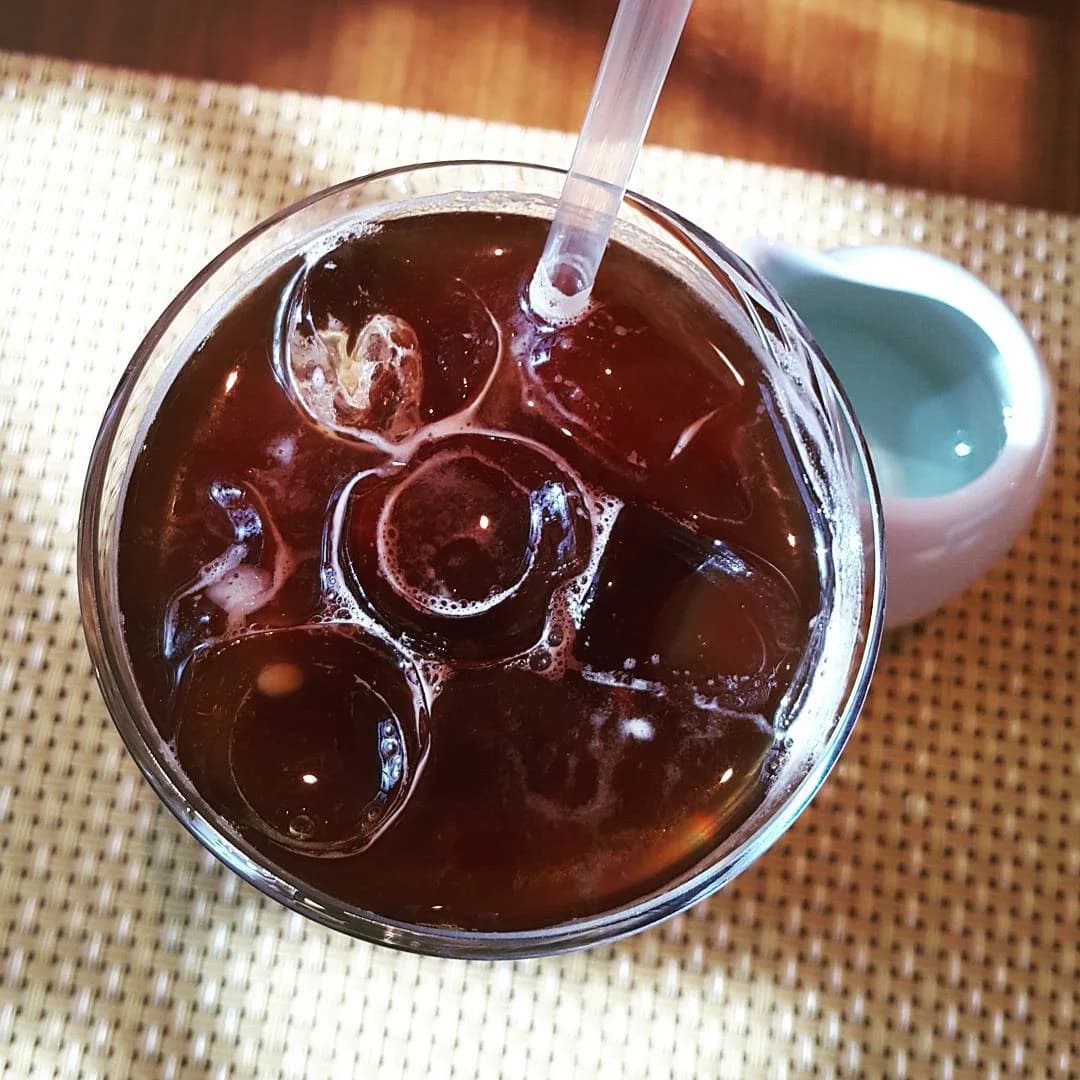
At a Korean café, 아아 (a-a) is a clipped form of 아이스 아메리카노—iced Americano. The first syllable of each word does the work.
Its hot counterpart can be shortened to 뜨아, from tteugeoun Americano (hot Americano), although full menu names are always safe for visitors.
An iced Americano is normally espresso diluted with water and served over ice. It is black coffee unless the menu says otherwise; milk and sugar are not built into the basic order.
얼죽아 Is a Badge, Not a Medical Plan
얼죽아 (eol-juk-a) compresses the playful phrase 얼어 죽어도 아이스 아메리카노: roughly, “iced Americano even if I freeze to death.”
It labels someone who chooses iced coffee regardless of the weather. The phrase is exaggerated on purpose. It is closer to declaring a stubborn preference than recommending anyone ignore cold-weather safety.
Korea.net reported that iced drinks made up 60 percent of Starbucks Korea sales during a winter period spanning November 2022 to early 2023. The same report said iced drinks accounted for 76 percent of the chain’s drinks across 2022. Those numbers describe one major chain and one period, not every café or every Korean customer, but they show why the joke is legible.
The Cup Fits a Fast Café Routine
There is no single proven reason for the habit. Several practical advantages stack together.
An Americano is usually one of the simplest espresso drinks on the menu. It contains no milk by default, pairs easily with sweet bakery food and can be carried out without waiting for it to cool.
Budget chains have also made large Americanos a familiar everyday purchase. For office workers or students moving between heated indoor spaces, the winter air may last only a few minutes; the drink stays with them much longer.
Cold Coffee Can Be the Neutral Choice
In many Korean cafés, an Americano sits at the low end of the coffee price board. It is bitter, unsweetened and visually plain beside cream-topped signature drinks.
That neutrality is part of its usefulness. It can follow lunch, sit beside a slice of cake or stretch through a meeting without becoming the main event.
Recent reporting also points to convenience, price and personal downtime as different motives among younger iced-coffee drinkers. Treat claims that one trait—speed, work pressure or national taste—explains everyone with suspicion. Habits this common survive because they work for different people in different ways.
Winter Makes the Preference More Visible
Koreans also drink hot lattes, tea, pour-over coffee and everything else a crowded café menu can hold. Plenty of people dislike iced coffee in winter.
What makes 얼죽아 culturally sticky is the contrast. The same plastic cup that looks ordinary in August becomes a personality statement in January. Friends can tease the person carrying it; the person can claim the label back.
So the useful answer is not “Koreans do not feel cold.” They do. The iced Americano simply became cheap, predictable, quick and adaptable enough that cold weather could turn loyalty to it into a joke.
How to Order Without Performing the Slang
Say 아이스 아메리카노 주세요—“An iced Americano, please”—and the order is complete. 아아 is convenient, not a password tourists must use.
If the kiosk offers size, shot and ice options, read those separately. “Iced” does not guarantee a fixed strength or cup size across chains.
And if you choose hot coffee in Seoul in February, nobody revokes your cultural credentials. 얼죽아 is a playful tribe, not a national rule.