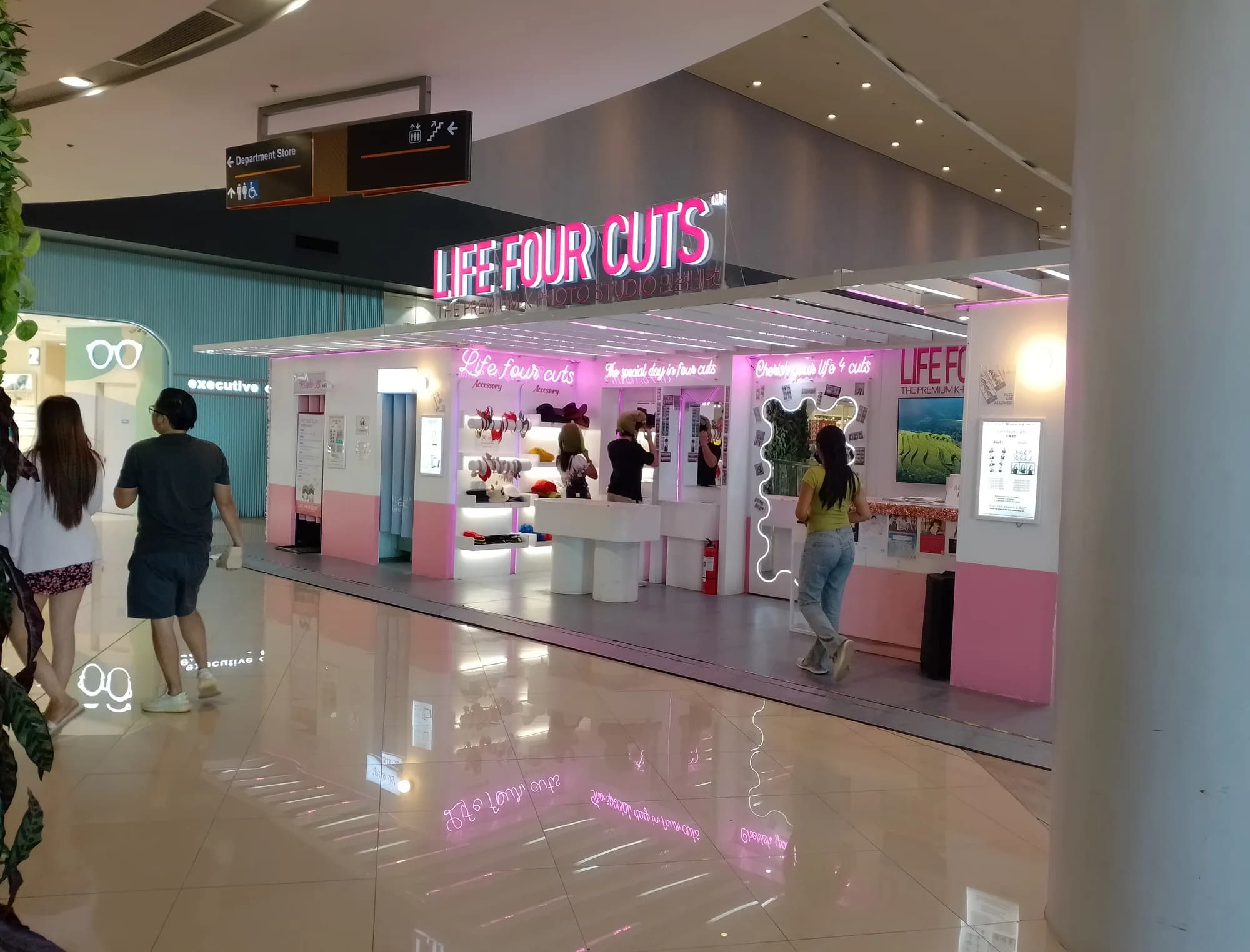
Dinner is over, but the outing is not. Someone spots a tiny studio full of costume ears, mirrors and bright curtains. Ten minutes later, everyone is holding the same narrow strip of four expressions.
That is 네컷사진 (ne-cut sajin, “four-cut photo”): a self-service booth session that prints a sequence of small portraits in one frame. The best-known brand name, 인생네컷 (Insaeng Necut, Life Four Cuts), is often used in conversation, but it is one company inside a much bigger category.
Four Cuts Means a Sequence, Not Four Copies
The “cuts” are separate selected shots arranged on one printed strip or sheet. Many sessions produce two matching prints, making the format easy to split between friends or a couple.
Korean booths do not all use the same layout. Some offer vertical strips, grids, close-up portrait modes or branded character and artist frames. The four-image rhythm is the cultural shorthand, not a technical law that every machine must obey.
This is also different from a passport-photo booth. The point is not a neutral face and exact dimensions. It is a tiny shared performance: pick a frame, race the countdown, change poses, then judge the results together.
The Countdown Is Half the Fun
Most shops are unmanned or lightly staffed, so the screen guides the session. The order usually looks like this:
- Choose the number of people, print layout and frame.
- Pay at the kiosk or booth.
- Step behind the curtain and check the camera preview.
- Pose as the countdown runs through several shots.
- Select the images you want before the editing timer ends.
- Collect the print and, where offered, scan a QR code for digital files or a short behind-the-scenes clip.
Interfaces and payment support vary. Korea.net reported foreign-card acceptance at the booths its writer used, but visitors should not treat one experience as a guarantee for every unmanned shop. Carrying another payment method is sensible.
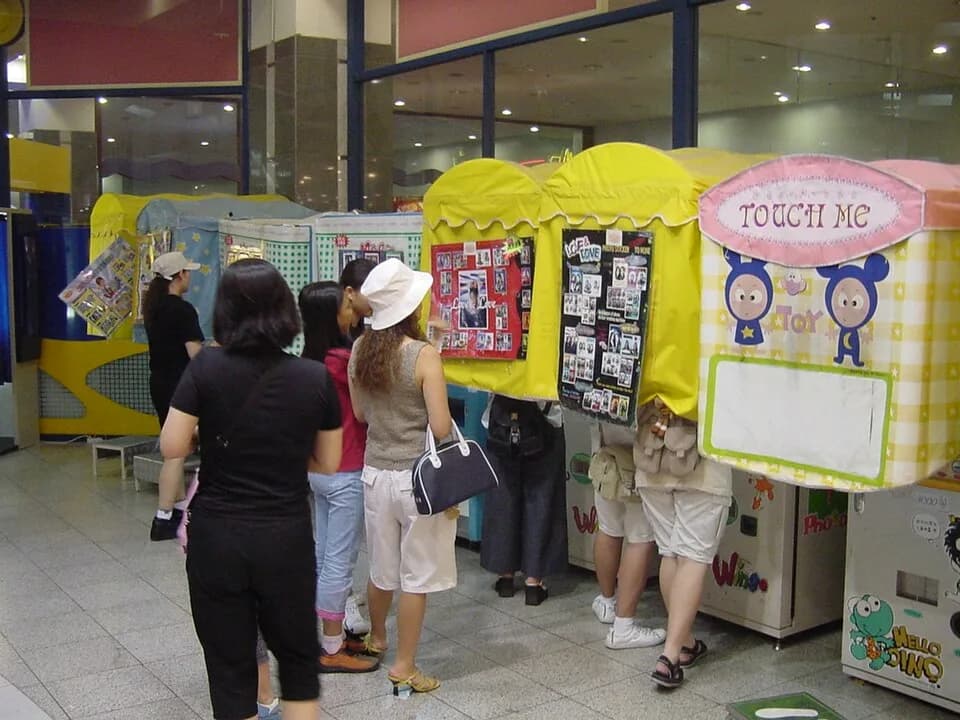
The Print Is Analog; the Session Is Not
The finished strip feels satisfyingly physical, but the modern booth is built for phones too. QR downloads, session videos and collaboration frames let the same visit become a keepsake, a profile post and a fandom moment.
VISITKOREA reported that unmanned four-cut booths in Korea grew from 1,006 in 2023 to more than 3,000 in 2024. Its 2025 feature also said teens and people in their twenties accounted for more than 80 percent of users. Those figures describe a fast-growing business category, not a claim that every young Korean takes the photos.
The format works because it is affordable compared with a staffed studio and short enough to add to an ordinary date, birthday or shopping trip. The same low-commitment logic helps explain coin noraebang’s one- or two-song visits. A 2025 Dongguk University report placed typical sessions around KRW 4,000–6,000, while noting that brands and experiences differ.
Props Help, but Coordination Wins
The wall of headbands can make a first visit feel like a costume challenge. It is optional. Many of the most recognizably Korean strips use ordinary clothes and a simple pose plan.
Pick four ideas before pressing start: perhaps one neat pose, one close-up, one deliberately chaotic frame and one safe final smile. Taller people should check the preview early. In a group, decide who stands front or center before the countdown starts doing the directing for you.
Do not linger inside a busy booth after the print is ready. Mirrors and styling tools may be in the shared area so the next group can begin.
Idol Frames Turn a Booth Into a Tiny Event
Limited collaboration frames can place graphics or an artist image beside the customer’s portrait. Fans use them around birthdays, releases and campaigns, creating a photo that feels like participation rather than ordinary merchandise.
Check the dates and participating brand before traveling for a specific frame. A collaboration visible online may have ended, may exist only in selected stores or may be licensed for one country.
That detail explains why four-cut photos travel so well beyond Korea. The machine sells a print, but the real product is a repeatable social ritual: four seconds of decisions, four poses and one artifact proving everyone was there.